

Confined Space Safety Equipment Guide
Confined space safety equipment is the matched set that lets a team enter, watch the air, talk to the entrant, and pull that person out without sending a second worker into the hazard. A harness on a shelf is not that set. The space, the task, and the rescue method decide which pieces belong together.
Request a confined-space equipment review from Fusion Tactical
Buyers in aerospace, government, and industrial rescue should treat the purchase as a system, not a catalog page. OSHA's general-industry rule defines a retrieval system as the line, chest or full-body harness, wristlets when appropriate, and a lifting device or anchor used for non-entry rescue. That definition is a starting point. Construction and shipyard work follow different rules, and a tactical or aircraft program may add mission constraints the civilian rule never names.
What confined space safety equipment has to cover
Start with the space, not the cart. A tank, vault, pit, or aircraft bay can all meet the confined-space test and still need different gear. OSHA's general-industry definition is a space large enough to enter, with limited entry or exit, that is not designed for continuous occupancy. A permit space adds a hazardous atmosphere, engulfment, a trap shape, or another serious hazard.
Write those facts down before anyone prices a tripod or a lifting device. Note the opening size, the depth, whether the route is vertical or horizontal, and what the entrant will carry into the space. A vertical tank and a low horizontal duct do not share a retrieval path. Buying one kit for both usually leaves a gap at the opening that matters most on the day of the entry.
Then name the job the equipment must do on that specific entry, and assign an owner to each job before you request quotes.
- Keep the entrant connected to a retrieval path when non-entry rescue is the plan.
- Show whether the air is safe before entry and while work continues.
- Move fresh air in, or bad air out, when the assessment says ventilation is required.
- Let the attendant hear or see a problem without entering the space.
- Give the buyer a record that the pieces were inspected and still match the plan.
The written plan owns the roles, permits, and stop-work rules for the program. Use the confined space rescue plan guide when you need that document. This page stays on the equipment those decisions require, and it does not rewrite the plan.
Match each equipment class to the hazard
A useful buy list groups confined space safety equipment by the job each class performs on the entry. If a class has no named owner, the set is incomplete even when the shopping cart looks full and the quote is already in hand.
| Equipment class | What it must do | Buyer check before award |
|---|---|---|
| Entrant interface. | Connect the person to the retrieval line with a harness suited to the exit path. | Check the attachment point, size range, and compatibility with the planned line. |
| Retrieval line and anchor. | Provide a non-entry path from the entrant to a rated anchor or lifting device. | Check the route, edge protection, and the device the line actually ties into. |
| Atmospheric monitoring. | Test oxygen, flammable gas, and toxic hazards the assessment names. | Check the sensor list, calibration status, and who may watch the test. |
| Ventilation. | Purge or supply air when the space cannot be made safe by isolation alone. | Check the duct route, power source, and whether the blower can run for the whole entry. |
| Communication. | Keep the attendant in contact when line-of-sight or voice will fail. | Check the method, the backup, and what no response means for retrieval. |
| Records and spares. | Show inspection, training interface, and replacement parts for fielded gear. | Check the serial or lot trace, inspection interval, and who stores the file. |
Do not treat that table as a universal kit. Horizontal entry may need a different patient-movement plan than a vertical lift. A space with no atmospheric hazard still needs a way out. Gas monitors and blowers do not replace a retrieval path when the plan calls for non-entry rescue.
Personal protective equipment sits beside this set, not inside every line of it. Gloves, eye protection, and respiratory protection follow the hazard assessment. They are not a substitute for the retrieval line. MSC's confined-space PPE guidance makes the same split: access and rescue gear and personal protection solve different problems. Cite the hazard, then buy the class that controls it.
How the retrieval path fits the rest of the system
Non-entry rescue is the equipment problem most programs under-specify. OSHA describes the retrieval system as equipment used to rescue a person without having another employee enter the permit space. The pieces only count when they work as one path: harness or wristlets, line, and a lifting device or anchor.
Confirm three interfaces in writing before you call the set complete or send it to the field.
- The entrant connection matches the harness and the line you will actually issue.
- The line reaches a rated anchor or lifting device outside the hazard.
- An attendant can run that device without stepping through the opening.
A tripod is one way to build the lifting point at a vertical opening. It is not the whole system. Field setup, leg position, and opening fit belong in the confined space rescue tripod setup guide. Procurement language for that device belongs in the tripod procurement framework. Keep those pages for the device. Keep this page for the interfaces around it.
Anchor choice is a separate decision. If the site will use a structural anchor instead of a tripod, read the rescue anchor system guide before you specify the line. Pulley hardware, if the method needs it, should be specified as rated hardware in the rescue pulley specification, not borrowed from a general rigging bin.
Harness selection follows the same rule. A full-body harness used for retrieval is not automatically the harness specified for high-angle work. Compare the attachment and the rescue method in the high-angle rescue harness criteria only when that method is actually in scope. Fusion Tactical's rescue harness collection is a place to review entrant interfaces after the method is chosen, not before.
Air monitoring, ventilation, and communications
Atmospheric equipment answers a different question from the retrieval line. Under OSHA's general-industry rule, oxygen below 19.5 percent is oxygen-deficient, and oxygen above 23.5 percent is oxygen-enriched. A permit space can also hold a flammable or toxic atmosphere. The test list has to name the hazards the assessment found. A single oxygen reading is not a full test when the space can hold solvents, fuels, or process gas.
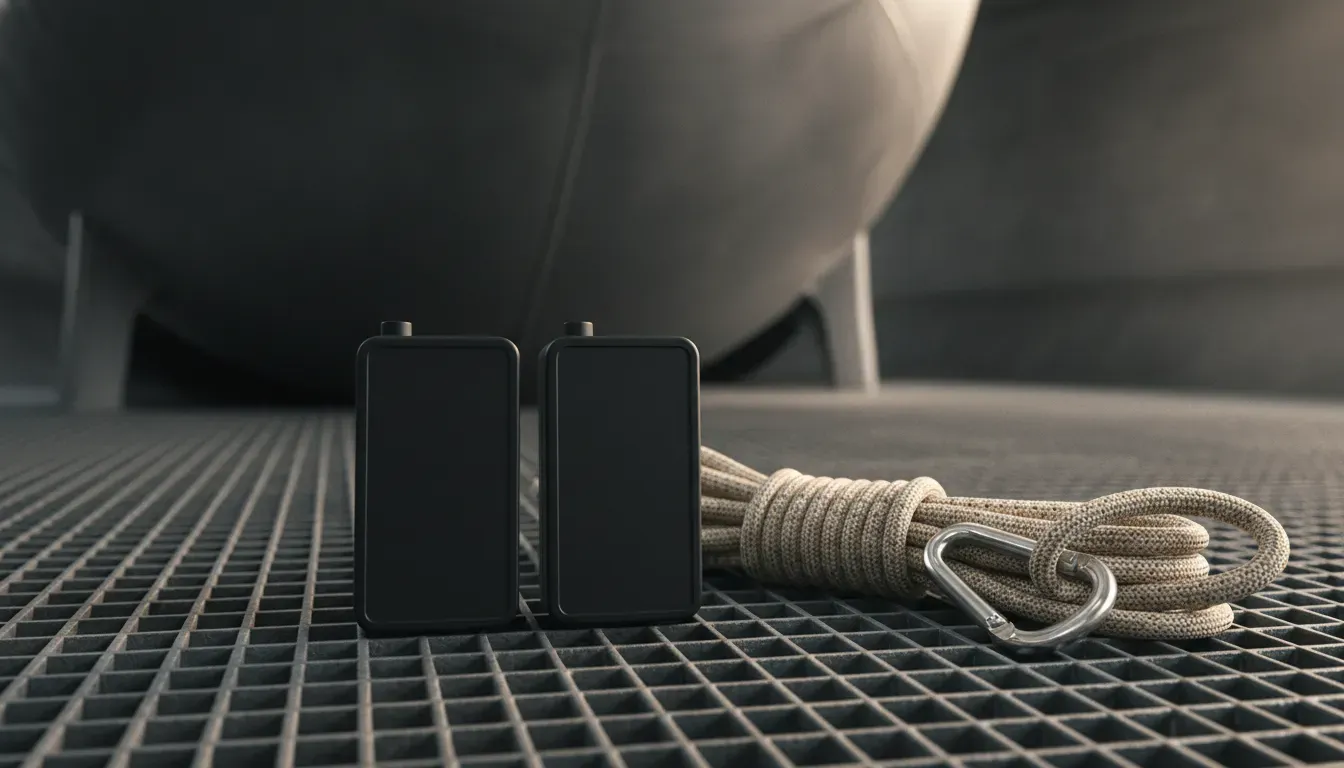
The employer must also let the entrant or that person's representative watch the testing. Build that into the buy. A monitor that only the supervisor can see, from a truck parked away from the opening, fails the interface even if the sensor is good. Calibration records belong with the instrument, and the team needs a rule for a failed or expired sensor: no entry, not a borrowed household detector.
Ventilation is control equipment, not rescue equipment. Use it when isolation, purging, or fresh air is part of making the space acceptable. Check duct length, bends, power, and whether the blower can run for the whole job. A blower that blocks the retrieval line, or that must be shut off before the entrant can exit, fights the rest of the system.
Communications close the loop. Voice works in a short, quiet vault and fails in a tank with a running blower. Pick a method the attendant can use while watching the opening. Define the backup, and define the moment a missed call becomes a retrieval. Radios, hard-line sets, and agreed rope signals are all valid if the plan says which one is primary and who carries it.
Authoritative background for the general-industry duties sits in OSHA 29 CFR 1910.146. Do not paste that rule onto a construction site or a shipyard. Those sectors have their own standards. A government or aerospace buyer should name the sector in the specification so vendors do not answer with the wrong rule set.
Inspection, readiness, and what to ask a supplier
Equipment that cannot be shown as ready is not yet fielded. Ask for the configuration, not a brand slogan. The package should list each class, the model or part, the rating basis the manufacturer claims, and the inspection the user must perform. Fusion Tactical's buyer notes on a broader technical rescue equipment list use the same evidence test: the list has to match the mission, and the file has to match the list.
Use a short supplier question set, and keep the answers in the same file as the hazard assessment.
- Which space types and rescue method is this configuration built for?
- Which harness, line, and anchor or lifting device are approved to work together?
- What inspection and removal-from-service criteria ship with the gear?
- What traceability ties a delivered unit to its test or conformity record?
- What does the buyer still have to add on site, such as monitors, ventilation, or radios?
Training is the proof that people can use the set, not a substitute for specifying it. If the open question is course scope, instructor evidence, or drills, use the confined space rescue team training guide. If the open question is who is on the team and how they are tasked, use the tactical rescue team readiness guide. Neither page replaces the equipment interfaces above.
Reject three weak answers. A discount bundle with no configuration sheet does not tell you what was left out. A used lot with no inspection history does not tell you what is still in service. A consumer catalog that mixes sport climbing gear with rescue hardware does not meet a government or aerospace buy. Keep the requirement written in the language of the space and the standard that governs it.
A buying sequence that keeps the system intact
Programs lose time when procurement, safety, and the rescue lead each buy a separate piece. Freeze the sequence below so the interfaces survive the purchase order and the field kit still matches the drawing.
- Profile the spaces and the entry tasks the program actually performs.
- Choose non-entry retrieval, entry rescue, or both, and name the limit of each.
- Specify the entrant connection, line, and anchor or lifting device as one path.
- Add monitors, ventilation, and communications only for hazards the assessment names.
- Require inspection criteria, traceability, and the on-site extras before award.
- Point training and the written plan at that same configuration, then stop adding gear that the plan does not use.
That sequence is how confined space safety equipment stays a system. The rescue system collection can supply rated hardware once the interfaces are fixed. It should not be used as the specification.
Teams that need a manufacturer to review a configuration against a real opening, a real harness interface, and a documented retrieval path can start with the contact page. Bring the space profile and the rule set that applies. A useful review compares interfaces. It does not replace the employer's hazard assessment or the competent person's sign-off.
Talk with Fusion Tactical about a confined-space system specification for your sites
Frequently asked questions
What equipment is required for confined space entry?
It depends on the space and the governing standard. A permit-space program typically needs a way to test the atmosphere, control hazards, communicate with the entrant, and retrieve the entrant without a second entry when that is the chosen method. There is no single national shopping list that fits every tank, vault, and aircraft space.
What are safe oxygen levels in a confined space?
OSHA's general-industry rule treats oxygen below 19.5 percent as oxygen-deficient and oxygen above 23.5 percent as oxygen-enriched. Acceptable entry conditions for a specific space can be tighter, and other gases can still make the air unsafe inside that band. Test the hazards the assessment names, not oxygen alone.
Is a tripod the same as a retrieval system?
No. A tripod can be the lifting device at a vertical opening. The retrieval system also includes the line and the harness or wristlets that connect the entrant, plus an attendant who can operate it from outside. Missing any of those pieces leaves you with hardware, not a system.
Do construction crews use the same OSHA rule as a plant?
No. OSHA 1910.146 applies to general industry and excludes agriculture, construction, and shipyard employment. Construction confined-space work follows the construction standard. Name the sector in the specification so the equipment answer matches the rule that will be enforced.
What should a buyer ask before accepting a confined-space kit?
Ask which spaces and rescue method the kit supports, which harness, line, and anchor are approved together, and what inspection record ships with the gear. Also ask what the site must still supply, such as gas monitors, ventilation, or radios. A kit that cannot answer those questions is not ready to award.


