

Technical Rescue Equipment List for Procurement
A procurement-ready rescue inventory is more than a catalog of ropes and hardware. It should show which equipment supports each rescue function, how components work together, and whether every item has the specifications, inspection history, and training ownership needed for deployment. That structure helps technical rescue teams identify gaps before an incident and gives procurement officers a defensible basis for evaluation.
Contact Fusion Tactical for procurement and engineering support.
A useful technical rescue equipment list groups ropes, anchors, connectors, pulleys, lowering and hauling devices, harnesses, patient-movement interfaces, PPE, and readiness records by operational function. Each entry should also identify applicable ratings, compatibility requirements, inspection status, manufacturer documentation, and training considerations. Verify those details against current manufacturer instructions, governing standards, and your team's procedures.
With that framework established, the next step is to define the system boundary and map each equipment family to the rescue work it supports.
What belongs on a technical rescue equipment list?
A procurement-ready technical rescue equipment list defines the complete rescue system, not just a collection of individual products. It should show how each equipment family supports a rescue function, connects to other components, and can be verified through manufacturer documentation, applicable standards, inspection records, and team procedures. Organizing the inventory this way helps buyers identify gaps without treating unlike equipment as interchangeable.
FEMA's rope-rescue category includes supporting items such as Prusik cords, soft-rope grabs, bags, webbing, and rope protection. Broader rescue inventory frameworks also identify anchors, connectors, pulleys, mechanical-advantage devices, descent and ascent devices, artificial high directionals, patient transport, and PPE. Those categories establish a useful system boundary, but the responsible technical authority must confirm the final configuration for the team's hazards and operating methods.
| Function | Equipment family | Procurement evidence |
|---|---|---|
| Rope movement and protection | Ropes, accessory cords, bags, webbing, and rope protection | Intended use, construction, compatibility, inspection method, and manufacturer documentation |
| Anchoring and connection | Anchors, anchor hardware, connectors, and rigging interfaces | Approved configuration, applicable standards, rating evidence, and system compatibility |
| Hauling and descent | Pulleys, mechanical-advantage devices, ascenders, descenders, and friction-control components | Operating instructions, compatible rope range, inspection criteria, and training owner |
| Patient and rescuer interface | Harnesses, litter or rescue basket interfaces, helmets, gloves, and PPE | Intended role, fit and compatibility requirements, care instructions, and replacement criteria |
From there, link each family to a controlled record and a responsible owner. For example, buyers can use the guide to specify rated rescue pulley hardware and review tactical rescue harness selection without collapsing those specialized decisions into a generic shopping category.
How should teams specify ropes, connectors, and anchors?
Specify these components as one connected load path, not as isolated line items. Begin with the rescue task, identify where force enters and leaves the system, and document how the rope, connector, anchor hardware, edge protection, and operating device work together. The responsible technical authority should then verify every interface against current manufacturer instructions, applicable standards, and the team's procedures.
For connectors and hardware, define the intended function before selecting a model. FEMA's rescue hardware category includes ascenders, descenders, friction devices, hand rope grabs, carabiners, plates, and racks. Where the applicable category or procurement requirement calls for it, FEMA notes that covered hardware should be certified to the referenced NFPA requirements. Record the applicable standard, product identification, rating evidence, gate or attachment configuration, and any restrictions on orientation or loading. A connector that fits physically may still be unsuitable for the planned load path or device interface. For a deeper procurement framework, see this guide to rated rescue pulley hardware.
Rope specifications should capture construction, diameter, length, intended operation, termination method, and compatibility with every connected device. Kernmantle construction uses a sheath that can help protect the core from damage, but construction alone does not establish suitability for a particular system. Rope diameter affects both weight and breaking strength, so teams should involve a qualified expert or training provider before standardizing rope and accessory-cord diameters. Cite the rope construction guidance and the rope selection guidance in the procurement record.
Anchors require the same discipline. Specify the anchor type, installation or attachment method, expected direction of loading, substrate or structure, edge and abrasion controls, and the evidence required to approve the setup. Include rope protection, webbing, bags, and soft-rope grabs where the operating method requires them. Do not treat a rated component as proof that the assembled system is universally compatible. Link the final equipment record to the team's design review, inspection process, and training documentation. When harness interfaces are part of the load path, compare the system requirements with guidance on load-rated rescue harnesses before purchase.
Which harnesses and patient interfaces belong in the inventory?
A complete rescue inventory needs interfaces for both the team and the patient. Start with harnesses for every rescuer, then account for personnel who may need to reach or stabilize a patient before a litter arrives. Add the patient movement interface, connection hardware, and PPE as one compatible system rather than as unrelated line items.
Harnesses are a recognized rope-rescue equipment category, while a litter or rescue basket provides a distinct patient-movement interface. Team sizing should reflect the planned crew, relief personnel, and realistic access roles. FireRescue1 recommends enough harnesses for all rescuers and notes that additional harnesses may be needed for personnel who access the patient before the litter. Verify those quantities against your own rescue plans, training model, and manufacturer instructions.
Tactical rescue harness selection should account for the intended connection points, movement pattern, clothing and PPE layers, and the equipment used alongside the harness. Do not assume that a harness, litter, connector, or patient packaging system is universally interchangeable. Document the approved combinations and the responsible technical authority for compatibility decisions.
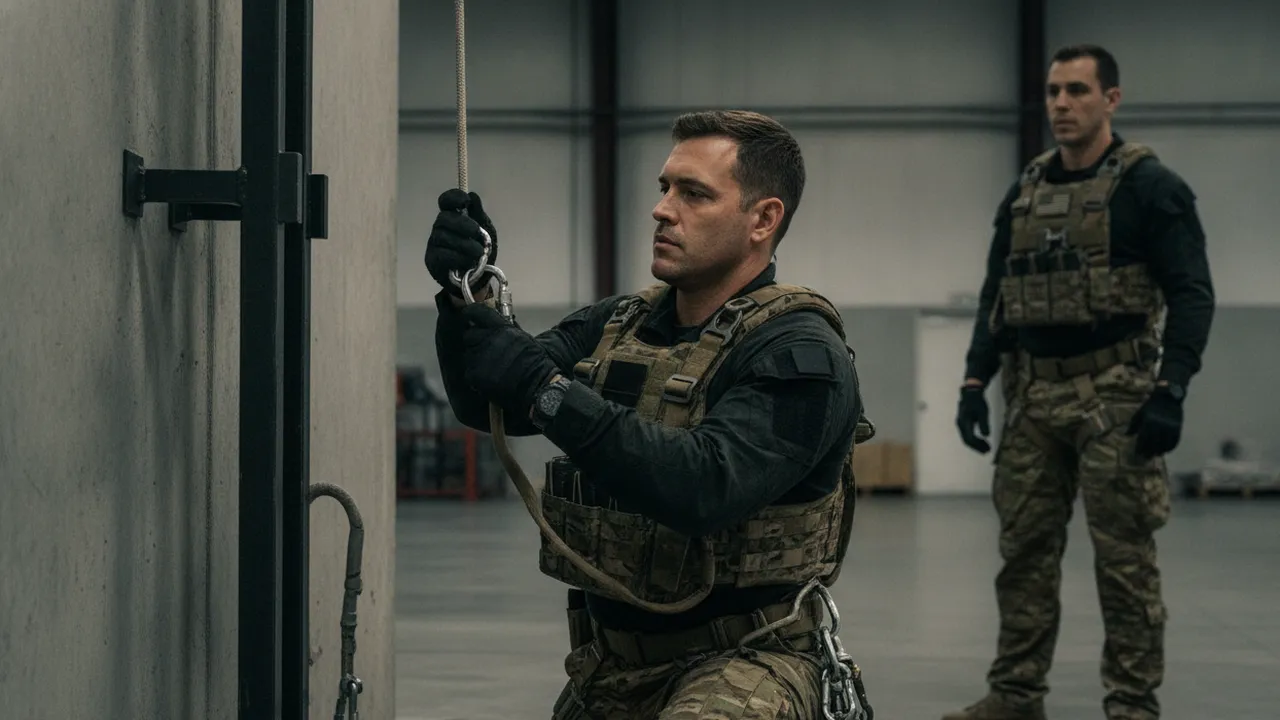
Helmets and gloves belong in the same inventory review because PMI lists both among rope-rescue equipment categories. Specify them by operational role, fit, environmental exposure, and compatibility with communications or other required PPE. Then maintain a separate count for patient-facing interfaces, including the litter or rescue basket, attachment points, securing components, and any equipment required to move the package through the planned route.
For procurement teams, the rated tactical rescue harnesses collection can support product review, but final selection still requires product documentation and procedure-level approval. Record model identifiers, approved use, compatible components, inspection status, and training owner for each interface so the equipment list remains operationally useful.
How do pulleys, lowering devices, and hauling systems work together?
A coordinated rope system turns separate components into a controlled movement path. Pulleys redirect rope and can support mechanical advantage, while lowering devices, ascenders, and friction devices help the team manage movement, capture progress, and maintain control. The correct configuration depends on the rescue plan, anchor arrangement, rope system, equipment instructions, and team training.
For procurement, treat these components as a system rather than a list of interchangeable parts. Pulleys are a recognized rope-rescue equipment category, and ascenders are commonly included in the same inventory. Rigging Lab Academy also places mechanical-advantage devices, descenders, ascenders, and artificial high directionals within the broader rescue equipment plan. See the guidance on rated rescue pulley hardware when building the pulley portion of the inventory.
Match each device to its control function
In a hauling system, pulleys may change rope direction or help create a mechanical-advantage arrangement. The haul team needs a defined capture method so progress is not lost when pulling pauses. Ascenders can support rope progress or positioning where the configuration and manufacturer instructions permit. A descender or friction device manages a lowering line by controlling rope movement through the device. These roles should be documented in the system plan, including the expected load path, anchor points, operator positions, and communication signals.
Control points matter as much as the primary devices. Identify who operates the lowering device, who monitors the haul, who confirms anchor and rope alignment, and who directs movement near the subject or litter. Include edge protection, rope management, and a method for stopping or transferring the load. The inventory should also identify compatible ropes, connectors, and accessory components rather than assuming that similar-looking equipment can be combined safely.
Procure the system, not isolated hardware
For each pulley, ascender, descender, friction device, and mechanical-advantage component, retain the manufacturer, model, intended function, compatibility information, applicable rating evidence, inspection status, and governing procedure. Keep training and scenario documentation with the equipment record so the team can demonstrate that the selected configuration is understood and supportable. A broader fire and rescue equipment inventory can then be organized by operational role instead of by product category alone.
Contact Fusion Tactical about procurement and engineering support.
What should procurement records specify for every item?
A procurement record should let a qualified buyer, user, inspector, and auditor identify what the item is, what role it serves, and what evidence supports its selection. Treat the record as an operational control, not merely a purchase order line. For each entry in a technical rescue equipment list, capture the following fields:
- Manufacturer and model: Record the legal manufacturer name, exact model or part number, revision where applicable, and the supplier of record.
- Unique identification: Assign or retain a serial number, lot number, asset tag, or other traceable identifier. Include quantity, acquisition date, and location when those fields support accountability.
- Intended function: State whether the item supports anchoring, connection, hauling, lowering, access, patient movement, protection, or another defined task. Avoid treating adjacent equipment categories as interchangeable.
- Rating evidence: Link the current manufacturer specification, label record, test documentation, or certificate that supports the required load or performance rating. Do not copy a rating without confirming the exact model and configuration.
- Compatibility: Document approved rope diameters, interfaces, connectors, attachment points, system combinations, and any limitations identified in the instructions. The responsible technical authority should approve the complete load path.
- Standards scope: Identify the applicable standard and the basis for inclusion. FEMA describes listed rope-rescue items as certified compliant with NFPA 1983 requirements of NFPA 2500, but buyers should verify whether that description applies to the specific item and procurement. FEMA also directs users to the Interagency Board standardized list for operating considerations, standards, and training requirements: review the applicable procurement guidance.
- Origin and contract requirements: Record country of origin when the solicitation, funding source, or contract requires it. Fusion Tactical reports U.S.-based production in Chino, California, while Berry Amendment and TAA capabilities remain company-level differentiators that must be verified for each item and contract. See this Berry Amendment procurement context.
- Inspection, storage, and ownership: Log current inspection status, quarantine or release status, storage conditions, assigned custodian, training owner, and the procedure used for review.
- Replacement trigger: Define the event that removes the item from service, such as damage, failed inspection, changed manufacturer guidance, expired documentation, or a system change. Record the decision authority and replacement date.
ISO 9001:2015 should likewise be recorded as an organizational quality-system claim, not as a certification of every product. When the specification is unusual or the evidence package is incomplete, use engineering and testing support to clarify requirements before award.
How should teams inspect, maintain, and retire rescue equipment?
A technical rescue equipment list is only procurement-ready when every item has a usable inspection and disposition process. The responsible technical authority should define the inspection frequency, qualified inspector, acceptance criteria, and record location for each equipment family, then align those controls with manufacturer instructions and applicable standards. Inspection and record keeping should follow those manufacturer recommendations rather than an assumed universal schedule.
Use layered inspections before and after operations
Pre-use checks should confirm identity, condition, configuration, compatibility, and legibility of markings before equipment enters a system. After use, inspect for contamination, abrasion, cuts, deformation, heat or chemical exposure, damaged stitching, gate or mechanism problems, and any event that could have imposed abnormal loading. For life-safety rope and associated products, a complete inspection requires both visual and tactile checks, not visual review alone. A tactile pass can help identify changes in stiffness, diameter, texture, or embedded damage that a quick visual check may miss. See the harness inspection records guidance for a related pre-mission control.
Schedule a documented annual inspection even when an item has no dedicated service-life term. The record should identify the item and manufacturer, model or part number, unique inventory ID, manufacture date when available, inspector, inspection date, findings, corrective action, and next required review. Include storage conditions and cleaning or maintenance completed. A separate equipment inspection and maintenance process can help teams apply the same discipline across adjacent load-bearing equipment.
Quarantine first, then make a documented retirement decision
Remove and clearly quarantine equipment when inspection findings are uncertain, when its history is incomplete, or after suspected damage or abnormal loading. Do not return it to service based on appearance alone. A competent authority should evaluate repair, authorized service, continued use, or destruction against the manufacturer's instructions and the team's governing procedures.
Retirement criteria are product-specific. One cited textile recommendation identifies manufacture age beyond ten years as a retirement reason, but that is not a universal rule for every rescue product. Metal hardware may follow different material and manufacturer-specific directions. Record the decision and reason so the inventory reflects current readiness rather than merely showing that an item once passed inspection.
What training documentation completes the readiness system?
A procurement-ready inventory is only operational when the team can demonstrate who is qualified to use it, which roles are assigned, and how the response will work in the hazards the team actually faces. Training records should connect personnel, equipment, procedures, and practice outcomes rather than sit apart from the technical rescue equipment list.
Record competency by role and equipment function
Maintain current competency records for each role involved in a response, such as team leader, attendant, entry rescuer, rope-system operator, patient packaging lead, and backup personnel. The record should identify the training completed, the practical skills evaluated, the evaluator, the date, and any refresher or remediation requirement. Equipment familiarization should be documented separately from general awareness. A rescuer may understand a procedure yet still need hands-on orientation to a specific harness, connector, rope system, or patient interface.
Training-provider input can also inform equipment decisions. Rope diameter and accessory-cord selection affect handling and system use, so procurement teams should involve the organization responsible for practical instruction before standardizing components. That approach supports compatibility between the equipment, the team's techniques, and the training environment. Training and teamwork remain part of the operating system alongside the gear.
Link drills to hazards, roles, and response plans
Each drill record should identify the scenario, hazards, rescue method, assigned roles, equipment used, communications, time or performance observations, and corrective actions. OSHA's rescue-service evaluation guidance considers training, equipment, and response capability, and says capability should be tailored to specific permit spaces and hazards. See the OSHA rescue-service evaluation guidance when building the documentation set.
Where no rescue occurred during the prior year, OSHA calls for practice rescues at least annually. Record that exercise, but also document more frequent drills when site conditions, personnel, equipment, or procedures change. The resulting record should show whether the team can select, deploy, communicate with, and recover using the equipment assigned to the hazard.
Contact Fusion Tactical about procurement and engineering support
Frequently Asked Questions
What equipment should be carried by a technical rescue team?
Build the inventory around the rescue functions the team must perform. Typical groups include ropes and cordage, anchors and anchor hardware, connectors, pulleys, mechanical-advantage components, lowering and ascending devices, patient transport interfaces, personal protective equipment, rope protection, and storage or transport solutions. The final list should reflect the team's hazards, access methods, patient movement plans, and operating procedures rather than a generic shopping category.
How should a technical rescue equipment list be organized?
Organize it by function and system role, then map each item to its compatible components and required evidence. For example, a hauling system should identify its ropes, pulleys, connectors, progress-capture or control components, anchors, and inspection records together. This structure helps buyers evaluate the complete load path and reduces the risk of purchasing individually acceptable parts that do not form a verified system.
What records should procurement teams keep for each item?
Record the manufacturer, model, unique identifier, intended function, rating evidence, compatibility requirements, applicable standards, origin or sourcing documentation when required, inspection status, storage location, responsible owner, and replacement or quarantine trigger. For covered rope-rescue hardware, compare supplier documentation with applicable requirements, including the FEMA equipment guidance.
How often should rescue equipment be inspected?
Use a documented pre-use, post-use, and annual inspection program, with additional checks after unusual loading, contamination, damage, or other defined events. Visual and tactile checks are important for life-safety rope and associated products. Apply the manufacturer's instructions and applicable standards, and document findings, corrective actions, quarantine decisions, and retirement rationale for each item.
What training records complete the equipment program?
Maintain competency records, role assignments, equipment familiarization, drill evaluations, hazard-specific rescue plans, and corrective actions from exercises. OSHA's rescue-service guidance evaluates training, equipment, and response capability, and says capability should be tailored to the specific spaces and hazards. It also calls for annual practice rescues when no rescue occurred in the prior year. See the OSHA evaluation guidance.
Ready to Build a Procurement-Ready Rescue Package?
A function-organized equipment list is a useful starting point, but the final package should also reflect your team's operating environment, documentation requirements, and engineering needs.
Contact Fusion Tactical USA about procurement and engineering support.


