

NASA Emergency Egress Systems: Procurement Guide
For aerospace procurement teams, NASA emergency egress systems illustrate a central sourcing challenge. The buyer is not acquiring isolated hardware. The acquisition is an integrated escape capability whose design basis, interfaces, test evidence, manufacturing controls, and operating procedures must remain aligned throughout the program.
Discuss your aerospace egress or retention requirement with Fusion Tactical USA.
The emergency egress system for Artemis at Kennedy Space Center provides a useful public example of that systems approach. NASA describes baskets positioned at the 274-foot level of the mobile launcher. In an emergency, personnel enter the baskets and travel down track cables toward a secure perimeter, where armored vehicles support movement away from the launch area. The concept is mechanically direct, but effective delivery depends on far more than the visible baskets and cables. It requires hazard analysis, interface control, verification, training, inspection, and documented readiness.
This distinction matters to program managers and contracting teams. A component may be well made and still be unsuitable for the intended system. Procurement decisions therefore need to connect mission scenarios to requirements, requirements to test methods, and test results to controlled production records. The following framework translates lessons from NASA's public egress architecture into practical questions for aerospace, defense, rescue, and other government programs.
What NASA Emergency Egress Systems Demonstrate
Architecture Begins With the Escape Scenario
An egress architecture should start with a defined hazard and a defined safe destination. NASA's Artemis arrangement provides a route from an elevated work location on the mobile launcher toward a protected area beyond the tower. That route is part of a larger sequence: personnel recognize or receive notice of a hazard, reach the baskets, descend on the track cables, arrive at the terminus, and continue in armored vehicles. Each transition creates requirements and interfaces that must be understood before a supplier can select materials or finalize hardware.
For procurement, the scenario should identify expected users, environmental conditions, access restrictions, required personal equipment, operating states, inspection needs, and the authority responsible for each interface. The purpose is not to prescribe a solution too early. It is to prevent the request for quotation from reducing a complete escape pathway to a list of disconnected parts.
Mechanical Directness Does Not Eliminate Systems Complexity
NASA's public description emphasizes baskets riding track cables, a concept that can operate without depending on a complicated user interface. Direct operation can reduce certain failure paths during an emergency involving power loss, smoke, heat, or disrupted communications. Yet a mechanically direct concept still demands rigorous engineering. Cable routing, basket access, braking behavior, structural interfaces, clearance, capacity, terminus operations, and inspection all contribute to overall performance.
The procurement lesson is to distinguish simple operation from simple qualification. Equipment intended to be intuitive under stress may require substantial analysis, prototyping, and verification to make that operation dependable. Buyers should ask suppliers to explain how design choices reduce user actions and how those choices are supported by test evidence.
Human Use Is a Technical Interface
Emergency equipment interacts with people who may be wearing protective clothing, carrying equipment, working in limited visibility, or moving under urgent direction. Controls, attachment points, openings, and release methods must be evaluated as human interfaces, not merely mechanical features. Training and drills can reveal interference, confusion, or sequencing problems that drawings do not show.
This approach also applies to wearable rescue and retention equipment. A tactical aircrew extraction and rescue harness, for example, must be assessed in relation to the operator, connected hardware, extraction method, and mission procedure. Its suitability cannot be established from one component specification alone.
Translate the Mission Into Procurable Requirements
Build a Hazard-Informed Requirements Baseline
Before soliciting hardware, the program should convert its hazard analysis into measurable requirements. The baseline should define the intended function, prohibited outcomes, system boundaries, environmental exposures, expected operating sequence, maintenance concept, and acceptance evidence. Requirements should be specific enough to verify without directing suppliers toward unsupported assumptions.
The baseline should also identify governing standards and program-specific criteria. NASA publishes technical standards for human spaceflight programs, including NASA-STD-8719.29. Applicability must be determined by the responsible program authority rather than inferred from a product category. Contract documents should state which requirements apply, how compliance will be demonstrated, and who approves deviations.
Control Interfaces Before Freezing Hardware
Many egress problems occur at interfaces. A connector may not align with the intended attachment point. Protective equipment may restrict movement, a release may be difficult to reach, or a component may behave differently after integration. An interface control process should document mechanical, human, environmental, procedural, and organizational boundaries. Changes at one boundary should trigger review of affected requirements and tests.

Early prototypes help teams evaluate these boundaries before production configuration is fixed. Mockups can support reach, access, routing, and sequence reviews. Functional prototypes can then support controlled verification. Fusion Tactical USA's engineering and testing capabilities provide a path for programs that need custom development, prototypes, and documented evaluation of integrated equipment.
Define Evidence at the Same Time as Requirements
A requirement is incomplete if the contract does not identify acceptable proof. Depending on the requirement, evidence may include analysis, inspection, demonstration, or test. The procurement package should state the required configuration, test conditions, instrumentation, acceptance criteria, reporting format, and approval authority. This prevents disputes after a supplier has designed and built the item.
Evidence planning should include negative and off-nominal conditions where appropriate. Programs should evaluate foreseeable misuse, blocked movement, changed interfaces, damaged components, and degraded operating conditions based on the approved hazard analysis. The responsible engineering authority should decide which conditions require direct testing and which may be addressed through other verified methods.
Verify Complete-System Performance
Component Qualification Is Only One Layer
Rated hardware, webbing, stitching, cables, and structural elements are important, but their individual properties do not automatically establish system performance. Loads may be introduced at unexpected angles. Materials may interact differently after assembly. A connector may be strong yet difficult to operate in the intended configuration. Verification must therefore progress from material and component controls to subassembly and complete-system evaluation.
Procurement teams should request a verification matrix that maps every applicable requirement to a method and a record. The matrix should identify the tested configuration and any differences between the test article and production item. If analysis is used, the underlying assumptions should be documented and approved. If similarity is claimed, the supplier should show why the prior evidence applies to the current configuration.
Environmental and Operational Conditions Belong in the Test Plan
Egress and retention equipment may encounter weather, contamination, repeated handling, storage, transportation, and maintenance activity before it is used. The approved test plan should reflect the environmental and operational conditions defined by the program. Tests should not add dramatic conditions without a technical basis, but they also should not evaluate pristine hardware while ignoring the intended service environment.
Operational demonstrations should use representative procedures and interfaces. Where personnel participation is appropriate and approved, evaluators should observe access, sequence, reach, attachment, release, and communication. Results should capture more than pass or fail. They should identify configuration details, observations, anomalies, corrective actions, and retest status.
Configuration Control Protects the Meaning of Test Results
A successful test applies only to the configuration that was evaluated, unless an authorized engineering assessment establishes broader applicability. Changes to materials, suppliers, stitching patterns, hardware geometry, finishes, or assembly methods may affect performance. The supplier's change-control process should identify what changed, why it changed, which requirements may be affected, and what additional evidence is necessary.
Request a technical consultation for custom aerospace safety equipment and verification planning.
This is where disciplined documentation supports both engineering and procurement. A controlled drawing, bill of materials, approved process, inspection record, and test report let the buyer connect delivered hardware to accepted evidence. Without that chain, a passing test can become detached from the production item it was intended to support.
Manufacturing Controls and Supplier Qualification
Traceability Should Match Program Risk
Traceability allows a program to identify the source, lot, process history, inspection status, and configuration of an item. The required depth should be based on contract requirements and program risk. For some equipment, material certifications and lot records may be central. For other items, serialization, process records, or additional inspection evidence may be required. The procurement team should define these expectations before award.
Traceability also supports corrective action. If a nonconformance is discovered, controlled records help determine its scope and identify affected items. Buyers should review how the supplier handles incoming inspection, nonconforming material, corrective action, record retention, and approved substitutions.
Process Discipline Matters for Sewn and Assembled Equipment
For load-bearing textile assemblies, finished performance depends on more than raw material selection. Cutting, routing, stitching, hardware installation, inspection, and handling all affect the delivered configuration. Procurement documents should identify critical characteristics and required process controls without assuming that a familiar-looking construction is adequate.
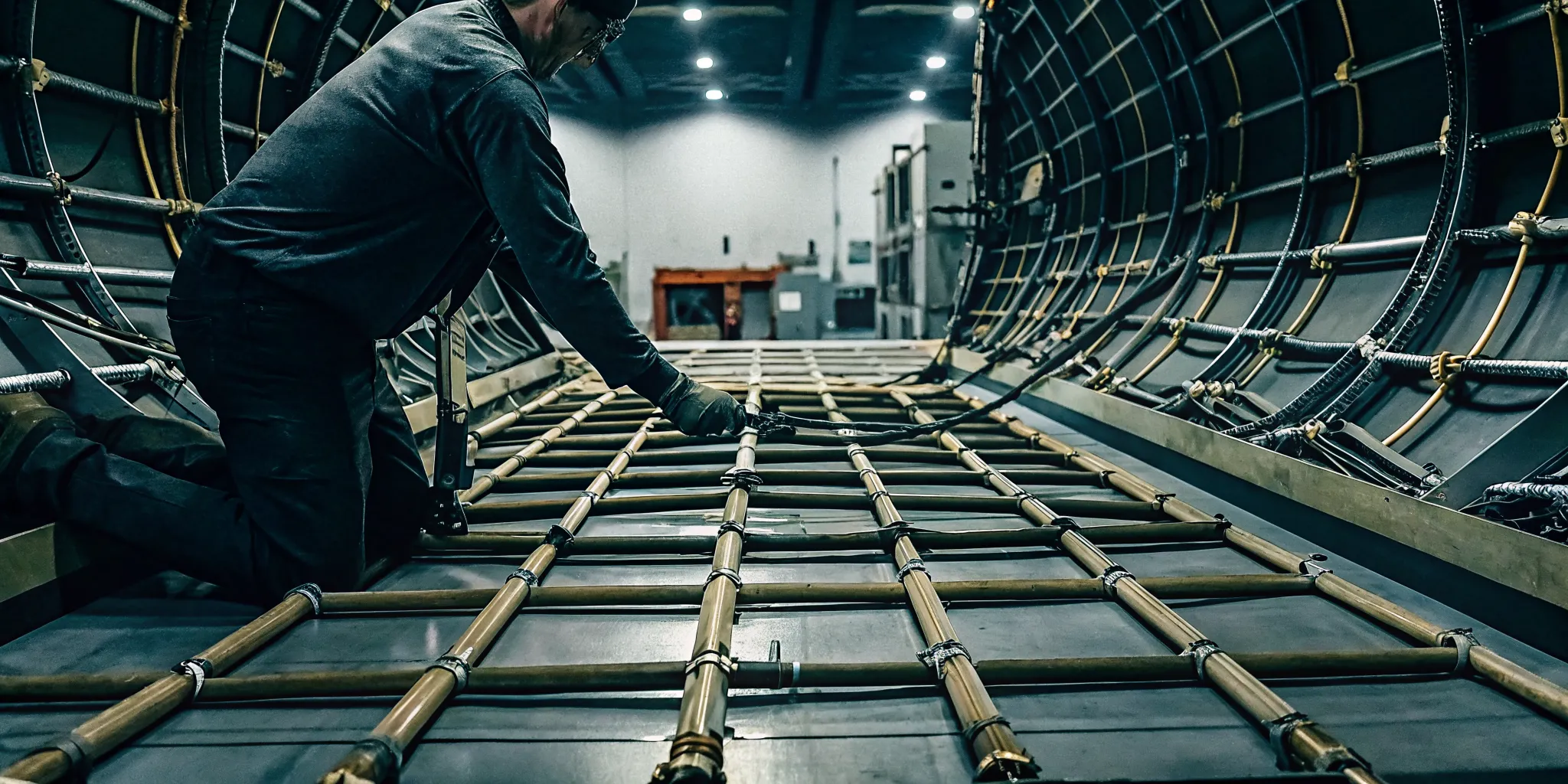
A qualified supplier should be able to explain how work instructions are controlled, how personnel are trained, how inspection results are recorded, and how production changes are reviewed. Fusion Tactical USA describes its role in NASA and aerospace programs and supports customers requiring custom-engineered sewn and hardware-integrated solutions.
Compliance Claims Must Be Contract Specific
Government programs may include domestic sourcing, quality, documentation, and contracting requirements. Buyers should avoid treating broad compliance language as a substitute for item-specific review. The solicitation and resulting contract should identify applicable clauses, required certifications, flow-down obligations, and evidence.
Fusion Tactical USA provides information about its government and defense contracting services and Berry-compliant U.S. manufacturing capabilities. Its published government information includes CAGE Code 0KQN1 and ISO 9001:2015 quality management. Procurement teams should still confirm applicability, item configuration, and contract requirements for each acquisition.
Plan for Readiness After Delivery
Training Is Part of System Verification
An egress system is not ready merely because its hardware has passed acceptance. Personnel must understand when to use it, how to enter or attach, what sequence to follow, and what to do after reaching the next location. Training should use approved procedures and representative interfaces. Drills can expose unclear instructions, access conflicts, or coordination gaps that require engineering review.
NASA's public account of Artemis egress testing shows the value of exercising the complete route and the people who support it. The lesson for other programs is that training outcomes should feed a controlled improvement process. A procedural issue may require a training update, but it may also reveal a design or interface concern.
Inspection Criteria Must Be Usable in the Field
Maintenance plans should state inspection intervals, responsible roles, acceptance criteria, retirement conditions, and record requirements. Instructions should distinguish acceptable wear from conditions requiring removal from service or engineering review. If specialized tools or supplier evaluation are needed, the support plan should make that clear before deployment.
Field records can reveal recurring wear patterns, handling issues, or procedural problems. Programs should define how those observations are reported and assessed. A disciplined feedback loop supports configuration decisions and helps prevent informal repairs or substitutions from undermining verified performance.
Sustainment Requirements Belong in the Original Acquisition
Long-term readiness depends on replacement parts, controlled repairs, technical data, training continuity, and change notification. These needs should be addressed during source selection rather than after hardware enters service. Procurement teams should ask how the supplier will maintain configuration records and communicate changes that could affect installed or stored equipment.
Aerospace and government buyers can review Fusion Tactical USA's broader government client capabilities when assessing manufacturing support, program fit, and contracting readiness.
A Procurement Checklist for Aerospace Egress Equipment
Evidence Matrix for Source Selection
| Area | Evidence |
|---|---|
| Mission | Hazard analysis and interface records |
| Verification | Requirements matrix and test reports |
| Production | Controlled drawings and traceability |
| Sustainment | Inspection criteria and training plan |
Questions for the Solicitation and Technical Review
- What hazard scenario, users, operating sequence, and safe destination define the system?
- Which standards, contract clauses, and program requirements apply?
- What mechanical, human, environmental, and procedural interfaces require control?
- How will each requirement be verified, and what constitutes acceptable evidence?
- Which configuration will be tested, and how will production remain aligned with it?
- What traceability, inspection, nonconformance, and change-control records are required?
- How will training, drills, field inspection, repairs, and sustainment be managed?
The strongest solicitation creates a common technical language for the buyer, engineering authority, operator, quality team, and supplier. It gives bidders enough context to identify risks and propose evidence, while preserving clear approval authority. That structure improves source selection and reduces the chance that important system assumptions remain hidden until integration.
Frequently Asked Questions
What is the purpose of NASA's Artemis emergency egress system?
It provides personnel at the mobile launcher with a route away from the tower during an emergency. NASA describes baskets that travel on track cables from the 274-foot level toward a secure perimeter, followed by movement in armored vehicles.
Why is complete-system verification necessary for egress equipment?
Individual components interact with users, attachment points, structures, procedures, and environmental conditions. Complete-system verification evaluates whether those interfaces support the intended escape sequence and requirements.
What evidence should aerospace procurement teams request?
Evidence should be defined by the approved requirements and may include controlled drawings, material and process records, inspection results, analyses, demonstrations, test reports, configuration records, and corrective-action documentation.
How should a buyer qualify an aerospace safety equipment supplier?
The buyer should evaluate relevant engineering experience, manufacturing controls, traceability, inspection, change management, verification capability, contract compliance, and sustainment support against the specific acquisition requirements.
Engage a U.S. Aerospace Manufacturing Partner
Lessons from NASA emergency egress systems point to a disciplined acquisition model. Define the escape scenario, control interfaces, establish evidence before award, verify the integrated configuration, and preserve readiness through documented production and sustainment. Fusion Tactical USA supports aerospace, defense, and government teams with custom engineering, controlled manufacturing, testing, and contracting capabilities for specialized safety and retention equipment.
Contact Fusion Tactical USA to review your program requirements and procurement timeline.


