

Custom Tactical Gear Manufacturing for Programs
Custom tactical gear manufacturing gives defense, aerospace, law enforcement, and government program teams a controlled path from an operational requirement to validated, producible equipment. Rather than adapting an unsuitable commercial item, stakeholders can define interfaces, load criteria, materials, compliance obligations, and acceptance evidence before production. Fusion Tactical USA supports that process from its Chino, California facility with in-house engineering, design, 3D modeling, prototype testing, load testing, and manufacturing.
Discuss your program requirements with Fusion Tactical USA.
The value of a qualified manufacturing partner is not speed at the expense of control. It is the ability to manage technical decisions, procurement constraints, and production risk within one accountable workflow. For mission-critical safety systems and load-bearing equipment, each revision must be traceable to a requirement, test observation, or approved design decision.
Why do urgent programs need an integrated manufacturing partner?
Urgent programs require a partner that can connect technical intake, engineering decisions, prototype evidence, compliance review, and production planning without losing control between handoffs. An integrated manufacturer helps program managers expose risks earlier, maintain configuration discipline, and create a defensible path from operational need to accepted equipment.
Fragmented development introduces predictable program risk. A design office may specify a component that is difficult to sew consistently, while a contract manufacturer may substitute materials without understanding the intended load path. When engineering, prototyping, testing, and manufacturing operate together, stakeholders can resolve those conflicts before they affect acceptance or field use.
Integration also improves governance when requirements change. Program managers can route a proposed revision through engineering impact review, sourcing review, test planning, and production assessment before granting approval. That process makes the consequences visible across compliance, schedule, and performance without assuming that one discipline can evaluate the entire change alone. The result is a clearer decision record for contracting officers, technical representatives, quality personnel, and end-user stakeholders.
Convert the mission need into measurable requirements
A disciplined intake begins with the use case, user population, attachment interfaces, environmental exposure, required service life, applicable standards, and test expectations. Procurement teams should also identify contract clauses, documentation requirements, quantity assumptions, and approval authorities. Fusion Tactical USA's custom equipment development capabilities provide a starting point for requirements that cannot be met by an existing configuration.
The resulting baseline should distinguish mandatory acceptance criteria from preferences. That distinction helps engineering teams manage tradeoffs without compromising the program's essential outcome. It also gives reviewers a consistent basis for evaluating each prototype revision.
Control procurement and supply risk early
For government requirements, sourcing and compliance cannot be deferred until production. Berry Amendment and Trade Agreements Act obligations may affect material selection, component origin, and supplier qualification. Fusion Tactical USA maintains Berry and TAA capabilities, and its government and defense contracting support helps buyers surface those obligations during planning.
CAGE Code 0KQN1 identifies Fusion Tactical USA within government procurement workflows. The code supports vendor identification, but program teams should still validate the clauses, records, and product-specific evidence required by their solicitation or contract.
How does custom tactical gear manufacturing move from concept to production?
A controlled development cycle translates operational requirements into a design baseline, evaluates that baseline through prototypes and testing, and releases only an approved configuration to production. Decision gates, documented feedback, and revision control keep the program aligned while allowing engineers to correct fit, interface, material, or load-path issues.
The process is iterative by design. A prototype is not a promise that a concept is complete; it is a tool for finding uncertainty before larger commitments are made. Effective program governance defines what each build must answer and who has authority to approve the next stage.
- Technical intake: Document the mission profile, users, interfaces, hazards, load criteria, compliance requirements, quantities, and required evidence.
- Design baseline: Convert the intake into drawings, specifications, bills of material, and measurable acceptance criteria.
- 3D modeling and design review: Evaluate geometry, hardware integration, manufacturability, and likely stress concentration before physical fabrication.
- Prototype fabrication: Build a controlled sample that represents the intended materials, construction methods, and critical interfaces.
- Evaluation and load testing: Inspect fit and function, apply defined loads where required, capture observations, and identify corrective actions.
- Revision approval: Update controlled documents and obtain stakeholder authorization before release.
- Production and acceptance: Manufacture against the approved configuration and retain the records required by the program.
Use engineering evidence to govern revisions
Engineering decisions should be connected to objective evidence. Field-user observations can identify mobility or access issues, while dimensional inspection and load testing can reveal whether a change affects performance. Fusion Tactical USA's engineering and testing resources support this evidence-based development loop.
Load testing is especially important for rated hardware and load-bearing assemblies. The test plan should identify the configuration, fixture, force direction, loading protocol, pass criteria, and required records. A result without those controls may not support a procurement decision.
Release a producible configuration
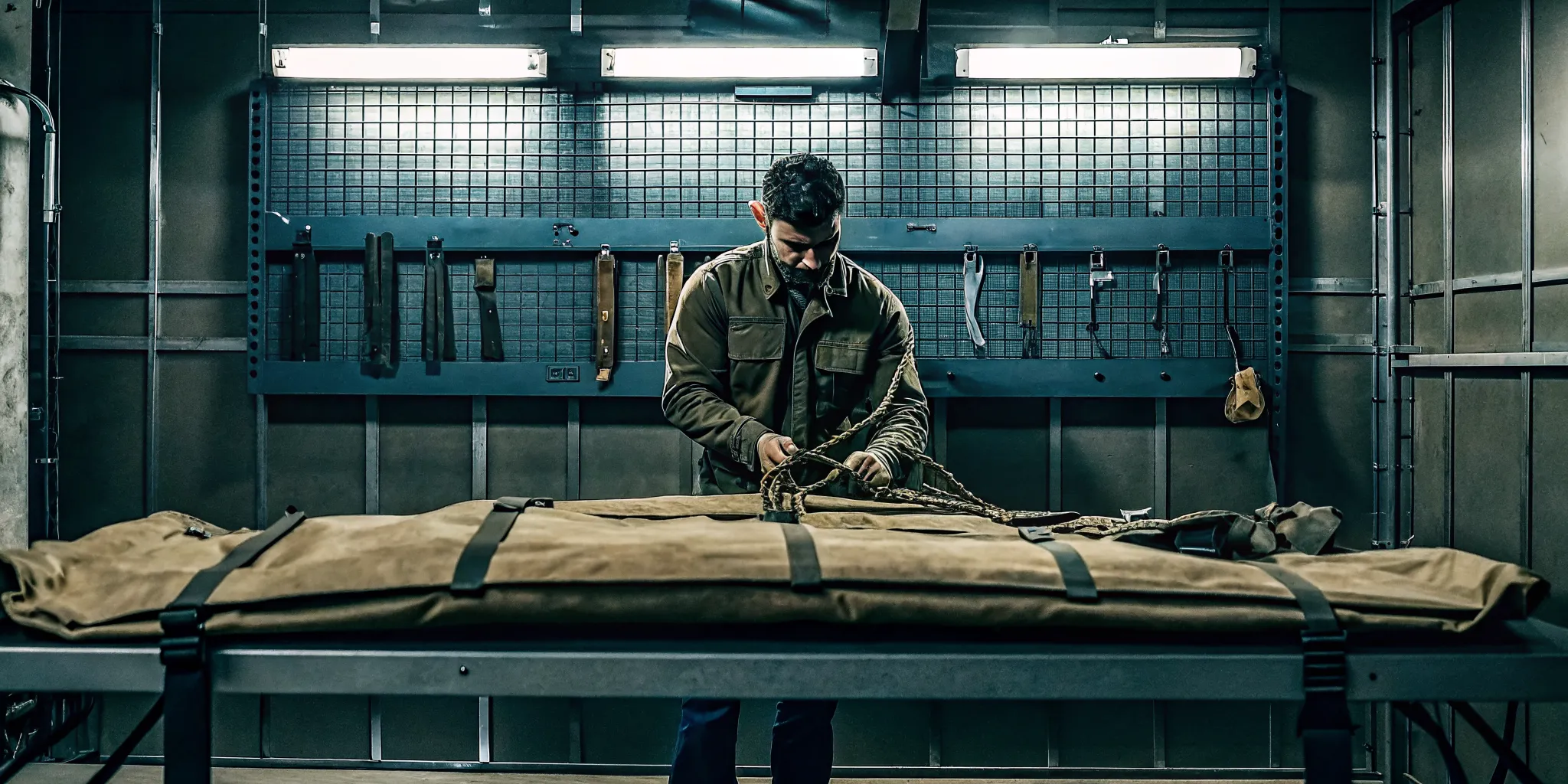
A successful prototype can still fail as a production program if its construction method is not repeatable. Production readiness review should confirm drawings, work instructions, approved materials, inspection points, test obligations, and change-control authority. Fusion Tactical USA's professional manufacturing operations connect engineering intent to controlled fabrication at the Chino facility.
Release documentation should identify the exact revision that passed review and any conditions attached to approval. The manufacturing team then needs unambiguous instructions for critical dimensions, stitch patterns, hardware orientation, labeling, inspection frequency, and record retention. If production identifies a manufacturability issue, the proposed correction should return through the designated change process rather than becoming an undocumented shop-floor variation. This discipline protects the technical baseline throughout the production run.
Engineering controls for mission-critical equipment
Mission-critical equipment requires controls that make performance requirements visible throughout development and production. Clear load paths, approved materials, defined inspections, documented tests, and controlled revisions allow program teams to evaluate risk with evidence rather than assumptions. These controls are particularly important when equipment supports personnel or operates in demanding environments.
Define load paths and acceptance criteria
Load-bearing equipment must transfer force through webbing, stitching, hardware, and attachment interfaces as an integrated system. Engineers need to understand where loads enter, how they travel, and where stress concentrations may occur. Acceptance criteria should reflect the intended use and applicable requirement, not an unrelated benchmark.
Testing should answer a defined engineering question. Depending on the program, that may involve a component pull test, an assembly evaluation, or comparison between revisions. The objective is not to claim that every test represents every operating condition. It is to reduce a specific uncertainty and document the result.
Manage materials and configuration records
Material controls support both technical performance and procurement compliance. Approved material specifications, supplier records, substitution rules, and revision histories help prevent an apparently minor change from altering the accepted configuration. Buyers evaluating domestic sourcing can review Fusion Tactical USA's Berry-compliant U.S. manufacturing capabilities.
Fusion Tactical USA operates under ISO 9001:2015, providing a quality-management framework for documented processes and continuous control. ISO certification does not replace product-specific acceptance criteria, but it gives program managers a structured basis for evaluating how requirements, records, nonconformities, and corrective actions are managed.
Request an engineering consultation for a mission-specific requirement.
Domestic manufacturing and program control
Domestic manufacturing improves visibility across engineering, sourcing, fabrication, inspection, and change control. For programs with Berry Amendment or TAA requirements, it can also simplify the evaluation of eligible sources and supporting records. The principal advantage is accountable coordination, not an unsupported promise of a particular schedule or outcome.
Fusion Tactical USA conducts its work from Chino, California, allowing engineering and manufacturing teams to coordinate directly. That proximity supports design-for-manufacture review, faster clarification of technical questions, and direct evaluation of prototype observations. Learn more about the company's U.S. manufacturing background and mission.
Program teams should still evaluate domestic capacity against the actual requirement. Relevant questions include whether critical processes are performed in-house, which operations depend on qualified suppliers, how long-lead materials are managed, and how source changes are approved. A domestic address alone does not establish compliance or production readiness. Transparent process ownership and configuration-specific records give procurement teams a stronger basis for evaluating supply continuity.
Compare integrated domestic development with fragmented sourcing
| Program consideration | Integrated domestic development | Fragmented or distant sourcing |
|---|---|---|
| Requirements interpretation | Engineering and production can review the same controlled baseline | Intent may be reinterpreted across separate suppliers |
| Prototype feedback | Observations can be routed directly into revision control | Feedback may require multiple contractual handoffs |
| Material compliance | Origin and substitutions can be reviewed during development | Source visibility may depend on several supplier tiers |
| Testing coordination | Test configuration can be linked to the current design revision | Test articles and released drawings may diverge |
| Change authority | Program roles can be defined within one coordinated workflow | Responsibility may be unclear across organizations |
Domestic capability is also relevant to specialized aerospace development. Fusion Tactical USA's NASA program participation demonstrates experience contributing to a demanding aerospace context. It should be considered alongside the specific engineering, compliance, and acceptance needs of each new program.
Procurement controls that protect the program
Procurement controls align the product configuration, contractual obligations, and required evidence before an award or production release. Program managers should verify applicable sourcing clauses, quality-system expectations, test records, inspection criteria, change procedures, and vendor identifiers. A capable supplier should explain what it can document without overstating product-specific compliance.
Verify requirements at the product and contract level
Berry Amendment and TAA capabilities are valuable, but applicability depends on the contract, item, and source configuration. Buyers should identify required clauses and request evidence appropriate to the procurement. A broad capability statement should not be treated as proof that every possible product configuration satisfies every acquisition requirement.
The same discipline applies to standards and load ratings. Program teams should define which requirements apply, which party will perform verification, and what constitutes acceptable evidence. A clear acceptance package reduces ambiguity at delivery and gives technical reviewers a defensible record.
Establish configuration and change authority
Every program should identify the approved configuration and the people authorized to change it. A substitution that appears equivalent may affect load performance, fit, origin compliance, or inspection methods. Written change control helps protect both the buyer and manufacturer from unintended deviations.
The government tactical gear supplier overview provides additional context for procurement teams evaluating vendor readiness. Program managers should combine that background with solicitation-specific due diligence.
How should program managers evaluate a manufacturing partner?
Program managers should evaluate a manufacturing partner through evidence of relevant engineering capability, controlled production, quality management, compliance readiness, and candid communication. The strongest partner is not the one making the broadest claims. It is the one that can define assumptions, identify risks, document decisions, and explain how acceptance evidence will be produced.
Ask questions that expose execution risk
- Who owns technical intake, design review, and configuration approval?
- Can engineering, 3D modeling, prototype fabrication, testing, and production be coordinated in-house?
- How are material substitutions and design revisions reviewed and documented?
- What test capabilities are available, and how are fixtures, samples, results, and revisions identified?
- How does the quality system manage nonconformities and corrective actions?
- What Berry Amendment or TAA documentation can be provided for the proposed configuration?
- Which acceptance records will accompany the delivered equipment?
Fusion Tactical USA combines in-house engineering and manufacturing with ISO 9001:2015 quality management, CAGE Code 0KQN1, Berry and TAA capabilities, and experience supporting specialized programs. Its federal program support capabilities can help stakeholders frame a productive technical and procurement review.
A useful evaluation also tests the supplier's willingness to define limits. Responsible technical teams separate confirmed capability from assumptions that require validation. They explain which evidence exists, which testing must be planned, and which compliance conclusions depend on the final configuration. That candor allows the program manager to assign risk deliberately and avoid treating marketing language as an engineering or contracting commitment.
Plan the next custom tactical equipment program
A successful custom equipment program begins with a shared definition of the mission, measurable requirements, applicable procurement controls, and the evidence needed for acceptance. Fusion Tactical USA provides a coordinated path through in-house engineering, design, 3D modeling, prototype testing, load testing, and controlled manufacturing from its Chino, California facility.
Before engagement, assemble available drawings, reference equipment, interface details, known failure modes, required standards, sourcing clauses, expected quantities, and stakeholder approval roles. Even when some inputs remain uncertain, identifying those uncertainties helps engineering teams build an appropriate evaluation plan instead of embedding assumptions in the design.
Contact Fusion Tactical USA to begin a controlled technical intake.
Frequently asked questions
What information should a program provide before custom development begins?
A useful technical intake package defines the operational use case, user population, interfaces, environmental exposure, required load ratings, applicable standards, quantities, delivery priorities, and documentation requirements. Existing drawings, reference samples, and known failure modes also help engineering teams establish a controlled baseline.
How does Fusion Tactical USA support Berry Amendment and TAA requirements?
Fusion Tactical USA can support Berry Amendment and TAA-aligned programs through domestic manufacturing capabilities, sourcing review, and procurement documentation appropriate to the requirement. Applicability depends on the contract and product, so buyers should identify required clauses during technical intake and confirm compliance for the specific configuration.
Why does load testing matter for custom tactical equipment?
Load testing provides objective evidence about how a component or assembly responds under defined force conditions. It helps engineering teams validate load paths, identify weak interfaces, compare revisions, and document whether the final configuration satisfies the program's stated performance criteria.
Can Fusion Tactical USA support aerospace and specialized government programs?
Fusion Tactical USA supports defense, aerospace, law enforcement, government, and industrial programs with in-house engineering, design, 3D modeling, prototype testing, load testing, and controlled manufacturing. Its NASA program participation demonstrates experience contributing to specialized aerospace work, while each new requirement remains subject to technical review.


