

Fall Protection Manufacturer USA: Compliance & Sourcing
For government buyers, fall protection is not only an equipment decision. It is a sourcing decision involving enforceable worker-protection requirements, technical documentation, domestic manufacturing, and contract eligibility. A supplier may offer compliant harnesses or lanyards, yet still create procurement risk if its origin, quality system, or federal registration cannot be verified.
A qualified fall protection manufacturer USA should support equipment designed to applicable ANSI Z359 and OSHA requirements. Backed by controlled U.S. manufacturing and procurement credentials such as Berry Amendment and TAA compliance. Fusion Tactical is a vertically integrated manufacturer in Chino, California, established in 2000, with ISO 9001:2015 certification and CAGE Code 0KQN1.
That combination gives procurement teams a clearer basis for evaluating reliability, traceability, and contract fit. It also makes the manufacturing location more than a marketing detail. For buyers responsible for mission-critical programs, U.S. production can affect responsiveness, customization, and confidence in the supply chain.
How a Fall Protection Manufacturer USA Supports Government Sourcing
In short: For government and defense buyers, a U.S. manufacturer provides closer control over materials, production, documentation, and fulfillment. Vertical integration and U.S.-sited production give procurement teams a clearer path to evaluate traceability and program-specific support.
Fusion Tactical USA operates as a vertically integrated manufacturer in Chino, California, and has been established since 2000. Its facility produces harnesses, lanyards, and load-bearing hardware for government, defense, aerospace, law enforcement, and industrial buyers. That operating model matters when the equipment is part of a life-safety program, because the buyer is not evaluating a product in isolation. The buyer is also evaluating how consistently it can be produced, documented, configured, and supported over the life of a contract.
Control and traceability at the point of manufacture
Vertical integration can reduce the number of handoffs between design, fabrication, inspection, and delivery. For a procurement team, fewer handoffs make it easier to establish who is responsible for specifications, revisions, quality records, and production questions. This is especially important for made-to-order or custom program requests, where an equipment configuration may need to match an agency's operational requirements rather than a generic catalog listing.
A U.S. manufacturing location also gives buyers a practical point of contact for technical clarification and program coordination. It does not replace the need to review test records, specifications, and contract terms, but it can make those reviews more direct. Buyers assessing a supplier should ask how the manufacturer controls materials, identifies production changes, maintains records, and supports repeat orders. Fusion's U.S. manufacturing model is discussed further in this fall protection manufacturer overview.
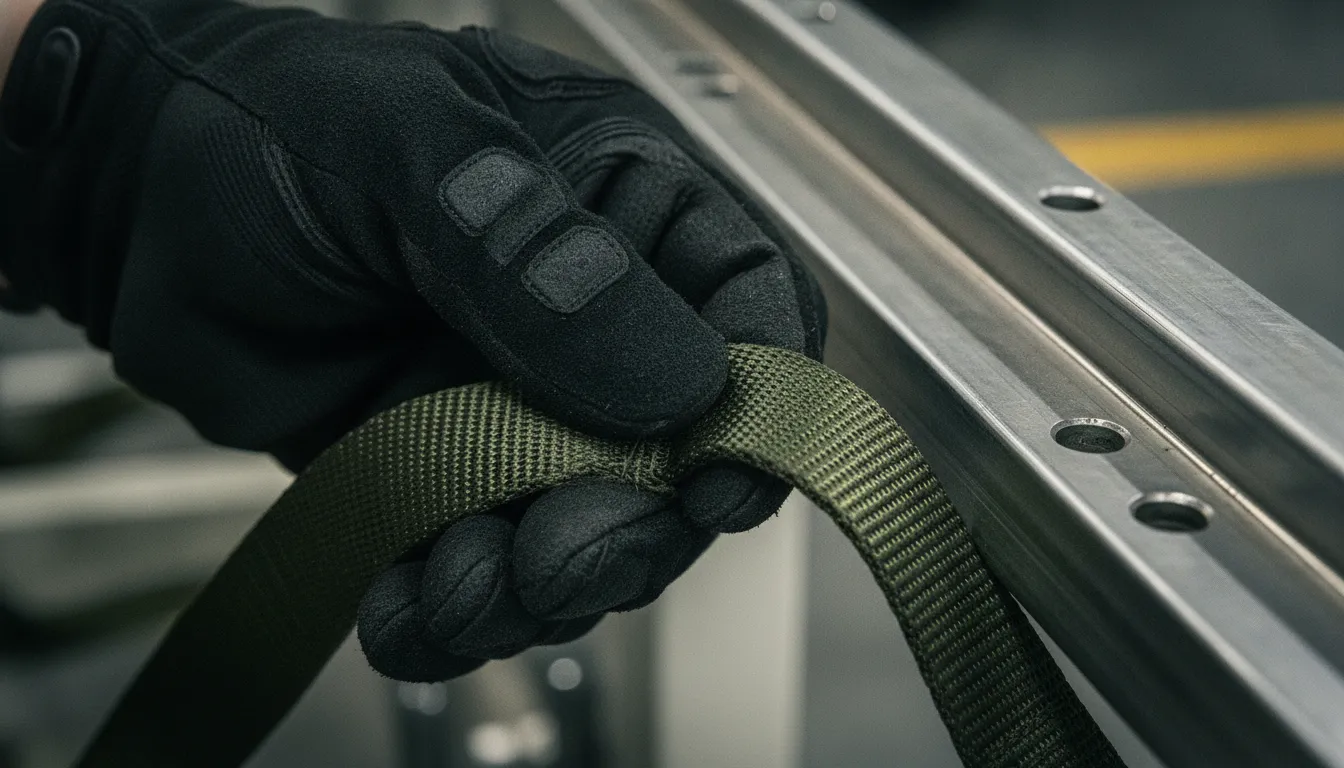
Supply-chain certainty for government and defense programs
Domestic production can also strengthen supply-chain planning. Government buyers may need to account for domestic sourcing preferences, contract-specific country-of-origin rules, lead times, and continuity of supply. Fusion Tactical USA is identified as Berry Amendment and TAA compliant, positioning its U.S.-based production for programs where sourcing eligibility is a material procurement consideration. Buyers should still verify the applicable clause and product scope for each solicitation, but supplier location and documented compliance are meaningful screening factors.
Large global suppliers such as 3M and MSA offer broad product portfolios and significant market presence. Their scale can be appropriate for standardized, high-volume requirements. The differentiation for a vertically integrated U.S. small-business manufacturer is closer alignment between the buyer, the engineering team, and the production facility. For specialized fall-protection programs, that relationship can support clearer communication, more responsive configuration work, and a procurement record grounded in U.S. manufacturing rather than a purely distribution-led model.
What ANSI Z359 and OSHA Standards a Qualified Manufacturer Must Meet
In short: A qualified manufacturer designs equipment to ANSI Z359 consensus standards and OSHA requirements, with documented quality control and testing. The key references include 29 CFR 1926.501 and 29 CFR 1910.
ANSI Z359 is the national voluntary consensus standard family used for fall protection equipment and connected systems, including harnesses, lanyards, self-retracting lifelines, anchors, and related components. Its value to procurement teams is that it establishes a common technical language for design, performance, testing, labeling, and use. A manufacturer that references ANSI Z359 should identify which parts of the standard apply to the product and retain documentation supporting those representations.
OSHA requirements serve a different function. OSHA 1926.501 addresses fall protection in construction, while 29 CFR 1910 establishes general industry requirements. These are enforceable federal workplace rules, not voluntary product labels. Equipment must therefore support the employer's duty to provide a compliant protection system in the intended application. Procurement review should connect the selected product to the work environment, anchorage arrangement. User population, inspection program, and training requirements instead of evaluating a harness or lanyard in isolation.
What quality systems add to standards compliance
Product-level conformance is stronger when it sits inside a documented quality system. ISO 9001:2015 indicates that the manufacturer has formal processes for managing design, production, corrective action, and continual improvement. It does not replace product testing or establish that every configuration is suitable for every application, but it gives buyers a framework for evaluating consistency and traceability.
Testing capability is another meaningful procurement signal. FallTech, for example, identifies an ISO 17025-accredited test laboratory and testing to ANSI, CSA, and OSHA requirements. The broader lesson is not to select a supplier based on an accreditation reference alone. Ask which products and configurations were tested, what methods were used, how test records are controlled, and whether the documentation corresponds to the delivered configuration.
Fusion Tactical's stated compliance profile includes ISO 9001:2015 certification and products designed to meet applicable ANSI Z359, OSHA, and MIL-STD specifications. Its CAGE Code 0KQN1, Berry Amendment and TAA positioning, and made-to-order manufacturing capability add procurement context for federal and defense buyers. Buyers evaluating a fall protection manufacturer should treat these credentials as part of a verification package that also includes product specifications, test evidence, production controls, and application-specific engineering support.
This section addresses how a manufacturer demonstrates standards, quality, and procurement readiness. It is intentionally different from the existing OSHA harness buyer guide, which focuses on selecting a compliant harness for a use case. The two resources can work together: use the buyer guide for equipment-selection questions. Then use manufacturer qualification criteria to assess whether the supplier can support the program over its full lifecycle.
How Does a Government Buyer Verify U.S. Manufacturing and Compliance?
A government buyer should verify a fall protection manufacturer USA claim through independent records, not marketing language alone. Start with the supplier's federal registration and CAGE record, then confirm certifications, domestic sourcing documentation, quality records, and facility capability before award.
Fusion Tactical provides a practical verification trail: CAGE Code 0KQN1, ISO 9001:2015 certification, Berry Amendment and TAA compliance, documented testing, and a U.S.-based manufacturing operation in Chino, California.
1. Confirm the supplier's federal identity
Search the contractor's legal identity and CAGE Code in the System for Award Management at SAM.gov. Fusion Tactical's CAGE Code is 0KQN1. Match the record against the quotation, entity name, address, and contracting documents. This basic check helps ensure that the business responding to the solicitation is the same entity represented in federal procurement systems.
2. Validate certifications and standards claims
Request the current ISO 9001:2015 certificate and review its issuing body, certificate scope, covered facility, effective dates, and any exclusions. The scope should make sense for the products and manufacturing activities included in the solicitation. Also request the manufacturer's compliance matrix showing how the proposed harnesses, lanyards, hardware, and related systems address applicable ANSI Z359, OSHA, and MIL-STD specifications. A standard reference by itself is not equivalent to product-specific evidence.
3. Review Berry and TAA documentation
For covered DoD textile and equipment purchases, request a written Berry Amendment sourcing statement that identifies where relevant materials and finished goods originate. For contracts subject to the Trade Agreements Act, ask the supplier to document the applicable country-of-origin basis and maintain supporting supplier records. Fusion Tactical is Berry Amendment and TAA compliant. Buyers can also review its Berry compliant gear information as part of the sourcing review.
4. Examine quality, testing, and facility evidence
Ask for inspection and test records tied to the proposed part numbers, including material traceability, proof-load or strength testing where applicable, nonconformance handling, and final inspection records. Then verify that the supplier can actually perform the stated work. A facility tour, live video walkthrough, photographs of production areas, or an on-site audit can confirm equipment, assembly processes, quality controls, and inventory practices. For custom programs, Fusion Tactical reports rapid prototyping in 3 to 5 days, which can support an evaluation of engineering responsiveness without replacing formal qualification.
Finally, confirm socioeconomic and contracting details required by the solicitation. Fusion Tactical's Small Business Certification is #2011930, and its broad NAICS coverage may support different procurement structures. For a deeper review of capabilities, documentation, and program fit, see the company's government contracting services.
Berry Amendment and TAA: Why They Matter in Federal Sourcing
In short: The Berry Amendment directs the Department of Defense to prioritize domestic sources for specified textile and equipment purchases. The Trade Agreements Act adds country-of-origin rules that apply to many federal contracts. A U.S.-sited manufacturer with documented compliance gives procurement teams a stronger starting point.
These requirements matter because federal sourcing is not based solely on whether a product meets a performance specification. The acquisition team may also need to confirm where qualifying materials and products originate. Whether the supplier fits the contract's country-of-origin rules, and whether the manufacturer can support the required documentation. A product that performs well but fails a domestic-preference or sourcing requirement can create award, fulfillment, or audit risk.
What the Berry Amendment means for life-safety equipment
For covered Department of Defense purchases, the Berry Amendment gives preference to U.S.-domestic sources for specified textile and equipment categories. That makes the manufacturing location and supply chain relevant procurement factors, not simply marketing claims. Buyers should review the solicitation, applicable Federal Acquisition Regulation or Defense Federal Acquisition Regulation Supplement provisions. And the product's material and manufacturing documentation before treating an item as Berry compliant.
Domestic production can also improve communication during technical review. When a program requires a particular webbing, hardware configuration, load rating, or made-to-order assembly. A manufacturer operating its own U.S. production capability may be better positioned to answer questions about materials, processes, and change control. Fusion Tactical USA manufactures in Chino, California and supports government, defense, aerospace, law enforcement, and industrial buyers.
How TAA compliance affects federal contracts
TAA compliance concerns the origin of products supplied under many federal contracts. The applicable contract language determines which countries qualify and what documentation is needed. A U.S.-sited manufacturer is inherently positioned to meet TAA sourcing requirements, but procurement teams should still verify the specific product. Component origins, and contract terms rather than relying on a general country-of-origin statement.
Fusion Tactical USA identifies itself as Berry Amendment and TAA compliant. Its compliance profile also includes ISO 9001:2015 certification, alignment with ANSI Z359, OSHA, and MIL-STD specifications, CAGE Code 0KQN1, Small Business Certification #2011930, and broad NAICS coverage. These details help buyers connect a product inquiry to the relevant federal sourcing and qualification review.
For a closer look at domestic production and sourcing positioning, review Fusion Tactical's Berry compliant gear. Procurement teams should then match the manufacturer's stated capabilities to the solicitation, required representations, and the exact equipment being evaluated.
Comparing a Vertically Integrated U.S. Manufacturer vs. Global Suppliers
In short: A large global supplier offers broad catalog depth and distribution, while a vertically integrated U.S. manufacturer provides closer production control and direct program-specific engineering.
Fusion Tactical USA represents the vertically integrated U.S. manufacturer model. Based in Chino, California, and established in 2000, Fusion produces harnesses, lanyards, and load-bearing hardware within a U.S.-based operation. That structure can matter when a procurement team needs more than an off-the-shelf item. It creates a direct connection between the buyer, engineering team, and production function.
| Evaluation dimension | Vertically integrated U.S. manufacturer | Large global supplier |
|---|---|---|
| Production location and control | U.S.-sited production with closer visibility into manufacturing decisions, materials, and workflow. | May combine global manufacturing, sourcing, distribution, and regional operations across a larger network. |
| Product customization | Often better suited to made-to-order requirements, configuration changes, and application-specific engineering. | Strong catalog breadth, but custom requests may need to move through standardized product and support channels. |
| Prototype and iteration | Fusion cites rapid prototyping of custom program requests in 3 to 5 days, supporting early design validation. | Established systems can support scale, but program-specific iteration may involve more formal handoffs. |
| Government sourcing review | U.S. manufacturing and direct supplier communication can simplify origin and capability discussions. | Requires careful review of the applicable manufacturing, sourcing, and fulfillment structure for the contract. |
| Supply-chain responsiveness | Shorter organizational distance can make it easier to surface constraints and coordinate engineering or production changes. | Scale and distribution reach can be advantages, particularly for standardized, high-volume replenishment. |
The global supplier model is not inherently unsuitable. Companies such as 3M, MSA, and FallTech can offer recognized brands, broad product portfolios, and extensive distribution infrastructure. Those advantages may fit agencies purchasing standardized equipment across many locations.
The U.S. SMB model becomes more compelling when the requirement involves a specialized configuration, a constrained deployment environment, or a program that needs rapid feedback from the manufacturer. A procurement team should ask who controls production, where critical work occurs, how changes are approved, and how quickly a supplier can move from requirement to prototype. Those answers reveal whether the supplier is merely distributing a product or actively engineering a solution around the mission.
Frequently Asked Questions
What standards should a U.S. fall protection manufacturer support?
Look for a documented quality system and equipment designed to applicable ANSI Z359 and OSHA requirements. For government programs, the manufacturer should also identify relevant MIL-STD specifications, testing documentation, traceability, and the quality controls used for harnesses, lanyards, and connected components.
What is the difference between ANSI Z359 and OSHA requirements?
ANSI Z359 is a voluntary consensus standard that provides technical criteria for fall protection equipment and systems. OSHA requirements are enforceable federal workplace rules, including construction requirements under 29 CFR 1926.501 and general industry requirements under 29 CFR 1910. Equipment selection should account for both.
Why does Berry Amendment compliance matter to government buyers?
The Berry Amendment directs the Department of Defense to prioritize domestic sources for specified textile, clothing, and equipment purchases. Buyers should confirm that the product and its relevant materials satisfy the solicitation's domestic-source requirements, rather than assuming that a U.S. sales office establishes compliance.
How can procurement officers verify TAA compliance?
Review the manufacturer's country-of-origin documentation, supply-chain controls, and contract-specific representations. TAA eligibility depends on the applicable federal contract and sourcing rules. Ask for written confirmation tied to the exact product, components, and solicitation, then retain that documentation with the procurement record.
What should buyers verify before selecting a U.S.-based manufacturer?
Verify the legal manufacturing location, quality certifications, applicable standards, test and inspection records, CAGE Code, and ability to support custom program requirements. Fusion Tactical is based in Chino, California, holds CAGE Code 0KQN1, and reports ISO 9001:2015 certification, Berry and TAA compliance, and ANSI Z359 and OSHA alignment.
Ready to Request a Quote?
Government buyers need fall protection equipment that aligns with applicable standards and sourcing requirements. A focused review can help your agency or program identify the right U.S.-manufactured solution for its operational and procurement needs.
To request a quote for ANSI Z359 and OSHA compliant fall protection equipment, contact Fusion Tactical through the request form. You can also call (909) 393-9450 for assistance.


