

Choosing a USA made tactical safety equipment manufacturer
A single split-second gear failure on a helicopter extraction line can end a service member's life. Federal buyers must secure tactical safety hardware that meets strict legal mandates and absolute physical load limits.
A USA made tactical safety equipment manufacturer delivers critical gear that meets strict federal sourcing laws and extreme physical standards. For defense orders, buyers must comply with the Berry Amendment, which restricts textile sourcing to domestic production. Buying from a domestic source also ensures TAA compliance for non-defense orders. This legal alignment protects federal funds and keeps supply chains stable. Working with a vertically integrated shop reduces lead times. It also guarantees strict quality control under ISO standards. This guide shows how procurement officers can find reliable vendors, verify federal CAGE codes, and check physical testing. Following these steps helps teams secure life-saving equipment that never fails in high-risk environments. It ensures your safety systems are fully compliant and ready for the field.
Sourcing life-safety hardware needs a clear grasp of federal compliance and engineering quality. You might wonder why more buyers choose domestic sourcing over lower-cost foreign options. Below, we break down the compliance, reliability, and supply-chain reasons to select a USA made tactical safety equipment manufacturer.
Why Buyers Turn to a USA Made Tactical Safety Equipment Manufacturer
Choosing a U.S. partner ensures strict contract compliance, equipment reliability, and full control over your supply chain. Sourcing managers choose a USA made tactical safety equipment manufacturer to meet federal standards and ensure that gear performs under pressure. Working with a domestic partner also cuts shipping delays and ensures fast custom engineering.
Sourcing compliance and legal rules
Federal buyers must follow strict rules for safety gear. The Buy American Act restricts federal agencies from buying foreign goods (trade.gov). For defense orders, the Berry Amendment restricts Department of Defense funds.
All textiles must be grown or made in the United States. Also, defense rules under DFARS subpart 225.1 set the domestic content test at over 60 percent. Sourcing from a U.S. partner makes it simple to meet these laws without risk.
Breaking these sourcing laws can lead to harsh contract penalties. Procurement teams must check the origin of every part, such as sewing threads and webbing fibers. A trusted domestic manufacturer gives you full tracking records to prove compliance. These files protect your agency during audits and ensure quick contract approval.
Mission reliability and safety testing
In high-risk settings like defense or search teams, equipment failure is not an option. Tactical safety gear must prevent equipment failure in these environments. Buying from a domestic tactical gear manufacturer lets you check quality control at every stage.
You can verify how each harness or lanyard is made and tested. This oversight gives you peace of mind that your gear will perform when lives are on the line.
Safety gear must withstand extreme forces during search and rescue tasks. Domestic partners test their gear to meet specific kilonewton strength ratings. They use high-grade raw materials and precise tools to build load-bearing systems. This focus on quality ensures that every harness and lanyard can hold up under heavy loads.
Control over the supply chain
Working with a local partner also gives you better supply chain control. Foreign sourcing often leads to long shipping delays and poor communication. Fusion Tactical USA, based in Chino, California, shows the benefits of domestic production.
A local team can design and ship custom orders fast. They can also offer custom tactical safety engineering to meet your precise mission needs. Close contact with the factory helps you get the exact gear you need.
Short production lead times help procurement buyers manage tight budgets. When you source from abroad, you must buy in bulk and store extra stock. A local manufacturer can build and ship gear as you need it. This swift system cuts storage costs and helps you adapt to changing project needs.
To learn how our domestic production fits your needs, contact Fusion Tactical USA for an engineering consultation or a price quote.
Berry Amendment Compliance: The Core Requirement for Domestic Sourcing
Berry Amendment compliance is a strict law. It forces the Department of Defense to buy only goods made in the United States. This rule applies to all textiles, yarns, and tools used by the military. Sourcing teams must verify this compliance to ensure their defense contracts remain valid.
Sourcing compliance and legal rules
The Berry Amendment restricts how the military spends its funds. Under this law, the Department of Defense cannot buy fabrics, fibers, or yarns unless they are made in the United States. These rules cover raw goods and all made-up textiles. This law is critical to keep the United States textile base strong.
This law does not just apply to clothing or uniforms. It covers every tactical harness, retention lanyard, and safety strap used in helo flights or rescue work. If a product uses webbed straps, thread, or metal hardware, it must meet these high domestic standards.
Sourcing teams must know the difference between this law and other trade pacts. Knowing this difference is vital because the rules apply to other defense and federal jobs. A simple mistake can cause contract issues and delay shipments.
Permanent domestic sourcing laws
The rules for domestic sourcing have a long history in defense buying. Congress first passed these rules to keep vital industries inside the country. This act was made permanent in Fiscal Year 1994 under Public Law 103-139. This step fixed domestic sourcing limits for defense textiles and tools. Since then, defense buyers have relied on these rules to secure their supply chains.
In the past, these rules were renewed year by year. Congress did this in each defense funding bill to keep foreign goods out of military supply chains. Making the law permanent in Fiscal Year 1994 gave U.S. plants the confidence to invest in new gear and training.
Choosing a compliant partner
When you bid on defense contracts, you need a partner you can trust. Fusion Tactical USA is a fully compliant maker of Berry Amendment tactical equipment. Our gear is designed to prevent equipment failure in high-risk zones. Working with a domestic partner helps you avoid sourcing risks.
As a USA made tactical safety equipment manufacturer, we control every step of our work. We source our raw yarns, design our webbing, and test our gear in-house. This complete control guarantees that every piece of safety gear meets strict load ratings. It also ensures that your agency stays fully compliant with all federal laws.
TAA Compliance vs. Berry Amendment: Know Which Applies
Understanding the difference between the Berry Amendment and TAA compliance is key. They apply to different purchasing cases for defense and civil agencies. While the Berry Amendment is a strict domestic sourcing rule for military purchases, TAA compliance allows products to be made in approved countries.
Scope and jurisdiction of the Berry Amendment
For Department of Defense (DoD) buying, sourcing rules are very strict. The Berry Amendment rules restrict the military from using federal funds for certain items. These include clothing, yarns, fabrics, and textiles that are not grown or made in the United States. This domestic rule keeps the U.S. textile base strong.
When buying Berry Amendment tactical equipment, you must check the source of every raw material. For defense items like life-safety harnesses and lanyards, no foreign parts are allowed. Every step of the work must happen on U.S. soil. Buyers must make sure that their supplier has the right papers to prove compliance.
The broader reach of TAA compliance
The Trade Agreements Act (TAA) governs U.S. government buying for federal civil contracts. This law ensures that products are made or substantially transformed in the U.S. or an approved partner country. To meet TAA standards, a supplier must perform major work inside an approved nation. This rule keeps civil agencies from buying goods from banned foreign sources.
Choosing a USA made tactical safety equipment manufacturer with TAA compliance is key for civil agencies. It allows them to list safety gear on General Services Administration (GSA) schedules. TAA compliant firms let government contractors meet their duties without breaking sourcing rules. Having this status makes the bidding process simpler and keeps projects on schedule.
Sourcing rules for federal contractors
When checking compliance, buyers must verify if the manufacturer keeps records that prove domestic sourcing. A reliable partner will keep clear records of every yarn, thread, and metal buckle used in production. This clear trail protects contractors from legal risks and audit failures during big federal projects. It also speeds up sign-off on defense jobs.
Choosing a vendor with both Berry and TAA options gives buyers the best setup. It allows a single supplier to support standard civil contracts and strict military programs. This range of products helps prime contractors win more bids. It also keeps their supply chains safe from foreign delays.
| Sourcing Standard | Applies to | Key requirement | Source of authority | Procurement scenario |
|---|---|---|---|---|
| Berry Amendment | Department of Defense (DoD) procurement. | 100% domestic sourcing of textile components. | DFARS and federal law. | DoD purchasing of lanyards or harnesses. |
| TAA | Federal civil agencies and GSA contracts. | Sourcing from U.S. or designated countries. | Trade Agreements Act. | General GSA schedule supply contracts. |
What to Verify Before You Qualify a Domestic Manufacturer
Vetting a domestic manufacturer requires checking their legal, design, and quality standards. Government buyers must check government files, test logs, and design skills to meet rules and stop gear failure in high-risk zones. Doing this deep review first ensures that your chosen partner can deliver rated safety gear on time.
Sourcing compliance and registrations
Buying teams must first check that a firm has the right federal codes. A qualified domestic tactical gear manufacturer must hold active records to support federal jobs. This includes an active CAGE code and a valid small business rank. For example, Fusion Tactical USA holds CAGE Code 0KQN1 and Small Business Cert #2011930. These records prove the vendor is registered to do business with the state. Under the Berry Amendment, defense safety gear must be made in the United States. Federal buyers should ask to see compliance sheets that prove all materials are grown or made at home.
Quality systems and design skills
A maker must have a proven quality system like ISO 9001:2015 to ensure steady safety rules. This setup ensures that every part meets strict strength ratings before it leaves the shop. Buyers should also check that the firm can deliver custom tactical safety engineering and rapid model samples. High-risk jobs need custom gear built to solve unique safety problems in the field. When a vendor can design, model, and test in-house, they can cut lead times and prevent failures. This vertical setup allows the maker to control every step of the process, from first design to final load testing.
Six steps to qualify a domestic partner
Buying experts should follow a strict review path when sourcing tactical gear. This checklist helps buyers check key skills before signing a contract:
- Check CAGE code and small business records. Checking the vendor's federal record ensures they can support defense and government jobs. Fusion's rank as a small business makes it easy for prime partners to meet set-aside goals.
- Review Berry and TAA compliance papers. Federal buying rules demand that textile goods be made at home to support the U.S. base. Ensure the maker has clear track records for all raw fibers, yarns, and metal parts.
- Ask for detailed capability statements. A clear skill sheet shows a vendor's core skills, NAICS codes, and past work in high-risk zones. This sheet lists the tools and past jobs that prove the firm can handle your volume.
- Evaluate custom engineering and rapid design. Ask if the firm offers expert advice and rapid design services to meet custom mission needs. Expert makers can quickly turn a sketch into a test-ready safety model.
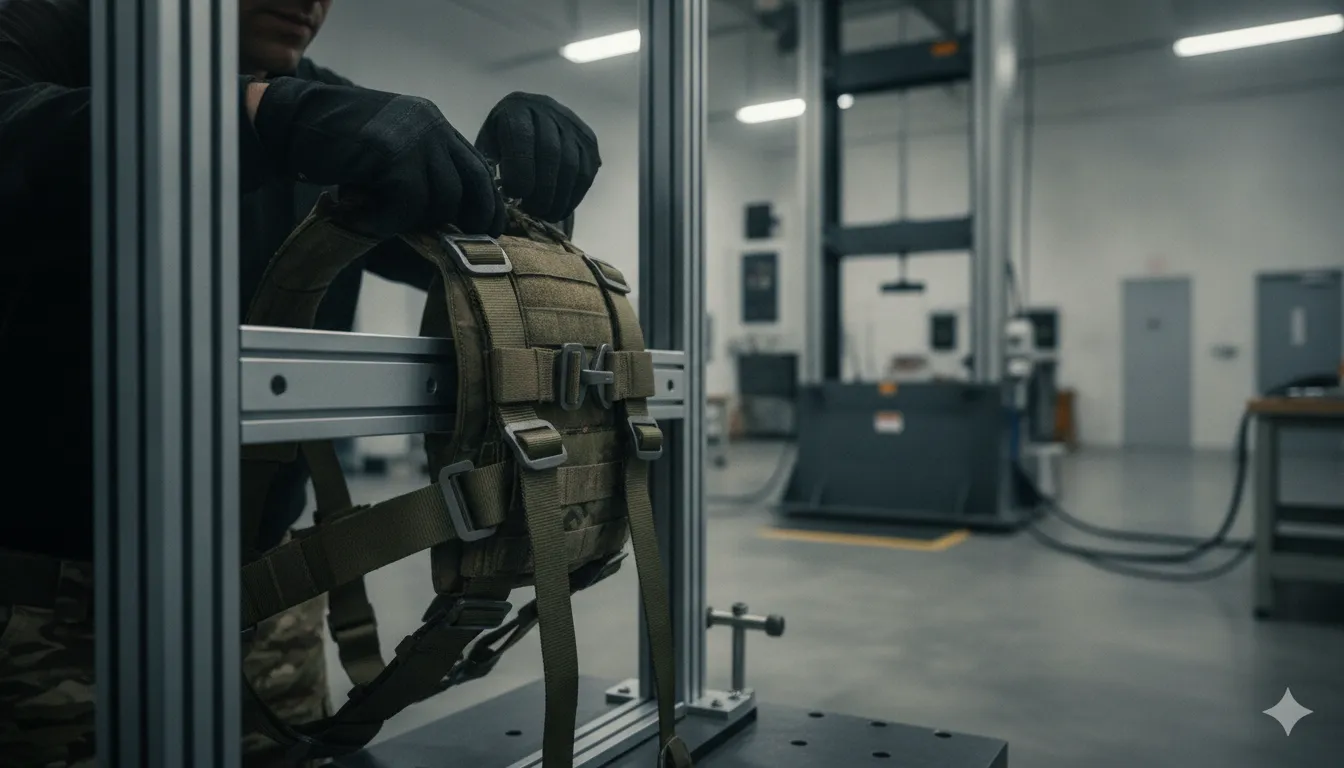
- Inspect the ISO 9001:2015 quality system. Working with an ISO-certified maker ensures that all gear goes through standard checks and testing. Look for shops that run static pull tests and dynamic drop tests to confirm strength limits.
- Verify production lead times and supply lines. A reliable maker must guarantee fast lead times and show a stable domestic supply chain. Ask how they handle raw shortages to ensure your dates are met without delays.
How Do USA Manufacturers Ensure Quality Control in Mission-Critical Hardware?
A USA made tactical safety equipment manufacturer ensures quality control in mission-critical hardware through vertical integration, strict ISO 9001:2015 quality systems, and strength testing. By making gear in-house, local plants inspect every part from raw textiles to finished metal hardware. This complete control ensures that each piece of gear meets the exact standards needed in high-risk fields.
Vertical Integration and Production Control
When a domestic tactical gear manufacturer runs the whole supply chain, quality risks drop. Many factories rely on foreign parts, but vertical integration keeps all steps in one place. This means the team controls the yarn, webbing, sewing, and final assembly. They do not have to worry about cheap foreign parts that might fail in the field.
In-house work also helps teams find flaws early. Workers can inspect every stitch and seam before the gear moves to the next stage. This close look keeps life-safety gear from failing in use.
Rigorous Kilonewton Strength Testing
Life-safety gear must pass strict kilonewton (kN) load-rating tests. High-risk settings need tactical hardware that is tested and checked for top performance to prevent failure. A single kN is a unit of force equal to about 225 pounds. For example, a tactical harness might have a rating of 15 kN or more. This means the gear can hold thousands of pounds of force without breaking.
To run these tests, makers use special pull-test machines. These machines pull the metal clips, rings, and webbing until they snap. This process finds the exact point of failure. By doing this, a plant can prove its hardware can stand up to real-world stress.
ISO 9001:2015 Systems and Sourcing Rules
A top factory uses a quality system like ISO 9001:2015 to guide its work. This system sets clear rules for how to make and track every piece of gear. Under this system, the team must write down every step of the process. If a problem occurs, they can look at the logs to see what went wrong. This traceback helps keep quality high over time.
Some makers go beyond standard systems to meet elite aerospace needs. Working with agencies like NASA needs even tighter controls. This high-level work means checking parts under a microscope. It also means tracking every batch of metal or thread. By meeting these top standards, a factory can prove its gear is ready for any mission.
Quality control is not just about making good gear; it is also a legal rule for federal buys. Sourcing rules like the Berry Amendment demand that all textile parts come from domestic suppliers. The International Trade Administration oversees these domestic source laws to support local industries. This means every thread and metal ring must be tracked from its U.S. source to the final product.
Why Is It Important to Verify a Supplier's CAGE Code and Certifications?
Checking a supplier's CAGE code and official certifications is key to prove their legal status for federal work. These active credentials show a firm can legally receive federal funds and build compliant load-bearing gear. Checking these records helps buyers avoid contract audits, project delays, and dangerous gear failures.
Checking CAGE Codes and Sourcing Status
Federal buying rules require every prime vendor and partner to have an active CAGE code. This five-part code is issued by the Defense Logistics Agency to track factories and check their business details. When you work with a registered domestic tactical gear manufacturer, this code ensures they can receive federal payments and pass strict audits. For example, Fusion Tactical USA holds CAGE Code 0KQN1 as part of its promise of open government work.
Checking this code also shows compliance with domestic sourcing laws. Federal agencies check supplier compliance under laws like the Berry Amendment, which you can find on the International Trade Administration website. An active CAGE code confirms that the factory really builds gear in the United States. It also proves they use U.S. materials for their safety systems. Buying from an unknown supplier can lead to severe contract errors.
Quality Standards and Aerospace Experience
Sourcing life-safety gear requires proof of strict quality control. Elite domestic builders hold ISO 9001:2015 certs to ensure safe and steady work. This check shows the factory uses clear steps to check every batch of webbing, harnesses, and rated hardware. For teams working in high-risk places, these standards are not optional because gear failure can be fatal.
Buying teams can also check a builder's past work with major defense and space programs. For example, Fusion Tactical USA works directly with NASA on emergency escape systems. As a registered USA made tactical safety equipment manufacturer, their high standards are fully proven. This partnership shows the company can meet the toughest rules in the world.
Capability Statements and Set-Aside Benefits
A professional tactical builder should readily give you a full capability statement. This document serves as a resume for government buyers and prime contractors. It outlines the supplier's specific equipment, tools, NAICS codes, and past work. Reading this document helps buyers check that the firm has the design skill and power to handle large or custom orders.
Finally, check for small business stamps. Federal contracts often require some funds to go to small or disadvantaged firms. Working with a certified small firm helps prime contractors meet these set-aside goals. Fusion Tactical USA has California Small Business Cert #2011930, which makes them a great partner for state and federal projects. This status, combined with their CAGE code, allows them to support complex government contracts well.
Building a Sourcing Workflow for Federal and Defense Procurement
A smart sourcing workflow for federal and defense tactical gear begins with clear steps to check compliance, quality, and design. Procurement officers can lower their risks by setting up clear gates to verify legal rules and product strength before they sign a contract. Using this clear workflow helps ensure that all safety gear meets hard federal standards while keeping delivery times short. This process also prevents errors when buying high-risk gear.
Evaluating Compliance and Technical Design
Procurement teams must test the core skills of a potential partner early in the buying process. Under federal rules, finding a reliable domestic tactical gear manufacturer means checking their work against the Berry Amendment and TAA standards.
Federal law restricts how the Department of Defense buys foreign textiles, as shown by the International Trade Administration. For this reason, these compliance checks are vital. Teams must evaluate compliance, engineering design, and testing protocols to prevent gear from breaking in the field. A single failed hook can put lives in danger during a mission.
Assessing Quality Control and Safety Standards
The next phase of the workflow looks at how a supplier tests and builds life-safety hardware. A top USA made tactical safety equipment manufacturer must use strict quality checks on the production line. This is true for critical items like rescue harnesses and personal retention lanyards. Buyers must focus on partners who prioritize equipment failure-prevention, contract compliance, and rapid production lead times.
They need to know the gear is safe before it enters the field. Working with a vertically integrated facility is a great way to meet these goals. These firms have tighter control over every step of the build, which helps them keep lead times short. This control ensures all hardware meets heavy load limits without relying on third-party parts.
Implementing the Procurement Workflow Gates
To run this sourcing plan, buyers can use a simple five-step due diligence process. First, request a capability statement from the vendor to confirm their contracting history. Second, verify their active CAGE Code and government certifications in the federal system. Third, confirm that all parts are made in the United States to meet federal laws and the Buy American Act.
Fourth, use custom tactical safety engineering channels to request rapid design prototypes for unique jobs. Fifth, set up the final order flow with clear delivery dates to build a reliable supply chain. You can secure strong gear from a vendor with a proven record of serving government agencies with compliant, mission-critical hardware. This workflow keeps your projects on schedule and keeps your teams safe.
Ready to qualify a compliant domestic partner for your next contract? Contact Fusion Tactical USA to request a quote, download a capability statement, or speak with our engineering team about your sourcing requirements.
Frequently Asked Questions
How do you verify if a tactical gear supplier is truly Berry Amendment compliant?
To check compliance, do not rely on simple claims. Ask the supplier for formal written proof. Under the Berry Amendment, all textile parts must be grown or made in the United States. You should trace the supply chain from raw yarn to the finished item. A reliable U.S. maker will provide clear records of domestic origin for all Berry compliant tactical equipment.
Why is TAA compliance important for government contracts?
For federal buying, TAA rules are vital. They allow a domestic tactical gear manufacturer to bid on GSA contracts. Under these rules, products must be made or heavily changed in the U.S. or a country with a trade treaty. This keeps your contract safe from fine risks and ensures that your safety gear meets government standards.
What is the difference between industrial fall safety and tactical rescue harness engineering?
Industrial safety gear is made for work drop arrest. It is often bulky and slow to adjust. In contrast, rescue harnesses need custom tactical safety engineering to support rapid movement and extreme angles. They must be light, quiet, and offer high kilonewton ratings. They are built for fast ingress, stealth, and helicopter use.
Why is a supplier CAGE code important for government buyers?
A CAGE code is a five-character ID issued by the federal government. It proves that a supplier is active in federal systems and ready to take contracts. Government buyers use it to verify the company's status and business size. It ensures you are dealing with a registered, vetted maker of mission-critical safety gear.
What are the benefits of choosing a USA made tactical safety equipment manufacturer?
Domestic sourcing gives you three clear benefits. It satisfies strict federal sourcing laws like the Berry Amendment, so your contract stays valid. It shortens lead times because the factory is close to you and controls every step. It also gives full quality oversight, so you can verify that every harness and lanyard meets its load rating before it ships.
What standards must tactical safety equipment meet for aerospace and defense applications?
Life-safety gear must meet two broad sets of standards. First, sourcing rules such as the Berry Amendment and TAA require compliant, domestic production. Second, engineering standards such as ISO 9001:2015 and kilonewton (kN) strength tests prove the gear can handle extreme forces. A certified manufacturer, like one holding CAGE Code 0KQN1, can document both.
Ready to Partner with a Compliant US Manufacturer?
Delays in your supply chain can halt critical defense projects and put your tactical operators at risk in the field. Sourcing from a non-compliant manufacturer often leads to failed federal contract audits, costly fines, and unexpected program shutdowns. You can protect your state or federal operations and keep your timeline secure by starting the qualifying process today.
Ready to request a quote? You can contact our engineering team today to schedule an engineering consultation for compliant, U.S.-made tactical safety equipment. Our experts will review your project plans to help you select the exact rated hardware, custom harnesses, or lanyards needed for your contract. Our California team is prepared to deliver the support and gear your program requires.


