

Demystifying kN Strength Ratings for Tactical Life-Safety Gear
Request a quote for certified kN-rated tactical hardware from a U.S. manufacturer with ISO 9001:2015 quality systems and third-party verified load testing.
What are kN strength ratings? Kilonewton (kN) strength ratings show the amount of force a piece of tactical hardware can withstand before failure. One kilonewton equals 1,000 newtons, approximately 225 pounds of force (lbf). For procurement officers and program managers, these ratings define the Minimum Breaking Strength (MBS) of life-safety systems including harnesses, lanyards, carabiners, and load-bearing hardware.
For procurement officers, the task is to translate these technical specifications into clear safety data for their teams. This guide breaks down what each rating means, how to read them on gear, and how to verify they meet your mission requirements.
How do you read kN ratings on tactical hardware? Most life-safety gear has its kN rating stamped directly on the metal hardware. A typical carabiner gate shows "24kN" on the spine, indicating it can withstand 5,395 pounds of force along its major axis before failure. Always verify that the rating matches the specific standard required for your mission profile.
What Are kN Strength Ratings for Life-Safety Tactical Gear?
Defining the kilonewton (kN)
A kilonewton (kN) is a metric unit of force used to measure the strength of safety-critical gear. One kilonewton is equal to 1,000 newtons. The National Institute of Standards and Technology (NIST) defines the newton as the standard unit of force. For procurement teams accustomed to pounds, a useful equivalency is that one kN equals approximately 225 pounds of force. This standardized rating system allows agencies across different countries to compare equipment from multiple manufacturers on a common scale.
This unit measures force, not static weight. In tactical field operations, gear must absorb the shock of a fall or sudden arrest, which generates far greater force than a person's body weight alone. Using kN ratings helps safety engineers plan for these high-impact events and ensures every component in the system can arrest a fall without catastrophic failure.
Why load ratings matter for safety
Load ratings establish the threshold at which a component will fail, known as the Minimum Breaking Strength (MBS). Standards organizations such as the American National Standards Institute (ANSI) set the benchmarks for these ratings. For example, OSHA regulations require fall arrest systems to limit the force on the human body to 1,800 pounds, or 8 kN.
Procurement teams must specify hardware with kN strength ratings that substantially exceed these limits. The safety factor acts as a buffer between the maximum expected load and the failure point. A belt buckle rated at 9 kN can hold over 2,000 pounds. While a helicopter retention lanyard rated at 32 kN can withstand over 7,100 pounds of dynamic force. These margins protect operators during high-risk maneuvers including fast-roping, hoist operations, and aerial rescue.
Finding ratings on gear hardware
Most tactical hardware has its kN rating permanently stamped or laser-etched into the metal. This mark typically displays a number followed by "kN." The Fusion Tactical Raptor buckle, for example. Is rated at 9 kN, meaning the buckle can withstand approximately 2,000 pounds of tensile load. This rating is critical for load-bearing belts used in tactical operations.
Many components display two ratings for the major and minor axes. The major axis represents the strongest load path, running from top to bottom through the spine of the hardware. Most carabiners carry a major axis rating of 20 to 30 kN. The minor axis rating, measuring across the width or gate, is always significantly lower. Procurement teams must verify both numbers to ensure the hardware meets operational requirements.
What is the difference between static and dynamic loads? Static loads apply steady, gradual force to hardware. Dynamic loads result from sudden impact events like a fall or shock load. Tactical operations expose gear to both: an operator leaning against a retention lanyard during helicopter turns creates static load. While a fall from the skid generates a dynamic impact spike that can reach 6 to 8 kN.
Static vs. Dynamic Loads: How Do They Affect Tactical Hardware?
Static and dynamic loads describe how gear responds to force in fundamentally different ways. A static load is a steady, gradual pull. A dynamic load results from a sudden event such as a fall or impact. For tactical teams, both are critical. Understanding how your equipment handles slow, sustained force versus sharp, instantaneous impact determines whether the gear is fit for mission-critical use. This is why rated hardware and kN strength specifications matter in real field conditions.
Static strength provides the baseline rating for most hardware components. It defines the failure threshold under a steady, non-moving load. MIL-SPEC Type 13 webbing, a standard material in tactical load-bearing equipment, carries a static rating of 5,000 pounds. This tells procurement teams the webbing can support that load indefinitely without failure, provided the load does not shift or impact. Knowing the static limit enables teams to select appropriate belts, straps, and harnesses for basic load requirements.
Static load and gear limits
Static load testing provides the foundational strength benchmark for every component. In a laboratory setting, a testing machine applies gradual tensile force until the component fails, producing a clean MBS specification. Field conditions, however, are rarely this controlled. A belt may hold 5,000 pounds under a static test, but the same belt under dynamic loading behaves very differently. Static test data alone cannot predict performance during a fall or sudden arrest event.
How dynamic impact force changes the safety equation
Dynamic loads are significantly more complex than static loads. They occur when a falling object is arrested by the safety system, generating an impact force that depends on the fall factor. A fall factor of 2, where a person falls 2 meters on a 1-meter lanyard, can generate 6 to 8 kN of force at the attachment point.
This is why OSHA safety regulations require fall arrest systems to limit the arresting force on the human body to 8 kN. Without properly rated equipment, a relatively short fall can cause carabiners, D-rings, or connectors to fail catastrophically. Dynamic loads transfer energy almost instantaneously, placing maximum stress on the hardware before the system can absorb and dissipate the energy.
Why helicopter teams need both static and dynamic ratings
Helicopter operations demand equipment that can handle both load types. An operator may lean against a retention lanyard while the aircraft banks during a turn, producing a static load. However, if the operator slips or falls from the skid, the same lanyard must absorb a dynamic impact. The equipment must arrest that fall without injuring the operator or failing. High kN strength ratings for helo retention systems ensure the complete system can withstand these shock loads.
Fast-rope deployment, hoist operations, and emergency extraction maneuvers place unique and compounding loads on safety equipment. The sudden deceleration of a fast-rope descent or the weight shift during a hoist pickup creates dynamic force spikes that exceed any static load the hardware will experience. Procurement officers selecting equipment for these missions must review both static strength specifications and dynamic test data to determine suitability.
How do you convert kilonewton ratings to pounds? One kilonewton equals approximately 225 pounds of force. To convert: multiply the kN value by 225. A 32 kN retention lanyard provides 7,194 pounds of load capacity. This conversion is essential for U.S. procurement teams who must verify that equipment meets OSHA limits expressed in pounds while also satisfying MIL-SPEC requirements stated in kN.
Converting kN to Pounds: A Quick Reference for Procurement Officers
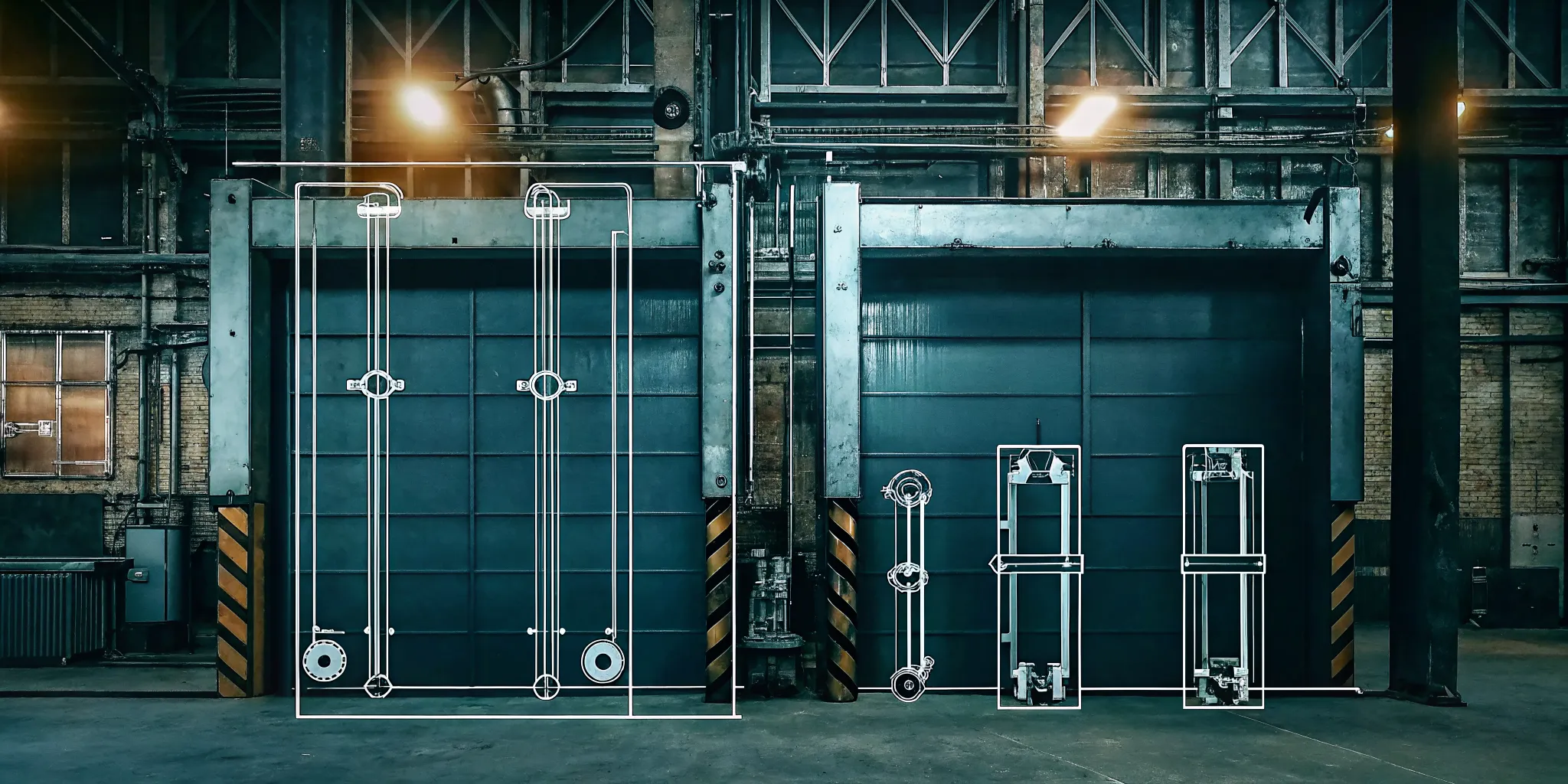
Understanding the relationship between kilonewtons and pounds is essential for tactical equipment procurement in the United States. A kilonewton (kN) is the SI unit of force equal to 1,000 newtons, as defined by the National Institute of Standards and Technology. While most U.S. safety regulations specify limits in pounds, global tactical hardware standards frequently use kN. Procurement teams must be fluent in both units.
Kilonewton (kN) to Pound Conversion Table
Use this reference table to translate common kN strength ratings into pounds of force. These values represent the Minimum Breaking Strength (MBS) for each rating level. The Fusion Tactical Helix retention lanyard, rated at 32 kN, provides over 7,100 pounds of load capacity for helicopter crew retention operations.
| Rating (kN) | Force (Pounds) | Typical Use Case |
|---|---|---|
| 1 kN | 225 lbs | Small accessory loads |
| 5 kN | 1,124 lbs | Light duty non-safety gear |
| 9 kN | 2,023 lbs | Tactical belt buckles |
| 10 kN | 2,248 lbs | Personal gear attachment |
| 20 kN | 4,496 lbs | Basic rappel gear |
| 24 kN | 5,395 lbs | Life safety carabiners |
| 32 kN | 7,194 lbs | Helo retention systems |
| 40 kN | 8,992 lbs | Heavy rescue anchors |
Why procurement teams need both units
Procurement officers must track both measurement systems to ensure equipment complies with domestic safety regulations while meeting international tactical specifications. Federal OSHA regulations require fall arrest systems to limit arresting force to 1,800 pounds (8 kN) when used with a full-body harness. A Raptor buckle rated at 9 kN provides approximately 2,000 pounds of tensile capacity, exceeding the OSHA threshold. Clear unit mapping prevents specification errors when selecting rated hardware and kN strength for mission-critical applications.
Meeting technical specifications through unit accuracy
Selecting the correct kN rating ensures teams remain safe during high-risk operations. Technical equipment for defense and aerospace programs must withstand instantaneous impact forces, not merely static weight. Understanding kN values allows procurement officers to verify whether a retention lanyard, harness, or connector meets specific contract requirements. This quick-reference guide helps confirm that every component delivers the appropriate safety margin for tactical professionals operating in high-stakes environments.
What is the difference between major axis and minor axis loading? The major axis is the strongest load path through hardware, running end to end along the spine. The minor axis loads across the width or gate. Hardware can lose 40% to 60% of its rated strength when cross-loaded on the minor axis. A carabiner rated at 24 kN on the major axis may hold only 7 kN on the minor axis.
Major Axis vs. Minor Axis: Why Load Direction Changes Strength Ratings
Hardware strength is not a single fixed number. The kN strength ratings stamped on your equipment change depending on the direction of the applied load. Most life-safety components are designed to be loaded from end to end. When force is applied in a different orientation, the hardware can fail well below its published maximum rating. This makes load direction a critical consideration for procurement planning and safety verification.
Understanding major axis loading
The major axis represents the strongest load path through any piece of hardware. On a carabiner or snap hook, this is a straight pull from the top eye to the bottom attachment point. For this rating to be valid, the gate must be fully closed and locked. End-to-end loading places stress along the spine of the component, where the metal is thickest and most structurally stable.
Fusion Tactical manufactures steel D-rings rated at 5,000 pounds for demanding load-bearing applications. This high limit applies specifically to major axis loading. When a rating displays a single high number, it refers to this optimal load path, assuming the operator rigs the equipment so the pull remains along the spine.
The risks of minor axis loading
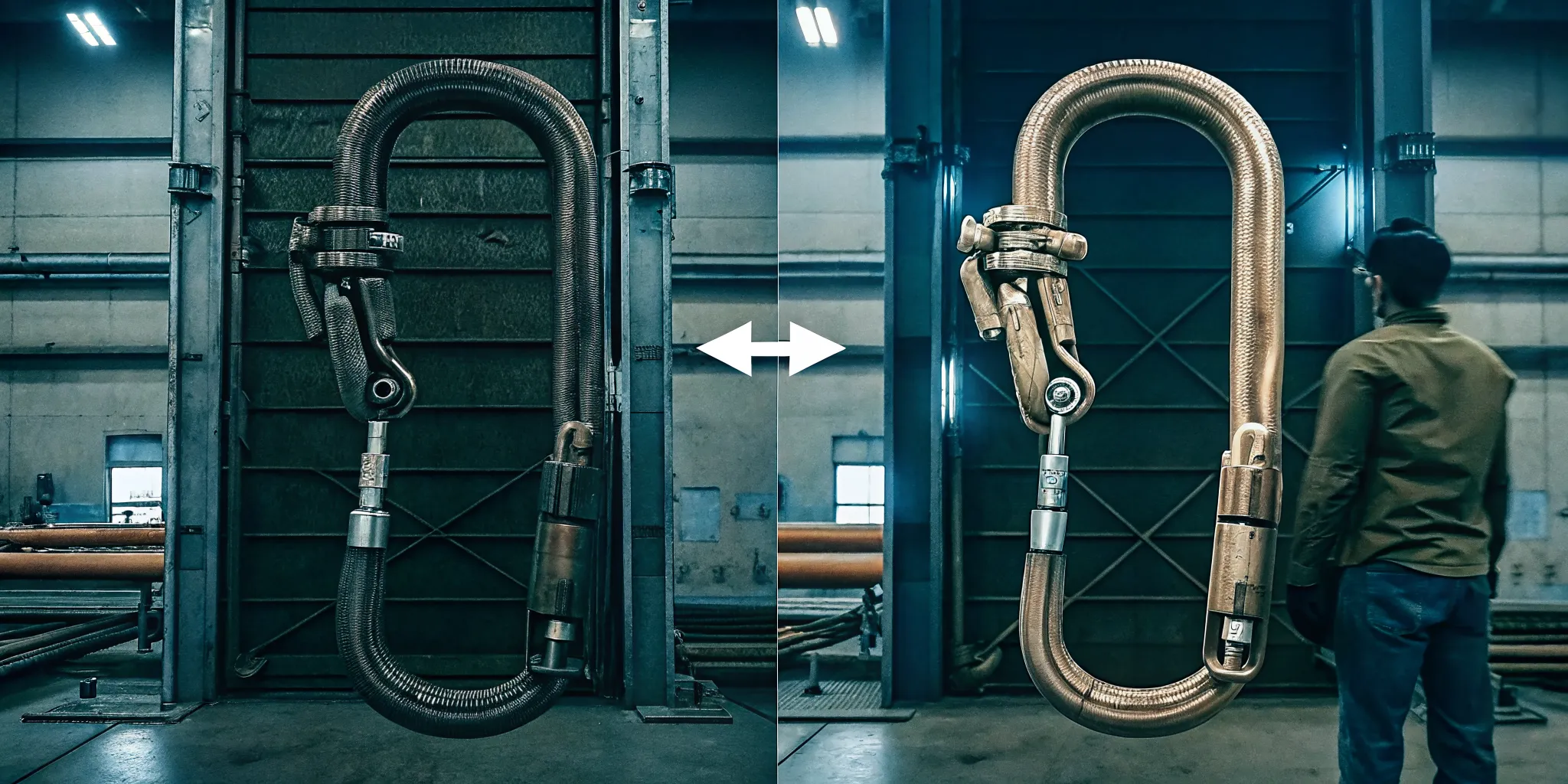
Minor axis loading occurs when force pulls across the width of the hardware, also known as cross-loading. On a carabiner, this places stress on the gate or sidewalls instead of the spine. Hardware is significantly weaker in this orientation. Even a small shift in loading angle can transform a safe configuration into a dangerous one.
Most components lose 40% to 60% of their rated strength when cross-loaded. A carabiner rated at 24 kN on the major axis may hold only 7 kN on the minor axis. This dramatic reduction is why kN strength ratings for helo lanyards and tactical hardware must be verified in the actual loading configuration expected during operations.
Open gate and safety standards
An open gate represents the weakest state for any connector. If a gate fails to close or lock properly, the strength reduction exceeds even cross-loading. In some configurations, an open gate can reduce a connector to just a few hundred pounds of capacity. Standards such as ANSI Z359.12 establish minimum gate strength requirements to mitigate this risk. OSHA standards for fall arrest systems also address force limits, requiring systems to limit body force to 1,800 pounds (8 kN). Procurement teams should specify hardware designed to maintain proper alignment under load.
Which standards govern kN ratings for tactical equipment? Multiple standards bodies establish kN rating requirements for tactical life-safety gear. MIL-SPEC Type 13 webbing carries a 5,000-pound static rating. ANSI Z359.11-2022 governs full-body harness performance. NFPA 2500-2022 covers life-safety rope and rescue equipment. OSHA mandates fall arrest systems limit force to 8 kN. Berry Amendment and TAA compliance ensure U.S. manufacturing for federal procurement.
Which Industry Standards Govern kN Ratings for Tactical Equipment?
Military standards and load ratings
Tactical equipment must meet stringent specifications to ensure operator safety in field conditions. The U.S. military specifies MIL-SPEC Type 13 webbing for many load-bearing applications, carrying a static rating of 5,000 pounds. Special operations equipment such as SPIE (Special Patrol Insertion/Extraction) systems rely on hardware with kilonewton ratings that can withstand the forces of personnel extraction under hover. Fusion Tactical holds CAGE Code 0KQN1 and Small Business Certification #2011930 to facilitate government procurement.
Units and procurement officers must verify specific MIL-STD markings on their equipment. These markings certify that the hardware meets the shock and load requirements of field deployment. Hardware used in helicopter insertions, fast-rope operations, or hoist rescues must exceed the minimum standards, as the dynamic forces generated during these maneuvers far exceed static load scenarios.
Safety regulations from ANSI, NFPA, and OSHA
Industry standards organizations establish the benchmarks for force ratings on life-safety equipment. ANSI Z359.11-2022 covers full-body harnesses used in fall arrest and tactical applications. The Fusion Tactical Era II Tactical Rappel Harness is built to meet these rigorous test protocols. OSHA regulations require fall arrest systems to limit the arresting force on the body to 8 kN when used with a body harness.
Professional rescue teams also look for NFPA 2500-2022 compliance markings. This standard covers life-safety rope and equipment used in technical rescue operations. Specifying gear with clear kN load ratings for tactical harnesses and connectors is the most reliable way to maintain crew safety. Every component in the life-safety chain should carry a verifiable rating from a recognized standards body.
Quality systems and U.S. manufacturing compliance
Consistent manufacturing quality is essential to achieve rated force thresholds on every production unit. Fusion Tactical operates an ISO 9001:2015 quality management system to track and verify every component. The majority of our production is Berry Amendment and TAA compliant, meaning the equipment is manufactured in the United States from domestic materials. This is a critical requirement for federal procurement officers who must comply with Buy American regulations.
Third-party verification laboratories confirm the published kN ratings. Fusion Tactical partners with John Batchelor Testing and Midwest Testing for break-test verification. Exvo OCM Test Laboratories provides independent validation of hardware strength. These external test reports provide procurement teams with objective evidence that the equipment meets the specified kilonewton ratings.
Program managers should request three categories of documentation when evaluating tactical hardware suppliers:
- Third-party test reports validating MBS for each component.
- Evidence of U.S. manufacturing to satisfy Berry Amendment and TAA compliance requirements.
- Current CAGE Code, UEI, and SAM.gov registration for federal contract eligibility.
Having this documentation ready accelerates the procurement cycle and provides the verifiable evidence that equipment is safe for mission-critical deployment.
How do you verify Minimum Breaking Strength for life-safety systems? Minimum Breaking Strength (MBS) is the force threshold at which hardware will fail under static load. The safety factor, typically 5:1 for life-safety gear, creates a buffer between the rated working load and the failure point. A component with 22 kN MBS has a safe working load of approximately 4.4 kN. Verification requires MBS certification, third-party test reports, batch testing data, and compliance statements.
How to Verify Minimum Breaking Strength for Life-Safety Systems
Minimum Breaking Strength (MBS) is the standard engineering metric used to establish the guaranteed failure threshold of tactical hardware components. For life-safety systems, the MBS represents the force at which a component will fracture or permanently deform under static load. Procurement teams rely on these kN strength ratings to confirm that equipment can withstand the forces generated during tactical operations.
Understanding the safety factor
The safety factor is the ratio between the MBS of a component and its rated safe working load. For most life-safety equipment, a 5:1 safety factor is the industry standard. This means a component with a 22 kN MBS has a rated working load of approximately 4.4 kN. This engineering margin accounts for dynamic loading, material wear over time, temperature effects, and manufacturing tolerances. NIST guidelines establish the kilonewton as the standard unit for measuring these critical force thresholds.
Required procurement documentation
When procuring equipment for defense or law enforcement applications, buyers must verify that manufacturer claims are supported by auditable data. Fusion Tactical provides comprehensive documentation to support government procurement review processes. Request the following items during supplier evaluation:
MBS certification: A signed document from the manufacturer stating the tested breaking strength for the production batch.
Third-party test reports: Laboratory records confirming the equipment meets specified standards. Fusion Tactical partners with John Batchelor Testing, Midwest Testing, and Exvo OCM Test Laboratories for independent verification.
Batch testing data: Documentation showing that the specific production run was sampled and tested for quality assurance.
Compliance statements: Evidence that the hardware satisfies Berry Amendment or TAA requirements for U.S. manufacturing and domestic materials.
Government and agency verification
Federal buyers can locate Fusion Tactical on SAM.gov using UEI JSR6VV16YGH5 or CAGE Code 0KQN1. These identifiers allow program managers to confirm the company's status as a qualified small business and U.S. manufacturer. Third-party laboratory reports from Exvo OCM Test Laboratories provide independent confirmation that equipment meets the standards established by OSHA regulations for fall arrest systems. These standards limit arresting force to 8 kN when used with a body harness.
What are the typical kN ratings for different tactical hardware categories? Carabiners range from 20 to 30 kN on the major axis. Tactical belt buckles typically carry 9 kN ratings. Retention lanyards for helicopter operations are rated at 22 to 32 kN. D-rings for load-bearing harnesses provide 18 to 22 kN. Always verify that the hardware rating exceeds the maximum expected load for your specific operational profile.
Common kN Ratings Across Tactical Hardware Categories
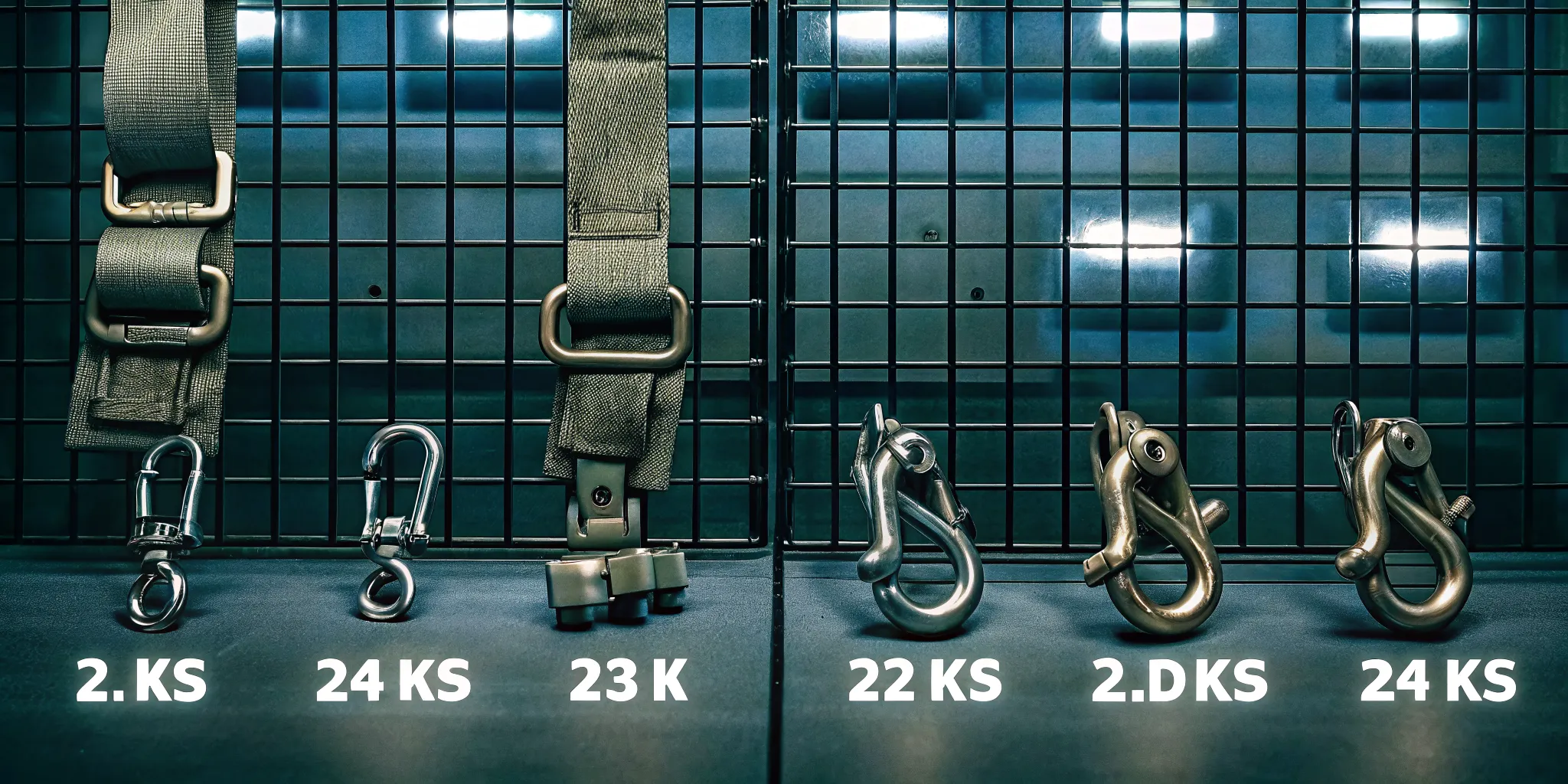
Procurement officers must understand the typical load ratings for each hardware category to select appropriate equipment. Different component types carry distinct kN strength ratings based on their design, material, and operational role. These benchmarks help teams choose the correct tools for mission-critical tasks ranging from helicopter crew retention to tactical rescue operations.
Hardware strength benchmarks
Most tactical hardware displays its rating as a kilonewton value stamped directly on the component. The following table summarizes typical ratings by category based on industry standards and Fusion Tactical product specifications.
| Hardware Category | Typical kN Rating | Equivalent Pounds |
|---|---|---|
| Tactical belt buckles | 9 kN | 2,023 lbs |
| D-rings (harness attachment) | 18-22 kN | 4,046-4,946 lbs |
| Life-safety carabiners | 20-30 kN | 4,496-6,744 lbs |
| Helo retention lanyards | 22-32 kN | 4,946-7,194 lbs |
| Heavy rescue snap hooks | 32 kN | 7,194 lbs |
| SPIE extraction hardware | 40 kN+ | 8,992 lbs+ |
Selecting the right rating for the mission
The appropriate kN rating depends on the specific operational profile. A ground-based load-bearing belt may only require a 9 kN buckle. While a helicopter crew retention system demands a 32 kN lanyard to account for dynamic forces during flight operations. The tactical rescue harness versus industrial fall protection comparison illustrates how mission requirements drive hardware specification decisions. Procurement officers should specify hardware with ratings that exceed the peak loads expected in their operational environment.
Frequently Asked Questions
What does kN mean on tactical gear?
How do you convert kN to pounds for procurement specifications?
What is the difference between MBS and working load limit?
Why do carabiners have different major and minor axis ratings?
Which U.S. standards apply to kN-rated tactical life-safety equipment?
How do I verify that tactical hardware meets its claimed kN rating?
Ready to source rated hardware for your next mission?
Understanding kN strength ratings is the foundation of safe, compliant tactical equipment procurement. Whether you are specifying hardware for helicopter operations, tactical rescue missions, or government contracts. Verifying that each component meets the required force threshold is essential for operator safety and mission success.
Browse our full catalog of kN-rated tactical hardware manufactured in the United States with ISO 9001:2015 quality systems, Berry Amendment and TAA compliance, and third-party verified load ratings. All products carry CAGE Code 0KQN1 and are available for government procurement through SAM.gov.
Contact our technical team for government pricing and engineering consultation.


