

Tactical First Aid Kit Procurement: Agency Guide
For an agency, readiness starts before a purchase order. Teams need to know who will carry the equipment, where it will be used, and how it will be maintained and replenished. Without those decisions, a pouch or supply package may not fit the mission or accountability process.
For an agency, readiness starts before a purchase order. Teams need to know who will carry the equipment, where it will be used, and how it will be maintained and replenished. Without those decisions, a pouch or supply package may not fit the mission or accountability process.
A tactical first aid kit program is procurement-ready when its requirements define the user, mission environment, response role, issue scale, carry location, and resupply approach. The agency's authorized medical or training authority should determine medical suitability and approved contents. Procurement staff should document requirements, supplier evidence, and lifecycle responsibilities.
This guide treats the subject as an agency program, not a consumer product roundup or a prescription for medical supplies. The practical starting point is to separate mission and purchasing requirements from clinical decisions, then assign an accountable owner to each.
Contact Fusion Tactical to discuss procurement requirements and pouch integration through the contact page.
What a Procurement-Ready Tactical First Aid Kit Program Must Solve
A procurement-ready tactical first aid kit program starts with a documented operational requirement, not a consumer-style roundup. Buyers should define who will use the equipment and in what environment and role. Clinical decisions and approved contents remain with the agency medical authority.
The CDC's travel health kit guidance offers a planning analogy. It considers the user, activity, duration, group size, medical expertise, evacuation access, and carriage. It is not a tactical standard. Agencies should apply those factors to their own mission and governing requirements, not treat them as specifications.
Use this checklist to frame the requirement before soliciting products:
- Set the operational objective. Describe the response role and its boundaries. Clarify whether equipment is intended for an individual, team, vehicle, or another deployment context. Do not ask vendors to determine the agency's clinical scope.
- Identify intended users and authority. Specify user groups, assigned responders, expected medical expertise, and who approves training and operational use. The designated medical authority should determine protocols and approve contents. Procurement owns the requirement, records, and acquisition process, not clinical decisions.
- Describe the environment and duration. Note expected operating conditions and deployment period. CDC guidance considers planned activities and trip duration when personalizing travel kits. Use these as mission-analysis prompts, not as a tactical prescription.
- Define expected scale. State the number of users and people the response plan may support. Explain issue quantities, assignment model, and resupply approach. CDC lists the number of people who may need treatment as a planning factor. Agency medical authority must translate operational needs into approved contents.
- Document evacuation and external-care access. Describe how and when personnel can reach follow-on care. Identify operational constraints that affect evacuation. CDC lists local care and evacuation access as travel-kit planning considerations. This is a reference point, not a tactical standard or clinical recommendation.
- Specify carriage and governance. Identify where the item will be carried and note space or weight constraints. Name the accountable owner and approval path. Document records needed to issue and sustain the program. CDC also considers how a kit will be carried. Validate fit and supply decisions rather than relying on catalog assumptions.
CDC's framework can support better procurement questions. It does not establish tactical-kit contents, certifications, or performance requirements. Keep the acquisition file clear about the operational requirement and the medical authority's approvals. Also identify the buyer's verification responsibilities. Before award, translate the requirement into measurable solicitation language. Name who will verify delivery, assignment, and changes to the approved configuration. This helps evaluators compare bids without treating a catalog description as a clinical decision.
How to Integrate a Tactical First Aid Kit With a Duty Loadout
Integrate the pouch as part of the complete duty system, not as a standalone purchase. Confirm its location, attachment method, access path, and clearance against the actual belt or carrier. Then validate the configuration with the people who will use it.
Placement should balance access with movement, retention, and space for other assigned equipment. The CDC lists space and weight, carriage, and ready accessibility as planning considerations. These factors support evaluating the full loadout rather than choosing by appearance alone. CDC travel health kit guidance
Start with the user's equipment and access needs
Map the intended location on the issued belt, carrier, or other equipment. Check whether the pouch is reachable in the user's normal operating positions. Note whether adjacent equipment may obstruct access. Check attachment security during routine movement. Confirm whether removal or handoff is part of agency procedure. These fit checks apply to the actual configuration; they do not guarantee that one attachment works across all platforms.
For a vehicle-based assignment, evaluate storage and retrieval in the actual vehicle. A pouch that fits on a belt may not be positioned suitably for vehicle storage. Do not assume vehicle installation from a general product listing. Record the selected carriage location and handling requirements so replacements can be checked against the same criteria.
Verify the pouch interface, not just the label
Fusion Tactical's MOLLE-compatible IFAK pouch listing describes a MOLLE-compatible pouch with a tear-away design and multiple attachment options. These features can inform a fit review. However, the listing does not establish that medical supplies are included. It also does not establish compatibility with a particular agency carrier or medical certification for the pouch. Buyers should confirm the supplied configuration against their requirements.
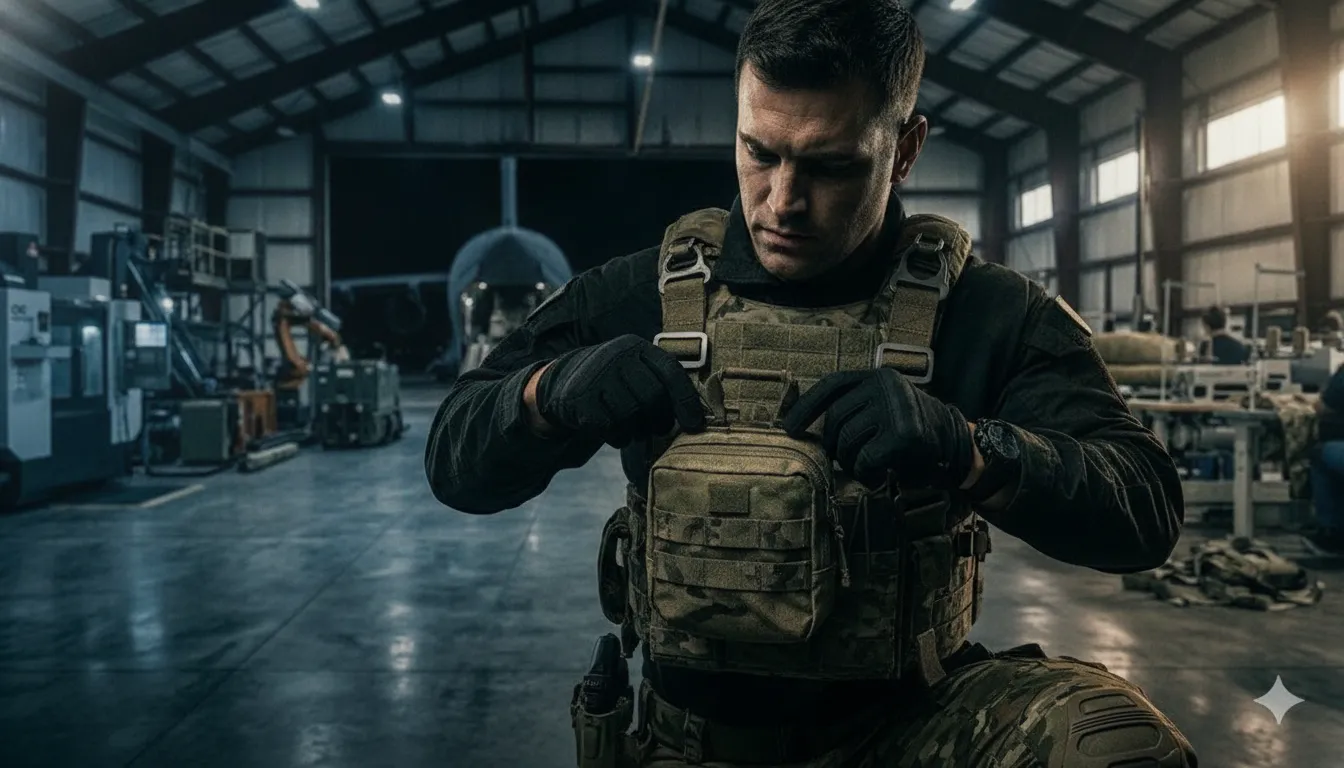
Use a practical fit check with the actual user and equipment. Confirm attachment points engage as intended. Check that the pouch does not interfere with movement or adjacent items. Verify the designated user can identify and access it under agency procedures. Repeat the check after changing the belt setup, carrier, or pouch model rather than carrying compatibility assumptions forward.
Document the approved configuration
Name an equipment owner and record the pouch model, approved mounting position, carrier context, and restrictions. This helps preserve a tested configuration during procurement and replacement. Medical contents and training remain separate decisions for the appropriate agency authority. For additional fit considerations, see this guide to tactical belt pouch integration and the overview of an integrated tactical duty belt system.
What Should Be in a Tactical First Aid Kit?
There is no universal contents list for every agency, mission, or responder. The medical director or other authorized clinical lead should approve what is carried. That authority should also identify approved users, required training, applicable protocols, and who may authorize substitutions or replenishment.
For procurement teams, the decision is a matter of documented governance, not a shopping list or medical recommendation. Define the kit's intended scope before soliciting or accepting a configuration, and make the approving authority explicit in the requirement.
Contents should match users' authorized roles and training. Do not select them only because they appear on a generic checklist. CDC travel-health guidance identifies group medical expertise as one factor in personalizing a kit. Its discussion of remote-area kits notes some items may be brought by a licensed medical professional. These are planning contexts, not a tactical-kit standard. (CDC travel health kit guidance).
Translate clinical approval into purchasing controls. The solicitation can identify the approving role, intended users, training prerequisites, and authorized configuration. It should also describe how changes are approved. State who may authorize substitutions and how equivalent replacements are evaluated. Define when a protocol update triggers review. Keep clinical decisions with the agency authority. Purchasing staff can document and enforce the approved configuration without deciding medical suitability.
Separate clinical approval from purchasing and logistics duties, while documenting how they coordinate. Buyers need a source of truth for the approved configuration and a named role to resolve questions. Define how proposed changes return to the clinical authority. This avoids treating a catalog description or responder preference as automatic approval.
When requesting proposals, describe required evidence and change control. A broad label such as "tactical" does not define suitability. Ask suppliers to identify the exact offered configuration and flag substitutions for review before acceptance. The agency can then compare responses with its approved specification without asking procurement staff to make medical judgments.
Manage training and equipment decisions together. The American College of Surgeons' Stop the Bleed training information describes a training pathway. Agencies can consider it alongside their own roles and policies. It is not a kit specification or a substitute for medical direction. (NAEMT TECC course).
OSHA's internal first-aid manual provides one example of program documentation. It says designated responders are expected to provide first aid as part of their duties and calls for current training certificates. The manual describes OSHA's own program, not a universal rule. Follow the requirements that apply to your organization and record training conditions tied to the approved configuration (OSHA first-aid program manual).
If a configuration includes products subject to medical-device requirements, review their applicable manufacturer labeling and documentation. FDA labeling information discusses regulated medical devices. It does not mean every kit item, or the kit as a whole, is necessarily a regulated device (FDA device labeling overview).
Record the approved version, approver, training assumptions, substitution authority, and review trigger. These records give buyers a controlled basis for evaluating supplier proposals and managing changes. Clinical decisions remain with qualified agency leadership.
How Should Agencies Manage Inspections and Replenishment?
Assign an owner for each issued tactical first aid kit and maintain a readiness record. Use a consistent process to check condition and contents, document gaps or damage, replenish through approved channels, and authorize return to service. The inspection schedule and fields below are recommendations, not universal legal requirements.
OSHA's first-aid program manual says kit contents are to be replenished and kept serviceable. This statement describes OSHA's program. It is not a rule for every agency or deployment. Confirm applicable workplace, contract, and internal requirements. OSHA's first-aid program manual
Start with accountability. Record the kit identifier, assigned person or unit, location, inspection date, reviewer, and status. On issue and return, or after reported use or a problem, verify the pouch and closure are intact. Check for signs of tampering and confirm the approved inventory is present. These are recommended controls. Follow agency policy and manufacturer instructions for storage, handling, and item-specific checks.

Keep exceptions visible rather than marking a kit ready by default. Record missing, damaged, opened, or questionable items. Hold affected contents from issue until the agency resolves them. Where a supplier specifies lot, expiration, or packaging information, capture and review it as applicable. Do not impose one shelf-life or inspection interval across different items. Follow supplier instructions and the agency's approved schedule.
For each deficiency, log the replacement need, responsible owner, replenishment action, and whether the replacement matches the approved inventory. Use a status such as ready, pending replenishment, or held for review. The designated owner verifies the correction and records approval before returning the kit to service. This links inspection findings to readiness.
Address exposure concerns under applicable agency procedures. OSHA's manual says employees in its program who are exposed to blood will follow the Bloodborne Pathogen Standard and procedures outlined in its Chapter 19. This describes OSHA's program, not a blanket agency obligation. Consult the rules and exposure-control procedures that apply to your workplace. See OSHA's program language.
Review records at the unit or program level to identify recurring losses, delayed replenishment, or unclear ownership. Use the review to correct the process, adjust stock authorization, or clarify responsibilities. Keep medical-content decisions with the agency's authorized authority.
How Do Buyers Verify Supplier and Contract Compliance?
Verify a supplier against the solicitation, offered configuration, and contract clauses before award. Request current eligibility and registration evidence where required. Review relevant past-performance references and product-level origin and compliance documents. Obtain written delivery, service, and change-control terms. A general capability statement does not prove a specific tactical first aid kit or pouch meets a contract requirement.
Build the review around the exact offered item. Confirm whether the quote covers a pouch only, stocked kit, or replenishment arrangement. Identify who controls contents and configuration. Have the agency's authorized medical authority review suitability. Require traceability and origin statements at the level the solicitation calls for. Where packaging, storage, or replenishment affects readiness, document handling requirements and replacement responsibility.
Procurement forms show how these checks can become bid requirements. A City of Philadelphia solicitation for first-aid kits and refills requested customer references and a delivery method. It asked sellers to disclose when delivery would exceed 30 days and acknowledge solicitation amendments. It separately asked about recycled content in products and packaging. These are examples from one solicitation, not universal requirements. Follow your own contract terms. (Philadelphia solicitation)
Keep Berry Amendment and TAA reviews separate
Berry Amendment analysis is not a generic country-of-origin checkbox. DFARS 225.7002-1 sets restrictions for covered items, subject to exceptions. Determine whether the clause applies and whether the item or material falls within scope. Separately, FAR Subpart 25.4 addresses acquisitions subject to trade agreements. Applicability depends on the procurement and its requirements. Do not assume either rule applies to every kit or pouch. Ask the contracting officer to confirm clauses and request documents tied to the offered configuration.
Fusion Tactical's company materials describe CAGE Code 0KQN1, SAM registration, TAA-capable documentation, and custom Berry-compliant production. Verify current, order-specific status rather than applying those statements to every catalog item. Review its government and defense contracting capabilities and Berry-compliant manufacturing capabilities, Request records that apply to the actual contract and configuration.
Before award, define configuration and change control. State which substitutions need approval and how revisions are recorded. Identify material or source changes that trigger review. Put lead-time assumptions, delivery milestones, warranty or service terms, storage instructions, and replenishment responsibilities in writing. Recheck registration and bid acknowledgements at submission. Retain approved documents with the award record.
How to Compare Tactical First Aid Kit Procurement Options
Compare procurement options by separating the carrier from the medical contents and assigning responsibility for approval, records, and replenishment before award. A tactical first aid kit purchase may cover a pouch alone, agency-managed contents, or supplier-assembled contents. The solicitation and acceptance documents should state exactly which model is offered.
| Procurement model | Scope and contents authority | Evidence to require | Replenishment responsibility |
|---|---|---|---|
| Pouch-only | The purchase covers a carrier, not a stocked medical kit. The agency's authorized medical or training authority defines and approves contents separately. | Verify dimensions, attachment interface, closure or access design, materials, and any contract-required product documentation. Confirm whether the item is supplied empty. The current MOLLE-compatible IFAK pouch listing describes pouch features and attachment options; it does not verify medical contents or medical certification. | The agency assigns an owner to procure approved contents, track serviceability, and replenish them. |
| Agency-managed contents | The buyer sources the pouch and contents under an agency-controlled specification. Contents selection remains with the agency's authorized clinical or training authority, not an assumption based on the carrier. | Define approved specifications, permitted substitutions, documentation and acceptance checks for each item, delivery packaging, and how changes require approval. Keep the scope explicit across line items and receiving records. | Name the agency unit responsible for inspections, inventory records, replacement decisions, and return-to-service approval. |
| Supplier-assembled or stocked | Use this model only when the solicitation expressly requests it and the supplier documents the offered scope. The agency still governs the approved contents and any clinical requirements. | Require a contents schedule, item-level identification and applicable lot or expiration information, approved-substitution process, packaging details, delivery terms, and acceptance criteria. Confirm that the response matches the solicitation rather than relying on a general product label. | Specify whether the supplier's contract includes replenishment or only initial delivery. If replenishment is excluded, assign it to an agency owner and define the records needed for follow-up orders. |
Issue the same requirements to each bidder. Evaluate the complete support model, not just the pouch exterior. Check that the response addresses carriage, contents authority, documentation, delivery, and lifecycle ownership. Philadelphia's public solicitation for first-aid kits and refills is one example of how to specify supply scope and replenishment. It is not a rule for every agency (solicitation details).
Keep product and kit claims distinct during evaluation. Fusion Tactical's listing supports review of the pouch interface and stated features only. It is not evidence that the pouch arrives stocked, that contents meet agency medical requirements, or that a complete kit is certified. If the requirement is pouch integration rather than a stocked supply package, confirm fit and scope against the listing and solicitation.
Before the FAQ, contact Fusion Tactical to discuss procurement requirements and pouch integration.
Frequently Asked Questions
Who should approve the contents of an agency first aid kit?
The agency's medical director or other authorized clinical or training authority should approve the contents against the intended users, response roles, local protocols, and approved training. Procurement teams can document and source the approved specification without independently prescribing medical supplies.
What does IFAK mean, and how is it different from a general first aid kit?
IFAK means individual first aid kit. In government procurement, define the intended user, mission, issue model, and governing medical or training authority. Do not assume every product labeled IFAK has the same contents or suitability. U.S. combat medical personnel and non-medical combatants are trained in battlefield trauma management in accordance with TCCC Guidelines (Joint Trauma System).
Does a tactical pouch come with medical supplies?
Not necessarily. A pouch listing may describe the carrier and attachment features without specifying included supplies. Confirm in writing whether the quote covers an empty pouch, a stocked kit, or a separately sourced contents package, then verify each item against the agency-approved specification.
How should an agency inspect and replenish issued kits?
Assign an owner and maintain a readiness record for each kit. Track its identifier, assignment, inspection, missing or damaged items, expiration details where applicable, replenishment actions, and return-to-service approval. Follow each item's manufacturer storage guidance and the agency's approved procedures. OSHA's program guidance also calls for kit contents to be replenished and maintained in serviceable condition (OSHA).
Do military personnel carry IFAKs?
Military practice depends on the service, unit, role, and applicable doctrine, so buyers should not treat one commercial configuration as a universal military standard. The Joint Trauma System describes combat medical personnel and non-medical combatants as trained in accordance with TCCC Guidelines. Agencies should align their own requirements with their authorized medical and operational authorities (Joint Trauma System).
What should buyers request when qualifying a supplier?
Request documentation that maps directly to the solicitation: product scope and contents, sourcing or origin evidence when applicable, traceability, delivery schedule, references, and responses to contract-specific compliance clauses. Berry Amendment and Trade Agreements requirements have distinct scopes. Their application depends on the contract. Assess the specific acquisition instead of assuming either applies to every pouch or kit (DFARS 225.7002-1; FAR Subpart 25.4).
Contact Us About Procurement Requirements
A focused discussion can help your team clarify pouch integration needs and the documentation to evaluate for its program. Keep the conversation centered on the intended loadout and procurement scope, without assuming kit contents or medical suitability.
To discuss your requirements, contact Fusion Tactical. The team can be reached at (909) 393-9450.


