

OSHA Fall Protection Harness: Tactical Buyer Guide
An OSHA fall protection harness is not a stand-alone compliance solution. For procurement teams supporting rescue, law enforcement, defense, and aerospace programs, the central question is whether the complete system matches the defined hazard, operating environment, and rescue plan. A harness that is appropriate for industrial fall arrest may not address aircraft retention, confined-space access, or technical rescue. Buyers therefore need to separate OSHA obligations from mission-specific performance requirements, then document how every component works together.
Contact Fusion Tactical USA for mission-specific harness procurement and engineering support.
What does OSHA require from a fall protection harness?
OSHA regulations establish employer responsibilities for protecting workers from fall hazards. The applicable rule depends on the work being performed and the environment. General-industry requirements appear in 29 CFR 1910, while construction requirements appear in 29 CFR 1926. Procurement teams should identify the governing rule before converting a requirement into a product specification.
For personal fall arrest systems, OSHA focuses on the performance of the complete system rather than a harness in isolation. The system includes a full-body harness, connectors, lanyard or self-retracting device, and suitable anchorage. It also depends on clearance, swing-fall exposure, compatibility, inspection, training, and prompt rescue. OSHA's personal fall protection systems standard is a useful starting point for compliance teams.
Translate the hazard assessment into requirements
A defensible specification begins with the task and its foreseeable hazards. Document the work position, potential fall path, available clearance, anchor location, sharp-edge exposure, environmental contaminants, required mobility, and rescue method. The resulting system requirement should state what the equipment needs to accomplish without assuming that a familiar harness model is automatically suitable.
Evaluate the complete system
A compliant harness can still be part of an unsuitable system if the connector does not mate correctly, the anchorage is poorly located, or the deceleration device leaves insufficient clearance. Procurement documentation should identify approved component combinations and the conditions under which each configuration may be used. This system-level approach also reduces the risk of field substitutions that have not been evaluated.
Industrial fall arrest versus tactical retention and rescue
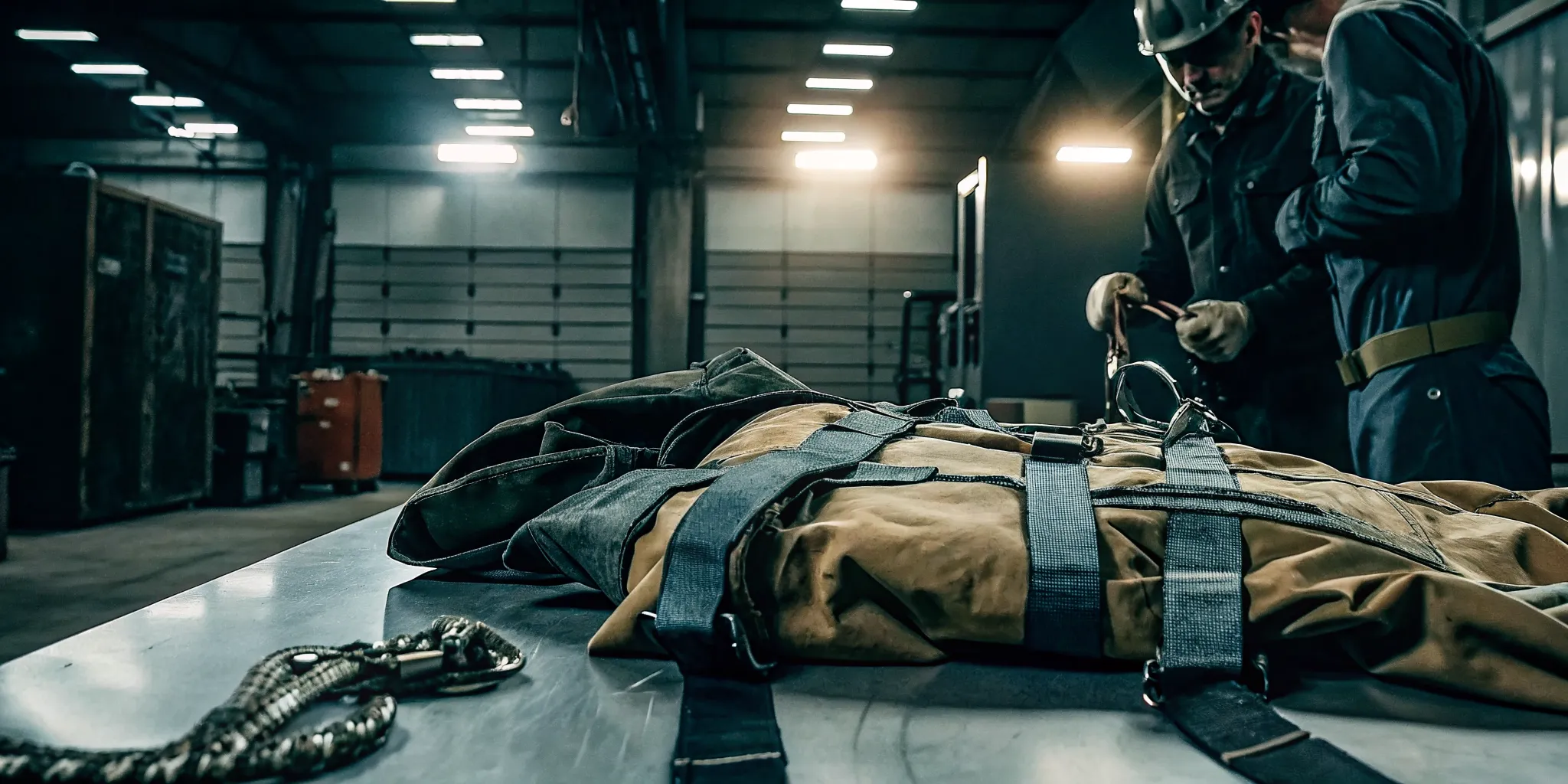
Industrial fall arrest, tactical retention, and technical rescue may involve similar materials or hardware, but they are not interchangeable operational categories. Industrial fall arrest is intended to stop a worker after a fall and limit the forces transmitted to the body. Tactical retention may be intended to keep an operator inside a platform or support controlled positioning. Rescue equipment may need to support patient handling, access, evacuation, or a planned transition between systems.
The correct procurement decision depends on the intended function. A retention lanyard should not be treated as a fall-arrest subsystem unless its documentation specifically supports that use. Likewise, a tactical or rescue harness should not be represented as meeting an OSHA requirement solely because it has strong webbing or rated attachment points.
Define use cases without overstating compliance
Requirements should distinguish normal operating loads from foreseeable dynamic events. They should also identify whether equipment is intended for restraint, work positioning, suspension, evacuation, or fall arrest. This language helps evaluators compare products on the basis of relevant evidence rather than broad claims.
Include rescue in the system design
Fall protection planning does not end when a fall is arrested. Suspension can create an urgent medical and operational problem. The acquisition package should therefore identify the rescue method, compatible equipment, required training, and response responsibilities. If the mission involves difficult access or nonstandard geometry, rescue planning should be validated before deployment.
How should buyers evaluate a mission-specific harness system?
Procurement teams can improve technical evaluations by using a requirements matrix that links each operational need to measurable evidence. This method supports consistent scoring and creates a record of why a system was selected. It also exposes requirements that cannot be satisfied by a commercial off-the-shelf configuration.
Start with measurable acceptance criteria
- Intended function: State whether the system is for fall arrest, restraint, positioning, rescue, evacuation, or a defined combination.
- User and load range: Account for the operator, clothing, tools, and mission equipment.
- Connection architecture: Identify anchor locations, connector interfaces, and permitted configurations.
- Environment: Address abrasion, chemicals, heat, moisture, salt exposure, and storage conditions.
- Documentation: Require instructions, inspection criteria, traceability, and applicable test records.
- Lifecycle support: Define training, periodic inspection, maintenance, retirement, and replacement needs.
Standards can inform these criteria, but buyers should confirm which edition and provisions apply. ANSI/ASSP Z359 documents are frequently referenced for fall protection systems and components. OSHA regulations remain legally distinct from voluntary consensus standards. The solicitation should not treat those sources as interchangeable.
| Use category | Primary purpose | Key procurement question |
|---|---|---|
| Fall arrest | Stop a worker after a fall | Does the complete system meet the governing requirements and available clearance? |
| Restraint | Prevent access to a fall hazard | Can the configured system prevent the user from reaching the edge? |
| Work positioning | Support a user at a work location | What backup protection and connection method are required? |
| Tactical retention | Keep an operator connected to a platform | Is the system documented for the platform, movement, and foreseeable loads? |
| Technical rescue | Enable access, patient handling, or evacuation | How does the system integrate with the rescue plan and trained team? |
Use a repeatable evaluation sequence
- Confirm the governing regulation, contract clauses, and mission requirements.
- Define the intended function and foreseeable misuse for every configuration.
- Review ratings, interfaces, test evidence, instructions, and limitations.
- Validate the rescue plan, training plan, inspection process, and retirement criteria.
- Record approved configurations and control later substitutions or design changes.
This sequence gives evaluators a common basis for comparing proposals. It also makes exceptions visible. If an offer cannot provide a required document or approved configuration, the team can assess the gap before award rather than during fielding.
Review Fusion Tactical USA engineering and testing capabilities for a mission-specific system.
Load ratings and component compatibility
Load ratings are essential, but a single strength value does not establish system suitability. Procurement reviewers should understand whether a published value represents minimum breaking strength, proof load, working load, or another test result. The test direction, fixture, sample condition, and applicable standard can materially affect what the number means.
Read ratings in operational context
A kilonewton rating communicates force, not a complete use case. Reviewers should connect the rating to the expected load path and relevant dynamic conditions. They should also verify whether attachment points carry different ratings or limitations. Product instructions and test records should make those distinctions clear enough for evaluators and end users.
Control interface risk
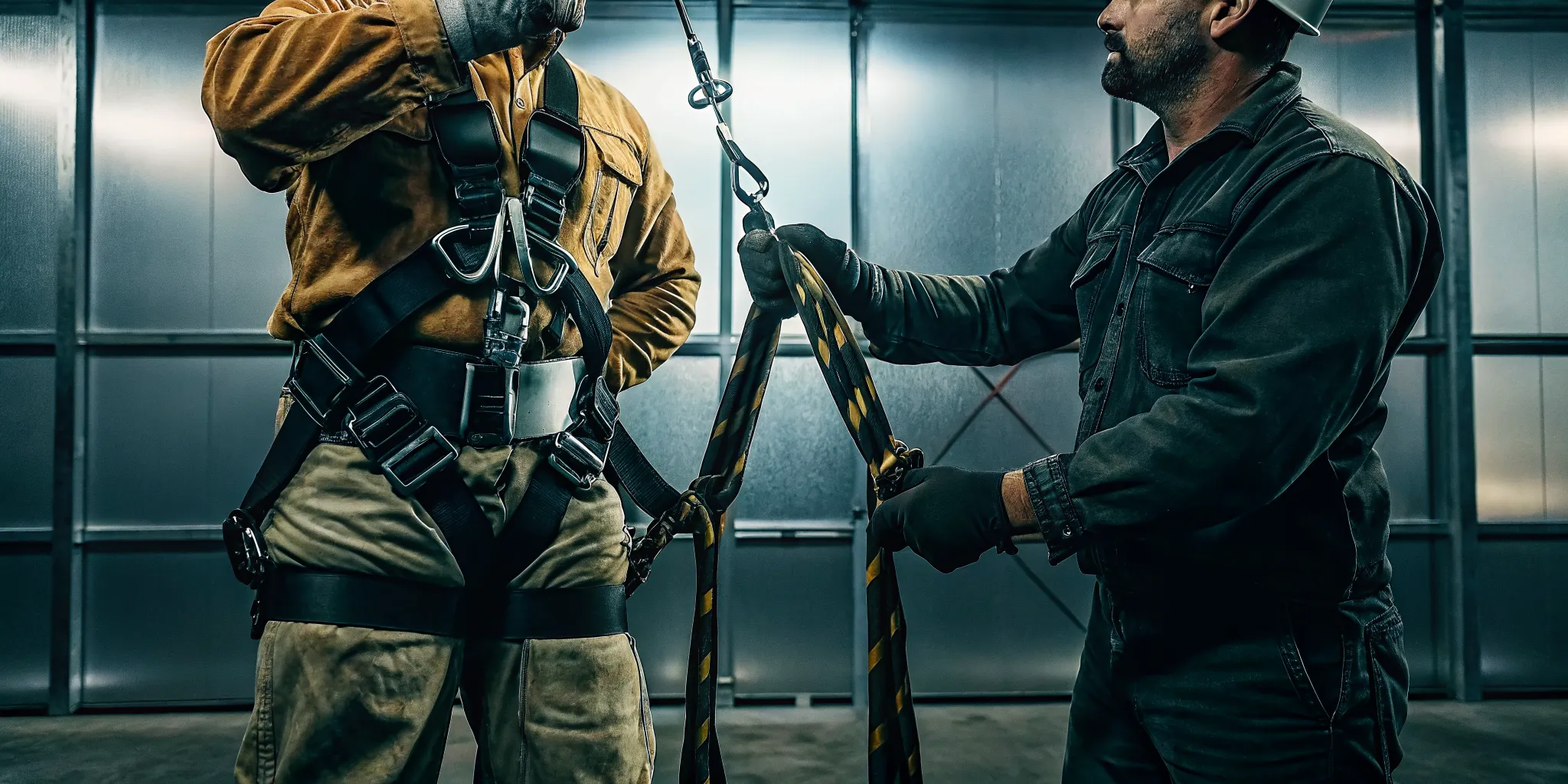
Compatibility failures often occur at interfaces. A connector can be individually rated yet interact poorly with an attachment point because of cross-loading, gate loading, geometry, or unintended movement. Webbing width, buckle design, dorsal or sternal attachment location, lanyard length, and anchorage position can also change system behavior.
Approved configurations should be documented and reflected in training. When a mission requires a nonstandard interface, engineering review and representative testing provide stronger evidence than an assumption based on individual component ratings.
What documentation should procurement require?
Technical documentation turns product claims into auditable evidence. The appropriate package depends on the contract and mission, but it should be detailed enough to support source selection, receiving inspection, training, field use, and lifecycle decisions. Vague statements such as "meets all standards" do not identify what was tested or how the conclusion was reached.
Build an evidence package
- Manufacturer instructions and intended-use limitations
- Applicable standards and referenced editions
- Component ratings and approved configurations
- Test methods, results, and third-party reports when required
- Lot, batch, serial, or other traceability information
- Inspection, cleaning, storage, and retirement criteria
- Country-of-origin and sourcing documentation when contractually required
- Quality-system evidence relevant to the procurement
Government acquisitions may also impose domestic sourcing and supply-chain requirements. Fusion Tactical USA supports U.S.-based manufacturing and Berry Amendment compliant manufacturing capabilities. Applicability should still be confirmed against the specific solicitation, contract clauses, product, and bill of materials.
Preserve configuration control
After selection, substitutions and design changes should follow a defined review process. A change in webbing, thread, hardware, or supplier may affect performance even when the finished product appears similar. Configuration control helps ensure that delivered units remain consistent with the evaluated design and supporting evidence.
The acquisition team should also define how evidence will be accepted. Depending on risk and contract language, that may include a certificate of conformance, lot-specific report, independent laboratory report, first-article inspection, or witnessed test. The evidence type should match the stated requirement. A marketing data sheet alone may not establish traceability to the delivered configuration.
For programs with recurring orders, documentation requirements should continue after the initial award. Receiving personnel need a practical method to confirm identity, configuration, quantity, condition, and required records. Any discrepancy should enter a documented review process before equipment is issued.
Inspection, maintenance, training, and retirement
Lifecycle controls protect the value of the initial procurement. Equipment can become unsuitable through damage, contamination, UV exposure, heat, improper storage, unauthorized modification, or involvement in an event. Inspection programs should follow manufacturer instructions and the employer's fall protection program.
Make inspections actionable
A useful inspection procedure identifies who inspects, when inspections occur, what conditions require removal from service, and how findings are recorded. Harness checks commonly address cuts, abrasion, burns, chemical damage, pulled stitching, deformed hardware, corrosion, buckle operation, labels, and evidence of modification. The procedure should also cover connectors, lanyards, energy absorbers, and other system components.
Align training with the deployed configuration
Training should reflect the actual equipment and environment, not only general fall protection concepts. Users need to understand fit, adjustment, connection points, permitted configurations, pre-use checks, limitations, and emergency actions. Supervisors and inspectors need clear authority to quarantine equipment when its condition or history is uncertain.
Retirement criteria should be established before deployment. Equipment involved in a fall event or showing a condition identified by the manufacturer should be removed from service. It should then be handled under the applicable review or retirement process. Records support accountability across units, shifts, and maintenance cycles.
Program managers should plan for replacement inventory and lead times as part of readiness. A unit that removes damaged equipment from service still needs enough approved equipment to perform the mission safely. Forecasting, serialized records, and scheduled inspections help procurement teams anticipate demand instead of relying on emergency substitutions.
When does custom engineering support the mission?
Custom engineering becomes relevant when standard products cannot satisfy the complete operational requirement. Examples include unusual connection geometry, platform integration, restricted movement envelopes, specialized extraction procedures, or contract-specific manufacturing controls. The objective is not customization for its own sake. It is a controlled solution to a defined gap.
Use a disciplined development process
A strong development effort begins with requirements capture and interface definition. It then progresses through design review, material and hardware selection, prototyping, representative testing, documentation, and controlled production. End-user and safety stakeholders should participate early enough to identify operational issues before the design is finalized.
Fusion Tactical USA provides U.S.-based design, manufacturing, and testing support for mission-critical equipment. Its manufacturing and program background includes work for demanding government and aerospace applications. Procurement teams can use that capability to evaluate whether an existing configuration is suitable or whether a documented custom solution is warranted.
Frequently asked questions
At what height does OSHA require fall protection?
The trigger depends on the industry, task, and applicable OSHA standard. Buyers should identify the governing regulation and hazard before specifying equipment. A height threshold alone does not determine which harness system or protection method is appropriate.
Does OSHA approve specific fall protection harnesses?
OSHA establishes and enforces workplace safety requirements; procurement teams should not treat a general "OSHA approved" claim as sufficient evidence. Evaluate the complete system, intended use, applicable rules, manufacturer documentation, and supporting test data.
Can a tactical retention harness be used for industrial fall arrest?
Not by assumption. Retention and fall arrest serve different functions. Use a product for fall arrest only when the manufacturer documentation and complete system design support that use under the applicable requirements.
What records should accompany a harness program?
Records commonly include product instructions, approved configurations, training, inspections, incidents, maintenance, and retirement decisions. Contract-specific traceability and test documentation may also be required.
Discuss your harness requirement with Fusion Tactical USA
A sound acquisition connects the hazard assessment, applicable regulations, operational mission, component interfaces, documentation, training, rescue plan, and lifecycle controls. Fusion Tactical USA can support procurement teams that need mission-specific harness systems, rated hardware, U.S.-based manufacturing, or custom engineering.
Contact Fusion Tactical USA to discuss procurement and mission-specific equipment requirements.


