

Military Riggers Belt: Design, Testing and Duty Integration
The military riggers belt has evolved from a parachute-rigging field expedient into a precisely engineered, load-rated life-safety system. What began as improvised webbing sewn on base sewing machines is now a mission-critical component certified to MIL-STD protocols. Rated in kilonewtons, and integrated into helicopter retention systems, tactical rescue harnesses, and government procurement contracts. This article traces that transformation across material science, construction standards, testing regimes, and duty integration.
A military riggers belt is a high-strength, double-layer nylon load-bearing system built to secure duty gear and provide a rated attachment point for rescue and retention operations. These belts use 1.75-inch resin-impregnated webbing with forged steel quick-release hardware, typically rated for tensile loads between 6,000 and 10,000 pounds. Unlike standard duty belts, a true riggers belt undergoes rigorous testing to meet MIL-SPEC protocols for strength, stitch integrity, and hardware performance. U.S. manufacturers produce these systems under Berry Amendment compliance, ensuring full material traceability for government buyers. The resin-treated nylon construction prevents sagging under heavy loads while maintaining the safety factor required for life-safety applications.
Ready to upgrade your team's load-bearing equipment? Explore Fusion Tactical's engineered riggers belt systems built for mission-critical operations.
Understanding how this hardware reached its current state requires examining the full arc of rigger history, from wartime parachute schools to modern kN-rated testing labs.
What Is a Military Riggers Belt and How Did It Evolve?
The military riggers belt traces its origins to the parachute riggers of World War II. These skilled technicians packed parachutes for airborne operations and, over time, applied their sewing expertise to create load-bearing belts that could carry heavy equipment on the ground. The military riggers belt emerged as a field-expedient solution that has since been formalized into a certified piece of life-safety equipment.
The Navy and Army parachute rigger schools
Training for this work was rigorous. During World War II, the Navy established the Parachute Materials School at Lakehurst. New Jersey, where sailors learned precision sewing and hardware assembly with high-strength nylon and steel components. The Army developed its own certification path through the Parachute Rigger Course, producing experts in load-bearing textile engineering. These riggers became the first generation of tactical gear craftsmen.
From field expedient to engineered system
Troops on the front lines needed stronger belts to carry their gear. They began crafting field-expedient riggers belts from spare parachute webbing and hardware. These early belts used layered nylon scraps stitched into stiff, load-bearing platforms that outperformed standard leather duty belts. Today, those same design principles have been codified into engineered specifications with certified load ratings and material traceability.
Key milestones in military riggers belt evolution:
- 1940s-1950s: Parachute riggers create field-expedient belts from spare webbing on base sewing machines
- 1960s-1970s: MIL-SPEC standards formalize webbing strength requirements for tactical load-bearing equipment
- 1980s-1990s: COBRA quick-release buckles enter military use, replacing traditional friction hardware
- 2000s-present: kN-rated testing, resin-impregnated nylon, and Berry-compliant U.S. manufacturing become baseline standards
Material Engineering: Webbing Specifications and Buckle Design
The strength of a military riggers belt depends on its core materials. Manufacturers build these as engineered life-safety systems, not casual accessories. Every material choice directly affects the belt's ability to perform under load.
High-strength nylon webbing
Standard single-layer webbing fails under the repeated stress of heavy gear. Military-grade riggers belts use two layers of resin-impregnated nylon webbing, achieving breaking strengths of 6,000 to 7,000 pounds. The resin treatment adds stiffness that prevents sagging and twisting, even when loaded with holsters, pouches, and rescue hardware. The 1.75-inch width has become the industry standard, distributing weight across the waist while fitting standard tactical attachments.
Forged steel hardware and quick-release technology
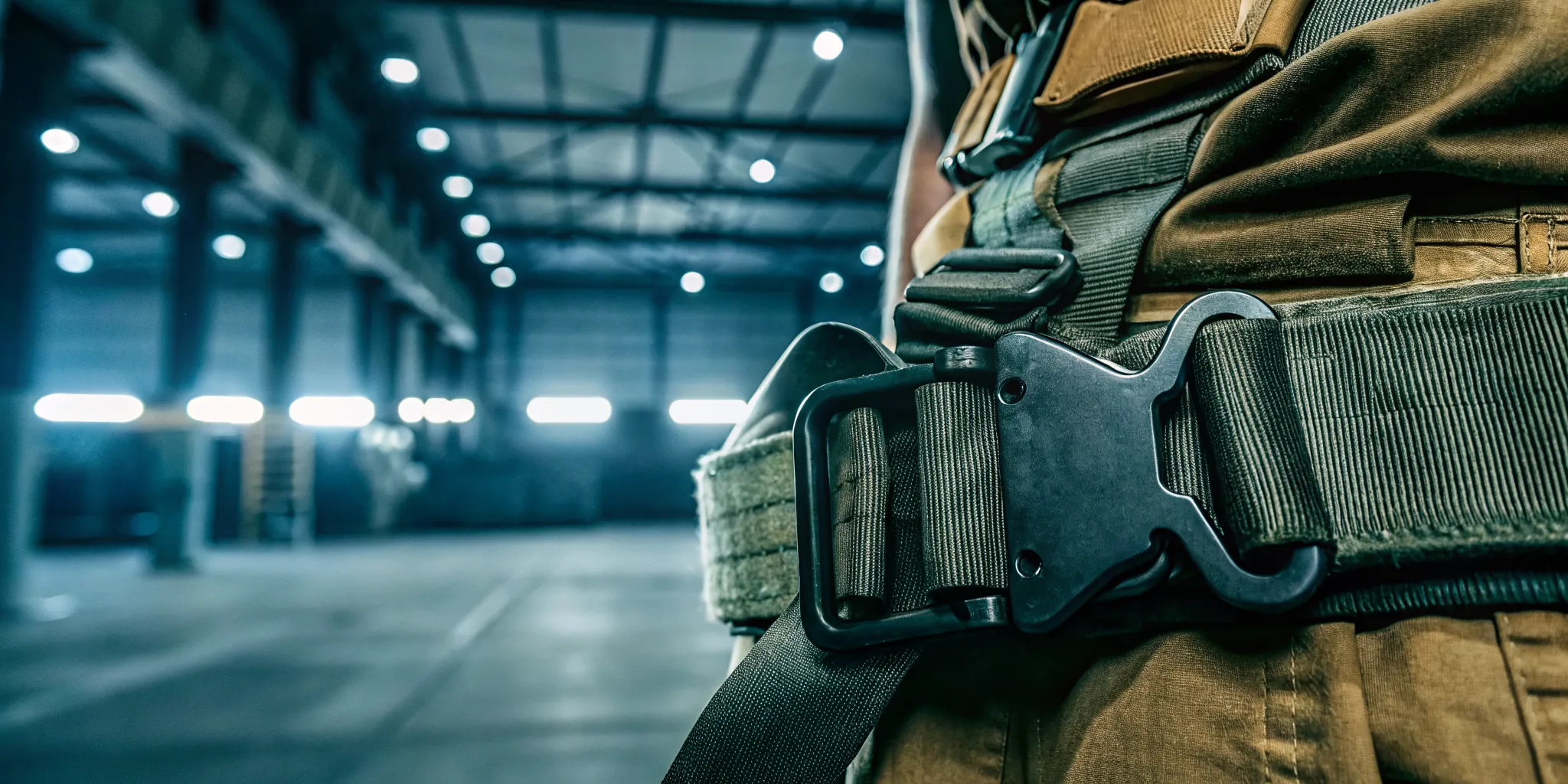
Buckles represent the single most critical failure point on any load-bearing belt. Quality riggers belts use forged steel components rather than cast or stamped parts. Modern COBRA quick-release buckles allow one-handed operation while maintaining locked security under load. These buckles are independently tested to tensile strengths of 7,000 to 10,000 pounds.
Comparison of hardware types used in tactical belts:
- Forged steel COBRA buckle: 7,000-10,000 lb rating, one-hand release, used in life-safety applications
- Cast metal buckle: 2,000-4,000 lb rating, suitable for duty carry only
- Stamped plastic buckle: Not rated for life-safety, prone to failure under shock loads
- Standard friction buckle: No load rating, designed for garment fit only
Stitching Patterns and Construction Standards for Life-Safety Belts
The difference between a duty belt and a life-safety riggers belt is invisible at a glance: it lives in the stitches. Every bar tack, thread count, and seam placement follows engineering specifications designed to prevent catastrophic failure under load.
Double-layer webbing and resin impregnation
A true military riggers belt uses two layers of heavy-duty nylon webbing laminated together. This double-layer construction provides the stiffness needed to carry full tactical loads without sagging or rolling. Resin treatment adds structural rigidity and protects against moisture and UV degradation. The standards mirror those used in FAA-certified parachute rigging, where precision construction separates safe equipment from catastrophic failure.
Bar-tack stitching and thread specifications
Bar-tack stitching is the industry standard for load-bearing stress points. These dense, closely spaced stitch patterns distribute force across a wide surface area, preventing the thread from cutting through the webbing under tension. Quality belts use UV-resistant bonded nylon thread that withstands sun exposure, moisture, and chemical contact.
Critical stitch specifications for life-safety riggers belts:
- Bar-tack density: Minimum 18-22 stitches per inch at all stress points
- Thread material: UV-resistant bonded nylon, minimum tensile strength 5 lbs per thread
- Stitch pattern: Box-stitch or X-pattern at buckle attachment points
- Seam type: Double-needle lockstitch for primary load-bearing seams
- Quality control: 100% visual inspection plus pull-test on every production batch
Load ratings and safety factors
While breaking strength often reaches 6,000 pounds, the safe working load for most riggers belts is set at approximately 2,000 pounds, creating a 3:1 safety factor. This margin accounts for shock loading, dynamic movement, and environmental degradation over the belt's service life. Fusion Tactical applies these engineering principles at its ISO 9001:2015 certified facility in Chino, California, maintaining full material traceability for every belt shipped.
Load Testing and Certification: From MIL-STD to kN Ratings
Rigorous testing separates certified life-safety gear from general-purpose tactical equipment. A military riggers belt must pass multiple levels of verification before it can be considered mission-ready.
The role of MIL-STD compliance
Military standards for load-bearing equipment trace their lineage to parachute rigging requirements. The FAA's oversight of rigger certifications established the precedent for third-party verification of life-safety gear. MIL-STD testing protocols now govern everything from webbing tensile strength to buckle pull-test procedures. These tests typically exceed the forces a belt would encounter in the field, providing a documented safety margin.
Kilonewton ratings and life-safety verification
Tensile strength in tactical gear is measured in kilonewtons (kN), where 1 kN equals approximately 225 pounds of force. A rated military riggers belt typically carries a 26-44 kN breaking strength, compared to standard duty belts that carry no load certification at all. This rating is the definitive indicator of life-safety capability.
Typical kN ratings across belt categories:
- Certified rescue riggers belt: 26-44 kN (6,000-10,000 lbs) , life-safety rated
- Duty-grade tactical belt: 9-13 kN (2,000-3,000 lbs) , equipment carry only
- Standard garment belt: No rating , not tested for load-bearing
Quality management and engineering services
Fusion Tactical operates an ISO 9001:2015 certified quality management system that governs every stage of production. The company holds CAGE Code 0KQN1 and Small Business Certification #2011930, enabling direct government procurement. Fusion also offers full load testing and custom engineering services for agencies requiring specialized configurations, including rapid prototyping for custom rescue, aviation, and tactical harness systems.
What Are the Key Differences Between a Military Rigger Belt and a Standard Duty Belt?
To an untrained eye, a military riggers belt and a standard duty belt may appear similar. In practice, they serve fundamentally different roles with vastly different engineering requirements.
The fundamental difference between a military riggers belt and a standard duty belt is load rating. A riggers belt is designed and tested to support a person's full body weight during a fall, rescue, or retention scenario. A standard duty belt is designed only to hold equipment in place on the waist. This distinction dictates every aspect of construction, from webbing selection and stitch patterns to buckle hardware and certification testing.
| Feature | Military Riggers Belt | Standard Duty Belt |
|---|---|---|
| Load Rating | kN-rated, up to 44 kN (10,000 lbs) | Unrated for life-safety |
| Construction | Double-layer resin-impregnated mil-spec nylon | Single-layer nylon or leather |
| Buckle Type | Forged steel quick-release (COBRA or equivalent) | Plastic, stamped metal, or friction buckle |
| Intended Use | Life-safety, rescue, helicopter retention | Equipment carry only |
| Compliance | Berry and TAA compliant, MIL-STD tested | Often non-compliant, no testing |
| Stitch Construction | Bar-tack reinforced, certified thread spec | Standard single-needle or no reinforcement |
| Price Range | $50 to $120 | $15 to $40 |
Choosing the right belt for the mission
The selection depends entirely on operational requirements. Personnel working near helicopter doors, on elevated platforms, or in rescue scenarios require a rated riggers belt capable of supporting body weight during a fall. Officers who only need to carry equipment on patrol may be adequately served by a quality duty belt.
Fusion Tactical offers belt sizing from 24 to 51 inches, accommodating the full range of body types with or without layered clothing. Each belt includes clear load rating documentation and material traceability records for procurement compliance. Regular inspection for wear, loose stitching, or hardware deformation is essential for maintaining safety.
Duty Integration: Connecting the Rigger Belt to Harness Systems and Retention
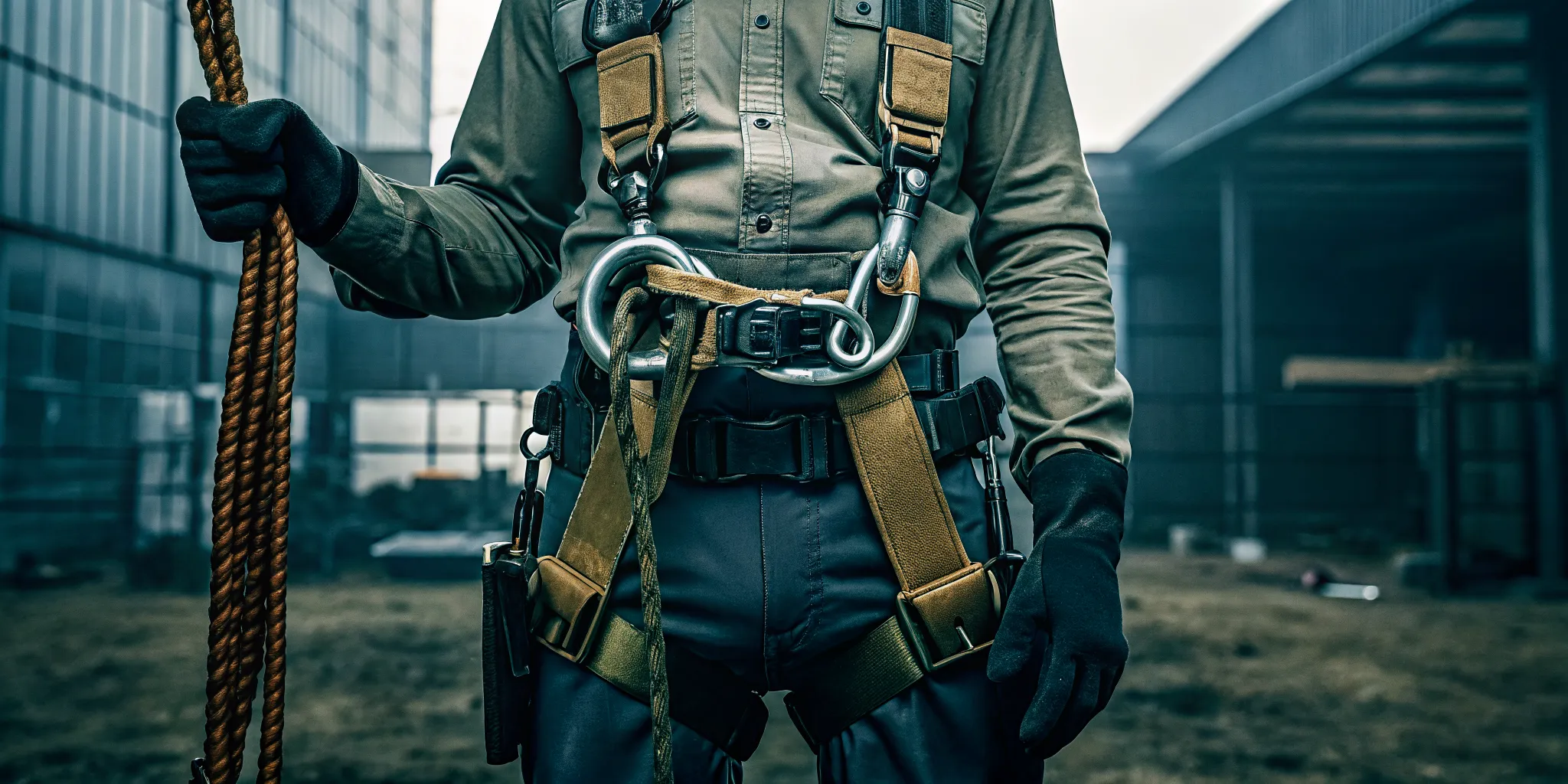
The military riggers belt rarely operates in isolation. It serves as the foundation for a complete load-bearing ecosystem, connecting to helicopter retention lanyards, tactical harnesses, and inner-outer belt systems.
Helicopter lanyards and operator retention
In helicopter operations, the riggers belt provides the primary attachment point for tactical retention lanyards. This connection prevents falls during open-door maneuvers while allowing freedom of movement. Fusion Tactical builds these components as engineered life-safety systems with kN-rated hardware and certified stitching. The same standards that govern FAA parachute rigging under 14 CFR 65.115 apply to the construction of these retention systems.
Inner and outer belt systems
Many operators use a two-belt configuration for stability. The inner belt passes through pants belt loops and features a hook-and-loop face. The outer military riggers belt attaches to this base, creating a rigid platform that does not shift under the weight of holsters, pouches, or rescue hardware. This system distributes load across the hips rather than the waist, improving comfort during extended operations.
Matching with tactical harness systems
For rope rescue and tactical climbing operations, the riggers belt integrates with full-body tactical rescue harnesses. The belt serves as a redundant load path and retention point, bridging the gap between garment-level equipment and full harness systems. This layered approach to safety equipment follows the same design philosophy used in aerospace and mountaineering, where redundant systems provide protection against single-point failure.
Compliance and Government Procurement: Berry Amendment, TAA, and MIL-STD
Government procurement of tactical equipment operates under strict regulatory frameworks. Understanding these requirements is essential for agencies building compliant acquisition programs.
Berry Amendment compliance
The Berry Amendment (10 U.S.C. 4863) requires the Department of Defense to procure certain items, including tactical textiles and personal safety equipment, from U.S. manufacturers. Fusion Tactical's manufacturing facility in Chino, California, is fully Berry Amendment compliant. Producing riggers belts from domestic materials with a complete audit trail from raw fiber to finished product. This compliance streamlines government procurement and eliminates contractor risk.
TAA compliance and federal contracting
Trade Agreements Act (TAA) compliance ensures that equipment sold to the U.S. government originates from approved countries. Fusion Tactical holds TAA-compliant status for all manufactured products, including riggers belts, rescue harnesses, and helicopter retention systems. Combined with CAGE Code 0KQN1, ISO 9001:2015 certification, and broad NAICS coverage, this enables direct federal procurement through GSA schedules and sole-source contracts.
MIL-STD and industry specifications
Fusion Tactical designs its load-bearing equipment to meet or exceed applicable MIL-STD requirements for tensile strength, environmental resistance, and material composition. The company's engineering team works directly with procurement officers to ensure that every product specification aligns with the relevant military standard or federal specification. Contact the engineering team for specification verification and compliance documentation.
Frequently Asked Questions
What makes a military riggers belt different from a regular belt?
A military riggers belt is built from double-layer resin-impregnated nylon webbing with forged steel hardware and bar-tack stitching, tested to kN-rated tensile specifications. A standard belt is designed only to hold up pants, not to support body weight or heavy tactical loads.
Can a riggers belt support body weight during a fall?
Yes. A properly certified military riggers belt with kN-rated hardware is designed to support a falling person's weight during rescue or retention operations. Always verify that your belt carries a published load rating and has been MIL-STD tested for life-safety applications.
What is the standard width of a military riggers belt?
The standard width is 1.75 inches. This width accommodates most tactical holster and pouch attachments while distributing load across the waist. Some specialized belts use 2-inch webbing for applications requiring additional stiffness or attachment surface area.
Are military riggers belts Berry Amendment compliant?
When purchased from a qualified U.S. manufacturer, yes. Fusion Tactical riggers belts are fully Berry Amendment compliant, manufactured in Chino, California from domestic materials with complete material traceability. Verify Berry compliance with your supplier before government procurement.
How do I inspect a riggers belt for wear?
Inspect the webbing for fraying, cuts, or discoloration; check all stitching for broken or loose threads; verify that the buckle engages and disengages smoothly with no deformation. Belts showing any of these signs should be removed from service immediately and replaced with certified equipment.
Ready to Secure Your Team with Engineered Life-Safety Gear?
Upgrading from unrated duty gear to certified life-safety equipment is one of the most consequential procurement decisions a tactical unit makes. The difference between a belt rated at 44 kN and one with no certification at all can mean the difference between mission success and catastrophic equipment failure. Fusion Tactical manufactures every riggers belt in the United States under Berry Amendment compliance. With ISO 9001:2015 quality management, full material traceability, and kN-rated testing documentation available for every production batch.
Whether your team needs helicopter retention systems, tactical rescue harness integration. Or standard load-bearing gear for daily operations, our engineering team can deliver custom solutions built to your specifications. Contact us for government pricing, engineering consultation, or to request a capability statement with CAGE Code 0KQN1 documentation.
Ready to upgrade your team's life-safety equipment?
Call (909) 393-9450 to speak with our engineering team or request a quote for government and defense pricing today.


