

Military Rappelling Harness Procurement Requirements
Selecting a military rappelling harness requires more than comparing a published load rating. Procurement teams must qualify the complete life-safety system against the operating environment, fully equipped user mass, connector compatibility, inspection controls, and contract requirements. Fusion Tactical USA manufactures mission-critical harnesses and rated hardware in Chino, California for defense, law enforcement, rescue, and government programs.
A military rappelling harness is a purpose-built safety system engineered to manage the combined mass, dynamic forces, and equipment interfaces associated with tactical rope operations. Unlike general-purpose equipment, the complete assembly must support the operator and mission load while maintaining stability around armor, belts, packs, and attachment hardware. Qualification should address webbing construction, reinforced stitching, connector geometry, heat and abrasion exposure, documented testing, and lifecycle traceability. OSHA fall-protection criteria provide useful anchorage and system-performance baselines, while the applicable contract and mission profile determine the final acceptance requirements.
Choosing the right system takes more than checking a load rating or unit price. Procurement officers, program managers, and operational evaluators must determine how design choices affect compatibility, mobility, deployment speed, inspection, and service life. This review explains how to translate mission requirements into a defensible technical specification and qualification plan.
Why must military rappelling harness requirements start with the mission?
Fusion Tactical USA recommends beginning military rappelling harness qualification with the operator's mission profile, not a generic product category. Tactical systems must manage high-risk maneuvers, fully equipped user mass, and interfaces with armor, packs, and duty equipment. A mission-first approach gives evaluators measurable criteria for configuration, compatibility, and acceptance testing. Reliability is essential because equipment failure is not an option.
Operational environment and load
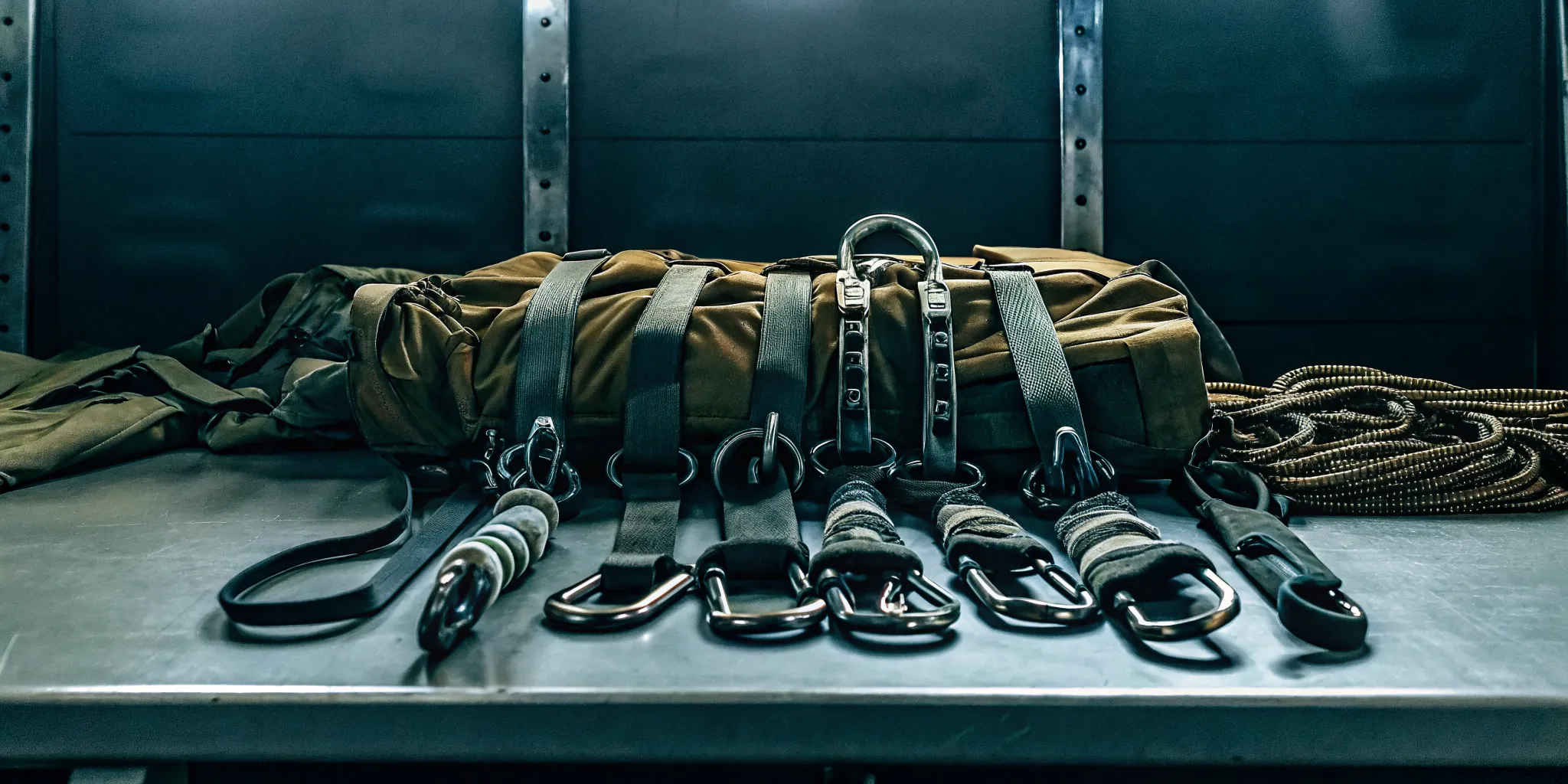
Operators often carry heavy packs and tools that change how a harness fits and moves. A professional military rappelling harness needs to support this weight while keeping the user safe. Standards for fall protection often need an anchorage that can support 5,000 pounds or 22.2 kN per person. You can find these rules in the OSHA safety standards for fall arrest systems.
Technical teams look for gear that meets high load ratings. For example, some tactical rescue belt systems are rated to 18kN for search and rescue work. Heavy test weights of about 300 pounds are used to check the strength of these systems. This testing ensures that the gear can handle the force of a fall while the operator is fully equipped for a mission.
System compatibility and movement
A harness must work well with other tactical gear like body armor and duty belts. Modular designs allow for quick changes between rappelling and extraction tasks. Many systems use delta rings or D-rings to help with these shifts. Professional tactical rappel harness models often use padding to improve comfort. This padding helps prevent pain and fatigue when hanging for long periods.
Fit is also a key part of mission success. A good harness should allow for a wide range of adjustment to fit different body sizes and clothing layers. Some professional sit harnesses allow for a waist size from 74cm to 120cm. This range ensures that the gear stays secure whether the user is wearing a light uniform or heavy gear. Proper fit is needed to keep the system stable during fast rope or rappel moves.
Extraction and rapid deployment
Speed is vital during a tactical mission. A modular military rappelling system must allow for fast use and extraction. Specialized SPIE or aircrew systems are built for these quick moves. These harnesses often meet strict safety codes like EN12277 or MIL-STD to ensure they work when they are needed most. Using gear that meets these standards helps officers buy with confidence.
High-quality tactical gear is often made with materials that meet Berry Amendment rules. This means the gear is made in the USA using American parts and labor. Following these rules is a must for many government and defense contracts. Choosing U.S.-made gear ensures that units receive reliable, compliant tools for their most critical work.
What standards should procurement teams evaluate?
Procuring a military rappelling harness is a life-safety and program-compliance decision, not a unit-cost exercise. The solicitation should define operational loads, required interfaces, test evidence, domestic sourcing obligations, inspection documentation, and acceptance criteria. A disciplined requirements matrix gives evaluators a repeatable basis for comparing systems and documenting award decisions.
Key safety standards
Many groups set rules for safety in the workplace. OSHA sets the main laws in the United States. For example, OSHA says an anchorage must support 5,000 pounds for each person. This is about 22.2 kN of force. A military rappelling harness often goes beyond these basic goals. It must hold up during fast rope moves.
Teams should check for ANSI Z359 rules. These rules cover fall protection in many fields like work sites or oil fields. While some gear is for workers, tactical gear needs to handle much more stress. Looking at the rules helps teams find the best gear.
| Feature | ANSI/OSHA Rules | Tactical/Military Specs |
|---|---|---|
| Main Goal | Workplace safety and fall stop. | High-speed moves and rescue. |
| Weight Limits | Standard 310-pound capacity. | Up to 150kg or more for gear. |
| Load Ratings | Focus on 5,000-pound anchors. | Ratings up to 18kN or higher. |
| Materials | Strong industrial nylon. | Berry and TAA compliant web. |
| Build Style | Standard safety harness. | Modular and SPIE designs. |
US production laws
Military buyers frequently include Berry Amendment requirements in applicable solicitations. The procurement team must identify the exact domestic-source clauses and verify that the proposed configuration is supported by supplier documentation. Fusion Tactical USA manufactures in Chino, California and provides a dedicated Berry Amendment compliance resource for buyers evaluating domestic manufacturing requirements.
TAA requirements may also apply to federal purchases. Buyers should document contract clauses, country-of-origin evidence, and the approved configuration before award. Fusion Tactical USA's government and defense contracting capabilities give procurement teams a direct path for discussing applicable documentation and program needs.
Importance of test logs
A harness program needs traceable records for materials, production lots, inspections, acceptance tests, issue dates, and retirement actions. This documentation helps a unit isolate affected equipment, investigate damage, and demonstrate that each assembly remains within the approved lifecycle.
Test reports must identify the configuration, procedure, load, acceptance criteria, and result. Evaluators should confirm that evidence applies to the complete proposed assembly rather than an unrelated component or earlier design. Fusion Tactical USA's certifications and compliance resources support the technical review process.
How should load ratings and hardware be evaluated as a system?
A published rating for one buckle does not establish the capacity of the assembled life-safety system. Evaluators must assess load paths, connector orientation, webbing geometry, stitching, and every interface under representative conditions. The lowest-performing compatible element governs system capability. A military rappelling harness joins webbing, thread, and metal into one unit. Each part must work together to keep the user safe during high-risk tasks.
Rated hardware and system strength
Most tactical gear uses kilonewton (kN) ratings to show strength. One kN is about 225 pounds of force. While a D-ring might be rated to 22 kN, the stitching that holds it must match that load. OSHA rules state that anchor points for fall arrest must support 5,000 pounds or 22.2 kN for each person. This ensures the gear can handle the sudden jerk of a fall without breaking.
Choosing the right hardware is just the start. You must also check how the metal parts fit with the soft goods. If a connector is too small for the webbing, it can cause wear or bunching. This stress can weaken the fabric over time. A modular military rappelling system often uses delta rings to keep loads centered and hardware aligned.
Webbing and stitching integrity
The nylon or polyester webbing is the core of any rescue kit. It must be thick enough to resist cuts but flexible enough for movement. Stitching patterns, like the 3-point bar tack, spread the load across a wide area. This prevents the thread from ripping out under tension. Professional gear should meet strict standards like EN12277 to ensure the build quality is top-tier.
Testing is how makers prove their gear works. Many kits are tested with a 300-pound weight to check for strength and force. These tests help find weak spots in the design before the gear reaches the field. In tactical and rescue work, there is no room for error. Every stitch and buckle must be ready for the worst-case scenario.
Connector selection must match the approved rope-system architecture and documented operating procedure. Evaluators can compare the Supreme II aluminum screw-gate carabiner, Fusion Figure 8 style descender, and Miraj aluminum quick-release half-body harness as representative components when defining connector geometry, descent-control interfaces, and rapid-release requirements.
Which military rappelling harness configuration fits the operation?
Configuration selection begins with a documented operational risk assessment. Evaluators should define the maneuver, anticipated suspension duration, inversion potential, extraction method, environment, operator load, and required connection points before selecting a system. This mission-based analysis aligns harness geometry and capacity with measurable safety and performance criteria.
Tactical sit harnesses for rappelling
A sit harness can support rapid rope access where the approved risk assessment indicates low inversion potential and does not require full-body fall-arrest geometry. A representative low-profile model may weigh approximately 814g, preserve operator mobility, and provide a stable seat for a tactical rappel harness used during steep approaches or structure access. Evaluators must verify the documented capacity against the operator's fully equipped mass rather than relying on product class alone.
These harnesses work well when the risk of a flip or a long free fall is low. They use strong waist belts and leg loops to spread the weight. You can change the waist from about 74cm to 120cm to fit over many layers of gear. This fit is key for safety during long shifts on a rope. The use of Berry and TAA compliant parts makes them a top pick for state contracts and field use.
Full body systems for fall arrest
When the job has a high risk of a fall, a full body harness is a must. These systems use straps over the shoulders to keep a person upright if they drop. This way helps stop injury to the spine and keeps the airway clear. Many full body types use soft foam padding. This helps the user stay at ease while they wait for help or finish a task. Some custom rescue belts for search and evac tasks carry an 18kN rating to ensure they hold up in the field.
Safety rules often drive the use of these systems in the field. For example, OSHA rules say that fall arrest anchors must support at least 5,000 pounds per person. A full body military rappelling harness meets these high rules for force and strength. These units are vital for work on high towers, ships, or when rappelling with heavy packs. They are built to last in areas where the user must hang for a long time.
Modular and built-in systems for mission choice
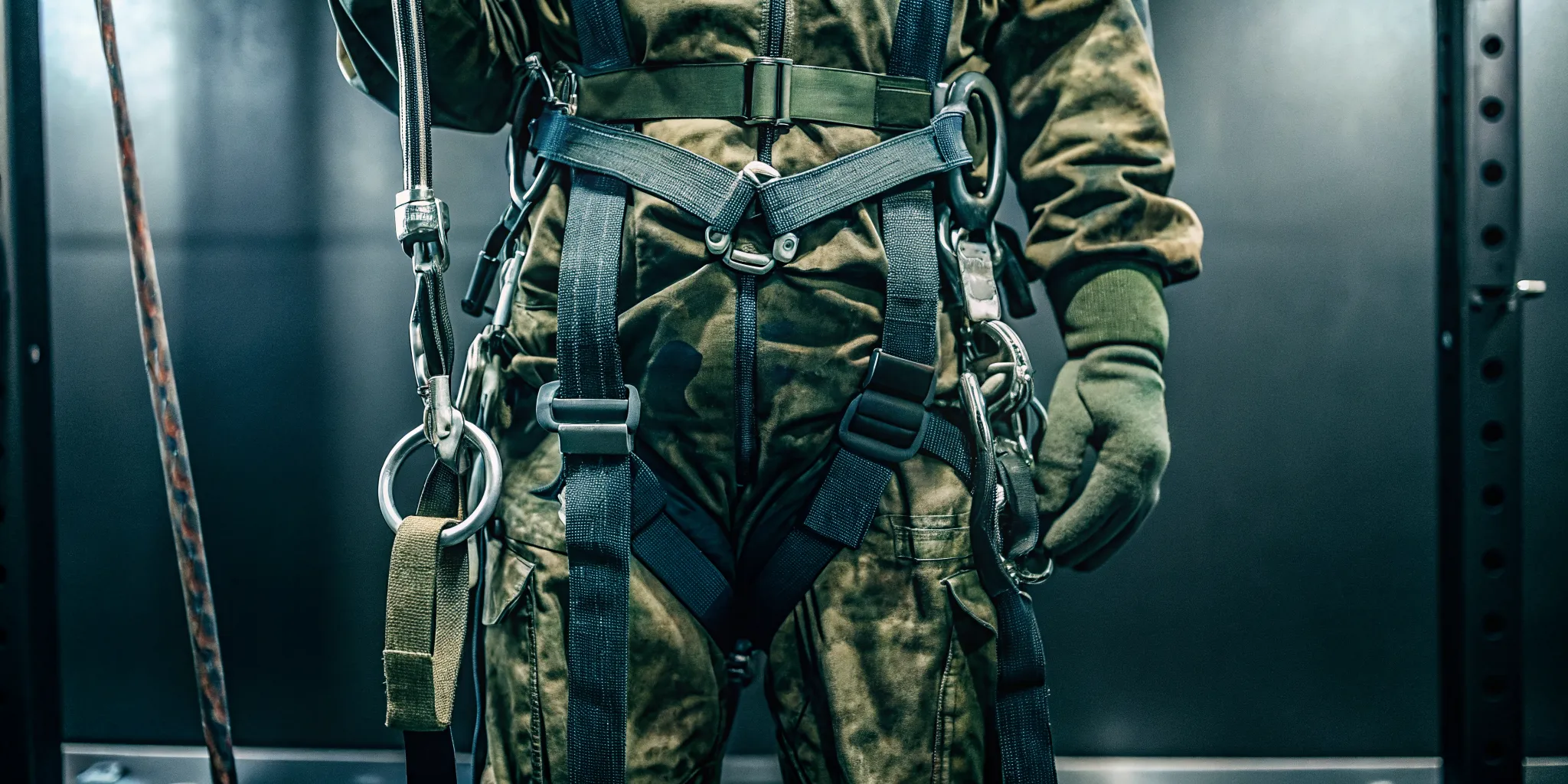
Some tasks need more than a simple seat or fall belt. Modular systems allow teams to add or remove parts based on what they need for each day. A rigger belt can serve as a base. It connects to leg loops or shoulder straps when it is time to use a rope. This keeps the gear light until the exact moment it is needed for a rappel or a hoist. These systems allow for rapid prototyping to meet the needs of a specific team or task.
Built-in systems often include delta rings for fast use in extraction plans. These rings allow a person to hook into a hoist line or a rope system in seconds. These tools are built to meet Berry and TAA rules for state use. They provide a high level of trust for teams that must move fast under pressure. Using the right setup ensures that the person can focus on the job rather than the gear.
How should teams qualify a military rappelling harness?
Qualifying a military rappelling harness for service requires documented evidence that the complete system satisfies the approved mission profile. Defense and public-safety teams should evaluate representative samples, verify component traceability, inspect critical construction details, and validate integration with the operator loadout. Qualification begins with measurable requirements and continues through acceptance testing, serialized asset control, periodic inspection, and retirement.
Safety rules and standards
The first part of a gear check is to look at the rules. Military units often have needs that go past what common gear can do. You must check if the tool meets the Berry Amendment. This law says that gear must be made in the U.S. with local parts. Fusion Tactical builds Berry and TAA compliant gear in their Chino, California plant. This helps buyers meet government rules while getting high-quality gear. Using local shops also makes it easier to get custom tools for a unit.
Safety ratings are also key. A good harness should meet global codes. Many pro systems meet EN 361 for fall arrest. For military use, you may also look for MIL-STD tests. These ratings prove the gear can handle big loads. For example, some personal fall arrest systems need an anchor that can hold 5,000 pounds or 22.2 kN. These OSHA safety standards give a baseline for how much force a system must take. Knowing these numbers helps buying teams pick the right gear for the job.
Field testing and gear fit
Once you find a likely model, you must test it in the field. Get samples to check the build and how it feels. A strong military rappelling harness must have tough stitching and rated metal parts. Some rescue belts are rated to 18kN for use in search and rescue tasks. Testing these items with weights is the only way to be sure they work. Labs use torso-shaped weights for these tests. The weight is often about 300 pounds to check if the straps hold firm. This proof is needed before any person puts their weight on the line.
You also need to see how the harness fits with other gear. It must work well with armor, packs, and ropes. A modular military rappelling system helps with this. It lets a user add or remove parts based on the mission. This keeps the gear from getting snagged on brush or doors. It also helps the operator move fast and stay safe. The goal is to have gear that helps the user instead of getting in the way.
- Define mission needs: List the exact tasks the gear will face, such as rappelling or air rescue.
- Verify law compliance: Check that the gear meets Berry and TAA rules for government use.
- Review load ratings: Look for kN ratings and EN codes to ensure the gear is strong enough.
- Run weight tests: Use test weights to check the strength of the straps and buckles.
- Check gear fit: Ensure the harness works with the rest of the operator's kit and tools.
- Audit the shop: Confirm the maker uses ISO 9001:2015 standards to keep quality high.
- Start tracking: Set up a system to log the age, use, and checks for each harness in the fleet.
Keeping good records is the last step. Every check and test must be logged. This helps units know when a harness is too old to use. Most gear has a set life span in years or hours of use. Retiring gear on time is a key part of safety. It prevents failures that could have been found earlier. By following these steps, teams can be sure they have the best tools for their dangerous work.
Which operational controls continue after procurement?
Acceptance of a military rappelling harness is the beginning of lifecycle control, not the end of procurement. A compliant acquisition establishes the baseline configuration; safe field use depends on serialized asset records, approved setup procedures, trained-user controls, scheduled inspection, incident quarantine, and documented retirement criteria.
Managing fit and equipment setup
Correct fit controls load distribution and system stability. Excess slack can allow the assembly to shift during descent, while over-tightening can restrict movement and create localized pressure during prolonged suspension. Units should document approved adjustment ranges and verify fit with the complete operational loadout.
Many tactical harnesses adjust a lot. Some sit harnesses fit waist sizes from 74cm to 120cm. This helps most people get a tight and safe fit. Units also need to see how the harness works with other gear. A tactical rappel harness must work well with vests, belts, and guns.
This setup lets the person move fast and reach tools while they hang from a rope. Testing all gear before a mission helps find snag points. It shows if any gear blocks movement before a real mission starts.
Rigorous inspection and retirement rules
Checking gear often is the only way to stay safe. Users should look at their gear before each use. They should look for torn web, rusted metal, or loose threads. A pro should also do a full check on a set schedule. These deep looks find damage that is hard to see, like wear from the sun or chemicals.
Clear rules for when to toss gear help teams stay safe. Most makers say to stop using soft gear after five to ten years. This time depends on how you use and store it. But any gear that takes a big fall or high stress must go in the trash right away. Even if it looks new, the stress may have weakened it.
Following OSHA safety rules for fall gear helps ensure that systems are twice as strong as they need to be. These rules protect people working in high places and make sure gear can hold a heavy load without failing.
Tracking training and mission readiness
Good training is just as vital as the gear itself. Every person must know how to put on and use their harness the right way. This includes knowing the load limits of their gear. For example, some pro harnesses are rated to 150kg. Going over these limits can cause the gear to break during a hard drop or fast stop.
Keeping track of all training and gear checks creates a clear record of mission readiness. These files should show when gear was given out and what checks were done. They should also list any training the person has finished. Good records help leaders manage gear and make sure every team member is ready for the tough work of rappelling.
Frequently Asked Questions
How do tactical rappelling harnesses differ from climbing harnesses?
Tactical harnesses are built for heavy loads in combat or rescue. Sport gear is not made for an operator with body armor and tools. These systems have low-profile shapes that work with duty belts. Procurement teams should verify whether a candidate sit harness carries a documented 150kg capacity for the fully equipped operator. They also use matte colors to stay hidden in the field. This makes them safer for high-risk missions.
Are tactical rappelling harnesses Berry Amendment compliant?
Most gear used by the U.S. military must follow the Berry Amendment. This law means the gear must be made in the USA with local materials. Fusion Tactical makes Berry and TAA compliant systems in Chino, California. This is a key need for government buys and helps ensure high quality. Buyers should check for a CAGE code to verify that a vendor meets these federal rules. This ensures the gear is ready for duty.
What is an operator extraction harness?
An operator extraction harness is a system built for rapid air or sea rescue. These systems let a team lift a person from a high-risk spot fast. They often use modular parts like delta rings to hook onto lift lines. Many of these systems, like the Fusion Tactical TAC-SCAPE, meet EN12277 safety codes. They give the strength needed for rescue while keeping the person mobile. This is vital for success in the field.
Can I use a climbing harness for military rappelling operations?
Do not substitute recreational equipment for a tactical rope operation without an approved technical evaluation. The selected assembly must carry documented capacity for the fully equipped operator and remain compatible with the approved rope system, attachment hardware, armor, and mission procedure. Procurement teams should compare Fusion Tactical USA's harness systems against the unit's written acceptance criteria rather than relying on a general product label.
How can Fusion Tactical support your harness program?
A military rappelling harness program must convert operational risk into documented requirements, test evidence, inspection controls, and a supportable procurement record. Fusion Tactical USA provides U.S.-based manufacturing, custom engineering, rapid prototyping, and mission-specific support for defense, law enforcement, rescue, and government buyers.
Request mission-specific military rappelling harness support from Fusion Tactical USA. Procurement teams can also call (909) 393-9450 to discuss custom manufacturing, government requirements, and technical qualification.


