

Law Enforcement Safety Harness: Mission-Fit Criteria
A law enforcement safety harness is not a standalone answer to an operational hazard. Agencies should select it as part of a defined system: the task, the user, the attachment point, connected equipment, procedures, training, and inspection all need to work together. This guide gives procurement teams a practical way to document that mission fit before they approve equipment.
Request a consultation about your harness requirement
What operational requirement should a law enforcement safety harness meet?
Start with the task and hazard, not a preferred product shape. Identify what the operator will do, where the exposure occurs, and what the harness must accomplish within the agency’s written procedures. A harness intended for positioning, restraint, fall arrest, rescue, or another function cannot be assumed to serve all of those roles interchangeably.
Write a short mission profile before comparing products. It should describe the work environment, expected movement, duration of wear, clothing and carried equipment, access constraints, and the foreseeable failure or emergency conditions. This gives evaluators a common basis for reviewing design, fit, and interfaces rather than relying on general claims such as “tactical” or “heavy duty.”
- Task: State the operation in plain terms, including whether personnel work at height, enter a restricted area, perform a rescue, or need a controlled connection to another system.
- Hazard: Define the exposure the harness is intended to address. Do not treat general retention or load-bearing utility as proof of fall-protection capability.
- Users: Account for the range of body sizes, assigned roles, training levels, and approved clothing layers.
- Operating conditions: Note weather, moisture, dirt, abrasion, storage, and any environmental factors relevant to the equipment and manufacturer’s instructions.
- System boundary: Identify what connects to the harness, who approves each interface, and what other equipment or structure completes the system.
Separate mandatory requirements from preferences. For example, a required attachment configuration, agency compatibility rule, or applicable standard belongs in the evaluation criteria. Color, pocket layout, or a familiar buckle style may be preferences unless a documented operational need makes them essential. This distinction supports fair comparison and helps reviewers explain why a bid does or does not meet the requirement.
Applicable rules depend on the task and operating context. Agencies should have their safety officer or other qualified authority determine which requirements apply rather than assuming a harness standard automatically covers every law-enforcement use. OSHA’s occupational safety resources are a starting point for workplace safety information, not a substitute for reviewing the specific regulation, agency policy, or system instructions that govern an operation.
How should teams evaluate a law enforcement safety harness for fit?
Fit is a functional requirement, not a comfort-only preference. The harness must be adjustable for the intended users and worn as directed with the agency’s actual clothing and equipment. Evaluate fit on representative personnel, then record the adjustment checks and limitations that users must know.
Procurement teams should not approve sizing from a catalog chart alone. A practical evaluation includes donning, adjustment, movement, and removal with the assigned layers and equipment. Confirm that straps can be routed and secured as the instructions specify; that adjustment hardware can be reached; and that excess webbing does not create an interference or snag issue. A qualified evaluator should review any concern about whether a configuration is correct.
- Test a representative range of intended user sizes and body configurations.
- Repeat fit checks with duty clothing, outer layers, and required carried equipment.
- Observe basic movements required by the mission, such as bending, reaching, kneeling, or working from the assigned position.
- Confirm that the harness does not conflict with other approved equipment or prevent access to controls and essential tools.
- Train users to identify incorrect routing, unsecured adjustments, damage, or a configuration that differs from the approved setup.
Comfort matters because discomfort can affect sustained wear and user acceptance, but it should be assessed alongside function and control. Ask evaluators to note pressure points, restriction, shifting, and adjustment difficulty. Do not solve a fit problem by improvising a strap route, substituting hardware, or modifying the harness. Refer unresolved issues to the manufacturer and the agency’s technical authority.
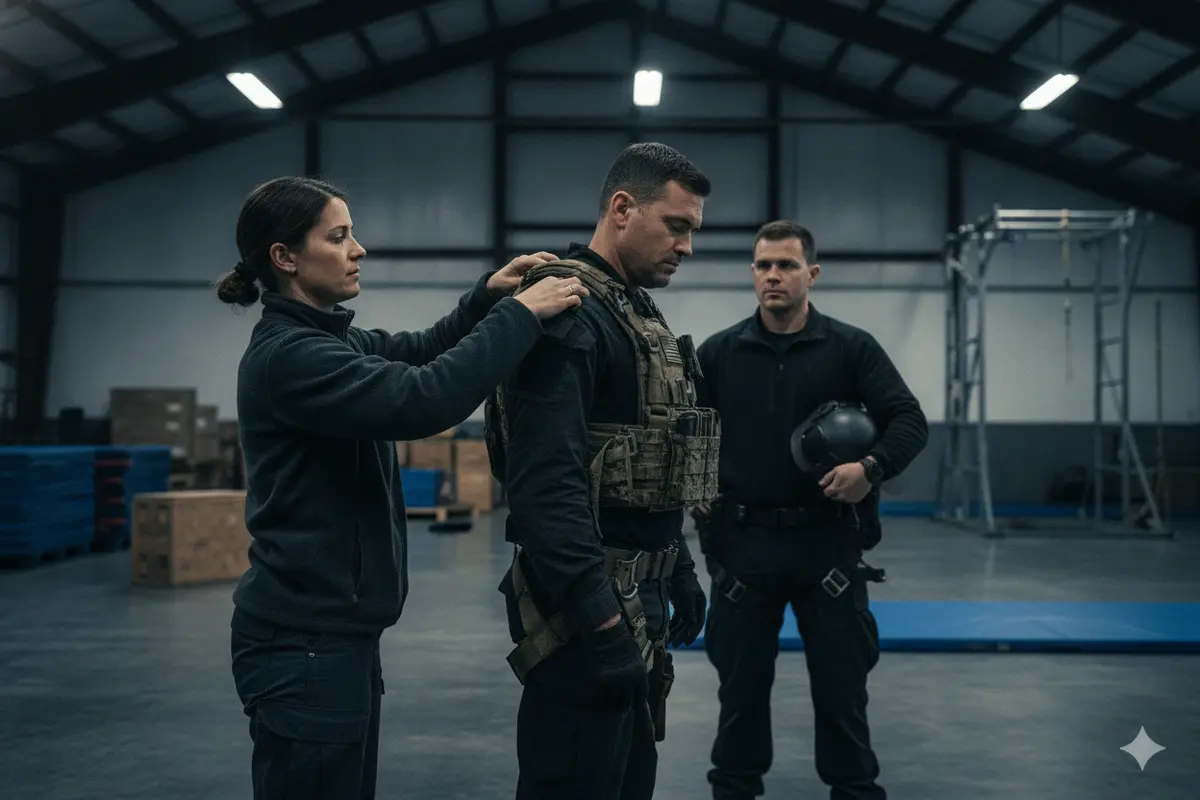
A useful acceptance record identifies which harness size and configuration were evaluated, what clothing and accessories were worn, which users participated, and any restrictions on use. If multiple configurations are authorized, assess each one separately. A change in clothing, attachment, or carried equipment can alter the interface and should trigger a review under the agency’s change-control process.
What load path and attachment details require review?
Trace the complete load path before approving a connection. Identify the harness connection, every intermediate component, the anchorage or receiving structure, and the intended direction of loading. A component’s rating by itself does not establish that the assembled system is suitable for a particular task.
Procurement specifications should require current manufacturer documentation for the exact harness and any proposed connection components. Review the intended use, marked ratings and units, configuration limits, compatibility instructions, inspection criteria, and warnings. Do not infer a product’s rating, material, or performance from its appearance, category name, or a similar model.
For rated hardware, confirm that the marking and documentation match the item offered, and that the connector’s geometry and operating method are compatible with the intended connection. Evaluate the entire connection for potential cross-loading, gate interference, unintended release, sharp edges, or other incompatibilities identified by the manufacturer or system designer. This is a technical review, not a substitute for a competent person’s assessment of the actual installation and task.
Terms such as “load-bearing,” “retention,” and “fall protection” describe different functions. A harness that carries equipment or provides an operator connection should not be treated as suitable for fall arrest unless its documentation and the complete system establish that use. Likewise, an agency should not assume that a product is appropriate for rescue simply because it has multiple attachment points. Define the required function precisely and ask the supplier to identify the documentation that supports it.
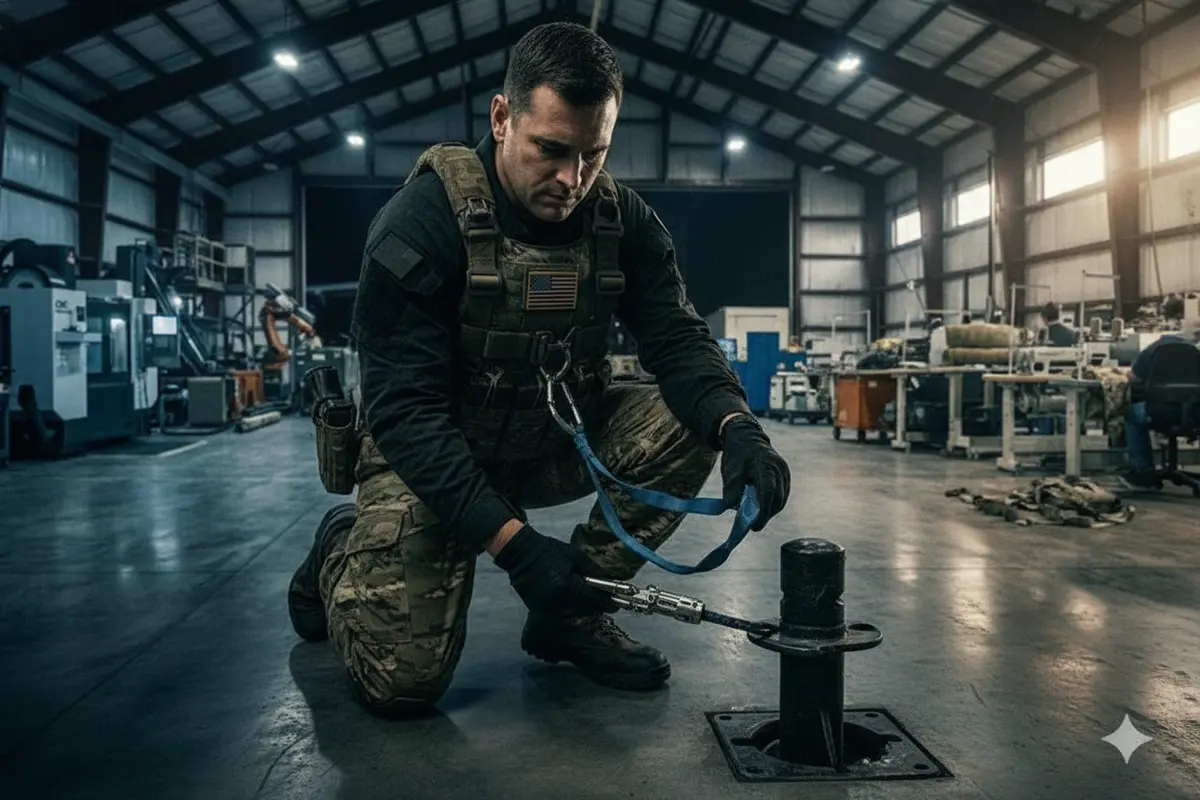
When comparing systems, document the assumptions behind any load calculation or rating review and the person responsible for technical approval. Do not create a new numerical capacity by adding component ratings together. If a proposed configuration is outside published instructions, pause the review and obtain written direction from the manufacturer or a qualified engineering authority before deployment.
A simple scenario review can expose gaps before a live evaluation. Suppose an officer must work from a designated elevated position while wearing an outer layer, radio, and mission-specific equipment. Reviewers should map the connection from the harness attachment through each compatible component to the approved structure, then check that the operator can reach controls and carry out required movement without changing the intended connection. Ask what happens if the operator needs to exit the position, if a component is found damaged during the pre-use check, or if a second responder must assist. These questions do not prove system capacity; they reveal assumptions the technical authority must verify.
Record unresolved issues as specific questions rather than informal observations. For example: “Is this connector approved by its manufacturer for this attachment geometry?” is actionable. “The hardware looks questionable” is not. Assign each question to a responsible reviewer, state what evidence will close it, and block approval of the affected configuration until it is resolved. This creates a traceable boundary between procurement review and operational authorization.
Which equipment interfaces and standards belong in the specification?
Specify interfaces and evidence, not just a broad label. A usable solicitation describes the intended task, compatible configuration, required documentation, and acceptance checks. It also gives vendors a clear way to disclose differences without implying that every harness is interchangeable.
Review the harness alongside the other equipment that will be worn or connected. This may include protective clothing, radios, tools, a retention connection, or a rescue system, depending on the agency’s defined mission. Verify clearance, access, adjustment range, connector compatibility, and whether the proposed combination is permitted by the relevant manufacturers’ instructions. Fusion Tactical’s full-body harness collection and half-body harness collection can help buyers identify categories for further review; category listings alone do not establish suitability for a specific operation.
Standards should be named only when they apply to the intended use and product. If an agency requires ANSI Z359, OSHA, MIL-STD, or another specification, state the relevant requirement and ask for evidence tied to the offered model and configuration. Do not use a standards list as a generic quality badge. Confirm the scope, edition, test or certification evidence, and any exclusions with the issuing body, product documentation, or the agency’s compliance authority.
| Review area | What the agency should define | Evidence to request |
|---|---|---|
| Mission and hazard | Task, exposure, user role, environment, and intended harness function | Written requirement and documented technical approval |
| Fit and configuration | Users, clothing layers, adjustment, permitted attachment points, and setup | Manufacturer instructions and recorded wearer evaluation |
| Load path and hardware | Connection sequence, intended loading direction, and compatible components | Model-specific ratings, markings, instructions, and system review |
| Standards and compliance | Applicable standard or rule and its scope for the stated task | Relevant declarations, test or certification documents, and procurement review |
| Lifecycle support | Inspection intervals, service limits, training, records, and replacement triggers | Inspection instructions, training materials, and agency tracking plan |
Build an evaluation matrix before bids arrive. Score mandatory criteria as pass, fail, or clarification required, and keep preference scoring separate. Request answers for the offered model rather than generic company literature. Where a proposal does not provide enough evidence, identify the exact document or clarification needed; do not fill gaps by assuming that another product in the supplier’s catalog has the same configuration or rating.
Turn the requirement into verifiable solicitation language
Use statements that an evaluator can check. For each mandatory item, name the required function or interface, the applicable configuration, and the evidence a bidder must submit. A requirement might ask the supplier to identify the exact model and provide its current instructions, marked ratings, permitted connection components, inspection criteria, and documentation for each named standard. Avoid language such as “best available” or “military grade” unless the solicitation defines a measurable meaning and supporting evidence.
Give suppliers a structured response format. Ask them to mark each requirement as met, not met, or requiring an exception, then cite the page or document supporting the response. Require a separate explanation for substitutions and configuration changes. This lets evaluators compare like with like and makes missing evidence visible instead of burying it in a general brochure.
Before award, route technical questions to the assigned safety or engineering authority and contract questions to procurement staff. Keep decisions, clarifications, and approved deviations together with the solicitation record. If a criterion changes during evaluation, document the reason and apply the revised criterion consistently. A transparent process helps an agency explain both the decision and the boundaries of the approved configuration.
How should agencies plan inspection, training, and records?
Readiness depends on a repeatable lifecycle process. Agencies need manufacturer-directed inspection and care instructions, trained users, a defined process for removing questionable equipment from service, and records that tie each unit to its history. Procurement should include these needs before the first order.
Use the inspection criteria and schedule provided by the manufacturer and applicable agency procedures. Users should know how to perform the checks assigned to them, recognize conditions requiring quarantine, and report damage or unusual loading. A qualified inspector should handle the examinations and decisions assigned to that role. Do not invent universal inspection intervals or service-life rules; they can vary by product, use, and instructions.
At minimum, plan to record the item identifier, model and configuration, date placed in service, inspections, findings, maintenance or cleaning permitted by the manufacturer, and disposition. Preserve applicable documentation with the equipment record. If a harness is exposed to a suspected damaging event, has uncertain history, or shows a condition outside the acceptance criteria, isolate it and follow manufacturer guidance and agency procedure before any return to service.
Training should connect the written procedure to the actual harness and complete system. It should cover correct donning and adjustment, approved attachment and component combinations, pre-use checks, limitations, emergency actions, and reporting. Include refresher or competency checks as required by the agency’s program. A product demonstration is not a substitute for task-specific training, and a single successful fit check does not prove that every user can configure the equipment correctly.
Agencies reviewing helo retention lanyards as a connected component should assess them as a separate interface with their own documented use and compatibility requirements. This article is not a lanyard selection guide: the harness, connection, anchor, and operational procedure still need a system-level review. Fusion Tactical also provides a tactical harness product page for model-specific information that buyers can validate against their written requirement.
Make records useful at the point of use
A tracking system should let an authorized person answer basic questions without reconstructing the history from memory: Which unit is this? Which approved configuration applies? Who inspected it and when? What did the inspection find? Is it currently available, quarantined, or retired? Use a unique identifier that stays legible and links the physical item to its record, consistent with manufacturer instructions and agency policy.
Keep records concise enough for routine use but detailed enough to support decisions. An entry should distinguish a routine check from a detailed inspection, note the finding rather than only “checked,” and show what action followed. When equipment is quarantined, identify its storage location and prevent accidental reissue under the agency’s process. If a unit is repaired, modified, or returned after review, record the authority and documentation supporting that decision.
Review the process during exercises and after procedural changes. If personnel cannot locate an instruction, identify an item, or explain the quarantine route during a drill, treat that as a readiness gap to correct. A useful lifecycle plan is not only a file of forms; it connects procurement, training, inventory control, and the operational team that depends on the equipment.
How can procurement teams compare options and verify a supplier?
Use the same documented questions for every offered system. That keeps the review focused on evidence, reveals unresolved interface risks, and creates a defensible record of why an option fits or does not fit the mission. A low unit price or broad capability statement should not replace this review.
- Issue the mission profile. Include intended function, users, environment, interfaces, training assumptions, and constraints.
- Request item-level documentation. Ask vendors to identify exact models, configurations, markings, ratings, instructions, and any applicable standards or test evidence.
- Review exceptions. Record any proposed substitutions, unsupported claims, unavailable documents, or configuration differences for technical resolution.
- Conduct a controlled fit and usability evaluation. Use representative personnel and the actual authorized clothing and connected equipment. Follow manufacturer instructions and agency safety procedures.
- Document approval and lifecycle support. Capture the technical decision, approved configuration, inspection responsibilities, training plan, and replacement or quarantine process.
For government or agency purchases, procurement teams may also need to evaluate domestic sourcing, contract clauses, and other solicitation-specific requirements. Confirm them with the contracting officer and compliance staff. Do not assume a general “made in the USA” statement proves compliance with a particular contract clause. Fusion Tactical describes U.S.-based manufacturing and Berry and TAA compliant capabilities in its company materials, but buyers should request the documentation and representations that apply to their specific procurement.
Ask suppliers how they support technical questions, customization, traceability, and controlled changes. If a design is modified, establish which party approves the change and how updated instructions, configuration identifiers, and inspection criteria will be maintained. Custom engineering or rapid prototyping may be relevant to a program, but prototypes and production articles should be distinguished in acceptance records and procurement terms.
Safety decisions also depend on organizational practice, not only on hardware. The National Law Enforcement Officers Memorial Fund’s law enforcement safety report describes a progressive approach to examining safer ways to conduct tactical work. For a harness program, that principle can translate into capturing lessons from exercises, reviewing near misses through agency channels, and updating procedures when an approved interface or task changes. The report is context for safety culture, not a harness standard or product approval.
For a harness requirement requiring a tailored technical review, contact Fusion Tactical with the task profile, expected user group, operating conditions, required interfaces, and applicable procurement constraints. This information helps frame a focused discussion without replacing the agency’s own qualification and approval process.
Contact Fusion Tactical to discuss your agency harness requirement
Frequently Asked Questions
Agency decisions often turn on intended use, evidence, fit, and lifecycle controls. These answers address common procurement questions, but the manufacturer’s instructions and the agency’s governing procedures remain controlling for a specific system.
Can one law enforcement safety harness serve every operational role?
No. Intended function, user configuration, connected equipment, and operating conditions determine suitability. Agencies should approve only documented uses and configurations that match their procedures and the manufacturer’s instructions.
Is a load-bearing harness automatically a fall-arrest harness?
No. A load-bearing or retention function does not by itself establish fall-arrest capability. Verify the product documentation and the complete system’s suitability for the intended application before use.
What documents should a buyer request?
Request model-specific instructions, ratings and markings, compatibility limits, inspection and care guidance, and evidence for any standard or compliance requirement named in the solicitation. Also request clarification for proposed substitutions or claims that are not supported in the submitted documents.
How should agencies evaluate fit?
Evaluate representative users wearing the actual approved clothing and equipment. Record sizing, adjustment, movement, access, and any interference, and follow the manufacturer’s donning and configuration instructions.
When should a harness be removed from service?
Follow the product instructions and agency procedure. Damage, uncertain history, suspected damaging events, or a failed inspection should prompt isolation and review by the assigned qualified person before the item is considered for return to service.
Does a recognized standard prove that a harness fits a particular mission?
No. A standard may address defined requirements within a stated scope, but procurement teams must still confirm that it applies to the task, product, configuration, connected components, and governing agency requirements.
Request a consultation to review your agency requirements
A documented mission profile, verified system interfaces, and a practical lifecycle plan give agencies a clearer basis for selecting and managing a law enforcement safety harness.


