

Helicopter Personal Retention Lanyards: A Safety Standards Guide
For a procurement officer, selecting a helicopter retention system is not simply a matter of matching a hook to a harness. The decision must account for operator movement, aircraft hardware, load paths, inspection intervals, and mission profile. It must also weigh the evidence required to support a government or aerospace purchase. Personal retention lanyards are recognized as critical safety equipment during helicopter operations and rescue missions, where loss of retention can become a life-safety event.
Choosing helicopter personal retention lanyards requires more than comparing length or connector style. Buyers should evaluate the applicable safety standards, dynamic loading and rated strength, hook geometry, and compatibility with the aircraft and operator system. Adjustability, inspection requirements, and domestic procurement criteria also matter before approving a specification.
The strongest selection process begins with the standards and testing framework behind the equipment. Those requirements clarify what a rating means, where common industrial fall-protection assumptions may not apply, and which compliance documents should be requested during procurement.
Contact a Fusion Tactical engineer to discuss helicopter retention system requirements for your aircraft and mission profile, or call (909) 393-9450.
What Safety Standards Govern Helicopter Personal Retention Lanyards?
Helicopter personal retention lanyards must be evaluated against the actual loads, interfaces, and procurement requirements of the mission, not by a static strength number alone. Personal retention lanyards are critical to operator safety during helicopter operations and rescue missions, where tactical personnel depend on reliable retention in a high-risk environment. Research on helicopter personal retention lanyards describes their use in both flight and rescue operations.
Which standards apply to a retention lanyard?
Procurement teams commonly review MIL-STD requirements alongside applicable OSHA and ANSI Z359 fall-protection principles. These references help establish expectations for materials, testing, hardware, traceability, inspection, and intended use. They should not be treated as interchangeable certifications. A helicopter retention assembly has a different mission profile from general industrial fall protection. So the specification should identify the aircraft interface, operator harness, connector geometry, loading scenario, and service environment.
EN 354 and EN 364 are also relevant reference points for lanyard design and testing. However, the available testing research indicates that these standards need dynamic test requirements because high loading rates can significantly reduce resistance compared with static tests. A static rating therefore cannot, by itself, demonstrate how an assembly will behave during an abrupt event. The dynamic-loading study provides the technical basis for requiring test evidence that reflects the forces and rates expected in service.
Why do dynamic loads matter more than a static rating?
Static strength is useful for comparing components, but retention systems experience force transmission through webbing, stitching, connectors, anchor points, and the operator interface. A sudden load can expose weaknesses that a slow pull test does not reveal. Buyers should request the test method, boundary conditions, failure mode, and configuration behind any claimed rating. Then confirm that the evidence matches the complete lanyard assembly rather than an isolated component.
Fusion Tactical documents lanyard ratings up to 31 kN and manufactures in the United States with Berry Amendment and Trade Agreements Act compliance capabilities. Those procurement attributes support defense, aerospace, law-enforcement, and government programs that require domestic sourcing and documented supply-chain alignment. Review the helo and operator retention lanyards collection for available configurations, then match the selected assembly to the governing MIL-STD, ANSI Z359, OSHA, and contract-specific requirements.
Which Helicopter Retention Lanyard Hook Types Should You Compare: Snap Hooks, Snap Shackles, and Cable Systems?
Answer: Connector selection should follow the aircraft interface, anticipated movement, and the required load path rather than the apparent strength of the hardware alone. Snap hooks support fast connection to compatible points, snap shackles provide a more deliberate captive connection, and cable systems such as the Kong Frog offer controlled engagement where routing and clearance matter.
For procurement teams, the connector is one part of a complete retention system. Verify compatibility with the aircraft or platform attachment point, confirm the manufacturer's rated configuration, and evaluate whether the system can be inspected and operated while personnel are wearing mission equipment.
| Connector type | Connector geometry | Load path | Adjustability | Best-fit mission |
|---|---|---|---|---|
| Snap hook | Spring-gated hook with a defined attachment nose | Direct transfer through the hook body when fully seated on a compatible point | Usually determined by the lanyard body or adjustment hardware | Tactical insertion where rapid, repeatable connection is required |
| Snap shackle | Captive, gated shackle designed around a shackle body and pin | More enclosed connection that can reduce the chance of roll-out when correctly matched | Typically configured through lanyard length rather than the shackle itself | Confined-space extrication and operations requiring a deliberate connection |
| Cable system, such as Kong Frog | Cable-based retention assembly with a dedicated connector interface | Follows the rated cable and connector assembly; routing and bend control matter | May provide useful positioning flexibility, subject to the approved configuration | Maritime hoist or other missions where clearance, routing, and controlled engagement matter |
Length and positioning are operational variables
Adjustability can determine whether a retention system stays clear of doors, seats, weapons, rescue equipment, and other mission interfaces. The Crye ASR Lanyard, for example, is specified as adjustable from 18 to 30 inches, illustrating how a controlled length range can support different operator positions. Review the cited ASR specifications before using any comparable range in a procurement requirement.
A fixed-length option can still be appropriate when the aircraft configuration and operator task are tightly standardized. The Yates Helo Personal Retention Lanyard is listed at 31 inches for high-strength helicopter use. But a listed length alone does not establish suitability for every attachment point or loading condition. Review the cited Yates product listing and require configuration-specific documentation during evaluation.
In all three categories, assess gate orientation, clearance, accidental release resistance, inspection access, and the complete assembly rating. The correct choice is the connector that preserves a predictable load path throughout the mission while remaining compatible with the aircraft system and the operator's required range of movement.
How Do You Select Helicopter Personal Retention Lanyards for Your Mission Profile?
Answer: Select helicopter personal retention lanyards by matching verified load performance, connector geometry, adjustment range, aircraft retention-rail interface, operator harness compatibility, and the actual duty cycle of the mission. A lanyard that is adequate for routine cabin movement may not be appropriate for hoist operations, rescue work, or frequent exposure to dynamic loading.
Start with load rating and test evidence
Review the complete load-rating package rather than relying on a product label or a static breaking-strength figure. Confirm the webbing rating, minimum breaking strength (MBS), connector rating, and the test method used for the complete assembly. For example, Fusion Tactical's SPIE extraction lanyard specifications identify 60 kN MBS and a 50 kN triple-locking carabiner. Those figures should be evaluated against the loads expected in the specific retention and extraction system, not treated as a substitute for a system-level engineering review.
Industrial fall-protection references can also create misleading comparisons. OSHA and ANSI Z359 industrial lanyards are commonly discussed around a 5,000-pound strength threshold, while helicopter retention and rescue applications may require different configurations, connectors, and qualification criteria. Dynamic loading deserves particular attention: research on EN 354 and EN 364 found that high loading rates can reduce resistance compared with static-test results, so buyers should ask manufacturers for dynamic-test evidence where the mission demands it. Review the dynamic-testing research before approving a specification.
Match connector geometry to the aircraft and harness
Connector selection is an interface decision. Verify that the gate, nose, locking mechanism, and body geometry can engage the aircraft retention rail without interference, partial capture, or unintended loading. A triple-locking carabiner may provide a strong, secure connection, but it still must be operable with gloves and compatible with the harness attachment point. Confirm that the connector cannot rotate into an off-axis position or contact nearby aircraft structure during normal movement.
Document the aircraft rail dimensions, harness attachment configuration, and any required clearance before selecting a hook or carabiner. If the operator transitions between aircraft, harnesses, or equipment stations, treat each interface as a separate compatibility check. Do not assume that a connector suitable for one rail or harness will perform equivalently on another.
Specify adjustment range and mission fit
Length adjustment affects reach, slack management, egress, and the operator's ability to work without creating an entanglement hazard. The Crye ASR lanyard, for comparison, is designed to adjust from 18 to 30 inches, which illustrates why procurement teams should specify a usable range rather than accepting a nominal length alone. See the published adjustment example. A fixed 31-inch high-strength helo lanyard is another documented configuration, but length still needs to be validated against the operator's harness, seat position, rail location, and mission movement pattern.
Use a decision checklist before approving a configuration:
- Load rating, MBS, connector rating, and applicable dynamic-test evidence are documented.
- Connector geometry and triple-locking operation suit the aircraft rail, harness, gloves, and expected loading direction.
- Adjustment range controls slack while preserving reach, egress, and safe movement.
- Compatibility is verified for every aircraft rail, operator harness, and attachment point in the procurement scope.
- The configuration reflects the mission profile, including routine flight, rescue, hoist, extraction, or repeated high-cycle use.
- Inspection, replacement, and traceability requirements are defined before fielding.
For a multi-platform program, provide the aircraft and harness interface data to the manufacturer before finalizing the bill of materials. This enables a documented engineering decision instead of a one-size-fits-all substitution.
How Do You Maintain Helicopter Personal Retention Lanyards in the Field?
Answer: Helicopter personal retention lanyards remain dependable only when their materials, stitch patterns, hardware, and service history are checked on a defined duty cycle. Inspection should account for both visible wear and the performance demands created by dynamic loading during flight, rescue, and emergency movement.
Static strength alone does not establish field readiness. Research examining lanyard standards found that high loading rates can significantly reduce resistance compared with static test results, which supports the need for dynamic test requirements in EN 354 and EN 364. This distinction matters to procurement and safety teams because a lanyard can appear intact while its rated performance is affected by forces that static inspection cannot reproduce. Review the dynamic-loading findings in the cited study.
What should a visual inspection examine?
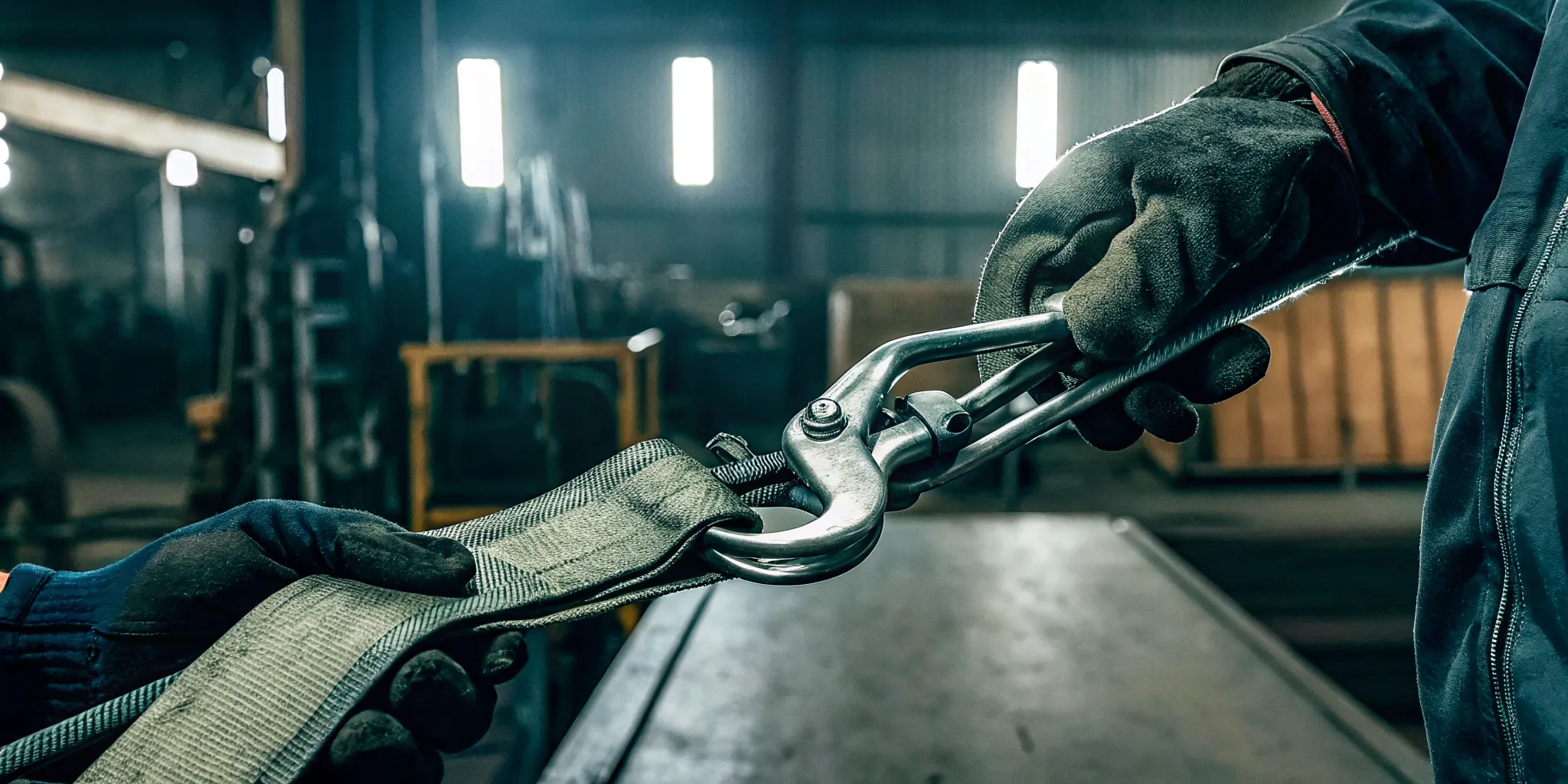
Inspection personnel should review the full load path, including webbing, stitching, adjustment points, connectors, and attachment interfaces. Look for cuts, abrasion, pulled fibers, chemical exposure, heat damage, fraying, contamination, deformation, corrosion, and any hardware that does not close or lock as designed. A locked-stitch, double-needle bar-tack, triple-box stitch pattern can support durable construction. But it does not remove the need to examine every stitch group for broken thread, separation, or distortion.
Any lanyard exposed to an abnormal load, sharp edge, severe contamination, impact, or questionable storage condition should be removed from service pending qualified evaluation. Do not return it to an aircraft or rescue kit based only on a clean exterior.
How should maintenance fit the duty cycle?
Maintenance intervals should reflect sortie frequency, operator movement, environmental exposure, cleaning requirements, and the consequences of failure. Establish documented pre-use checks, scheduled inspections, post-event evaluations, and disposition records. Personnel operating in high-risk helicopter and rescue environments must maintain and inspect personal retention lanyards to confirm integrity, as documented by the cited government research. See the research on personal retention lanyard inspection and maintenance, then review Fusion Tactical's helicopter lanyard inspection and maintenance guidance.
For procurement teams, the inspection program should be part of the equipment specification, not an afterthought. Require traceable service records, clear rejection criteria, compatible cleaning and storage instructions, and a defined replacement process. That lifecycle discipline helps preserve operator retention performance when equipment is repeatedly exposed to demanding operational conditions.
Procurement Decisions: Compliance and U.S. Manufacturing Excellence
For defense, aerospace, government, and law enforcement buyers, the procurement decision should evaluate more than a product specification. It should confirm that the manufacturer can support the required compliance framework, documentation, engineering response, and production continuity. Fusion Tactical USA provides helicopter personal retention lanyards through a 100% U.S.-based manufacturing model, with Berry Amendment and Trade Agreements Act (TAA) compliance for qualifying procurement requirements.
What compliance documentation should buyers verify?
Procurement teams should validate the supplier's contracting and manufacturing credentials before approving a retention system. Fusion Tactical USA operates under CAGE Code 0KQN1 and holds Small Business Certification #2011930, giving government contracting teams relevant identifiers for supplier evaluation and federal procurement workflows. Its quality framework includes ISO 9001:2015, while product requirements may also call for applicable MIL-STD, ANSI Z359, OSHA, or program-specific specifications. Buyers should request the applicable test records, material information, inspection documentation, and configuration details for the exact part being purchased.
Berry Amendment and TAA compliance address sourcing and eligibility considerations, but they do not replace technical review. A compliant purchase still needs a clear statement of intended use, attachment geometry, load requirements, inspection interval, and environmental exposure. This distinction is especially important when equipment will support rotary-wing operations, rescue missions, or other applications where operator retention is mission-critical.
Why does U.S. manufacturing matter for program risk?
Domestic production gives program managers a direct path to custom engineering, rapid prototyping, and made-to-order manufacturing rather than forcing a standard configuration into a specialized aircraft or operator workflow. Fusion Tactical can work from the mission profile and define the appropriate materials, length, connection hardware, and documentation package. That responsiveness can reduce procurement friction during development, qualification, replenishment, and fielding.
For a supplier assessment, review Fusion Tactical's helicopter retention lanyard manufacturing capabilities, then schedule an engineering consultation to discuss requirements, compliance documentation, and government pricing.
Request an engineering consultation for your specific aircraft and mission profile, or contact our team to start the specification and government-pricing process.
Frequently Asked Questions
What is the primary purpose of a helicopter personal retention lanyard?
It helps maintain operator retention during helicopter flight, repositioning, and rescue operations. The lanyard should be selected as part of the complete aircraft, seat, harness, and attachment-point system, not as an isolated piece of hardware. Research identifies personal retention lanyards as critical to operator safety in helicopter and rescue missions.
Which safety standards should procurement teams review?
Review the mission-specific requirements first, then map the lanyard, connectors, attachment points, and inspection program to applicable military, occupational, and fall-protection requirements. ANSI Z359 and OSHA may inform industrial fall-protection decisions, while military specifications, program requirements, and contract clauses can govern tactical aviation equipment. Do not treat one standard as universal approval for every helicopter configuration.
Why does dynamic testing matter for lanyard selection?
Static strength alone may not describe performance during a sudden load. Research on EN 354 and EN 364 found that high loading rates can reduce resistance compared with static-test results, which supports the use of dynamic testing and realistic loading conditions when evaluating life-safety equipment. See the cited study for the testing discussion.
How should teams choose between snap hooks, snap shackles, and cable systems?
Match the connector to the approved attachment point, required gate behavior, access limitations, and the likelihood of accidental release or snagging. Snap hooks can support quick connection, snap shackles may suit specific engineered attachment points, and cable systems can address specialized access or routing needs. Confirm compatibility with the aircraft and harness before procurement.
Is an adjustable lanyard better than a fixed-length model?
Not automatically. Adjustability can improve operational flexibility when users work across different seating positions or attachment geometries, but the adjustment mechanism must remain secure and be simple to inspect. For context, the Crye ASR Lanyard is listed as adjustable from 18 to 30 inches: manufacturer specifications.
What inspection practices should be required after procurement?
Define pre-use, periodic, post-event, and service-life inspection criteria covering webbing, stitching, connectors, gates, adjustment hardware, labels, contamination, corrosion, and signs of shock loading. Remove equipment from service when damage or uncertain history is found. Helicopter personnel should maintain and inspect retention lanyards to confirm integrity in high-risk environments. Reference the aviation safety source.
Ready to Align Retention Equipment With Your Mission?
Selection decisions for helicopter personal retention lanyards should account for mission profile, hook compatibility, load ratings, inspection requirements, and procurement standards. A focused engineering discussion can help your team translate those requirements into an equipment specification that supports operational use and government purchasing needs.
Schedule an engineering consultation or request government pricing by contacting the Fusion Tactical team or calling (909) 393-9450.


