

Made in USA Tactical Gear: Government Sourcing Guide
Made in USA tactical gear sourcing demands more than a country-of-origin label; procurement teams need documented compliance, technical evidence, and production controls aligned with the contract and mission profile.
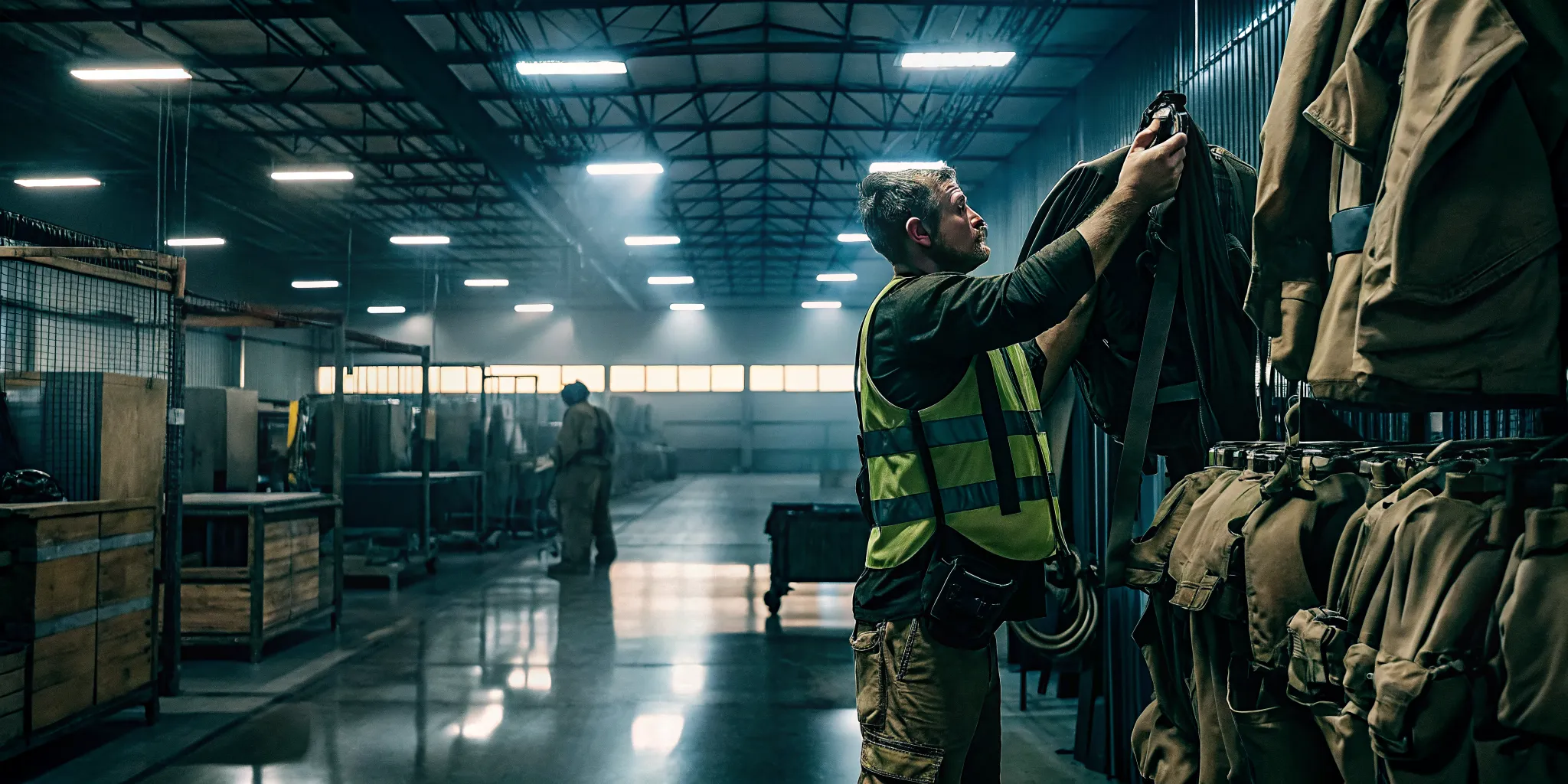
Government buyers should identify the domestic-source clause in the solicitation, then request records that substantiate product origin, testing, quality controls, and change management. Made in USA claims, the Berry Amendment, and Trade Agreements Act requirements are distinct. The applicable contract language determines which standard a supplier must document.
Why made in USA tactical gear matters in procurement
Domestic sourcing can improve visibility into materials, production processes, and supplier capacity. For defense, aerospace, law enforcement, and government programs, that visibility supports more informed source selection and stronger contract records.
A U.S.-based supplier can also provide direct access to engineering and production teams when a program requires a nonstandard configuration. This is particularly useful when buyers need to review a prototype, evaluate hardware integration, or manage an approved design change.
Domestic manufacture does not, by itself, prove that equipment meets a particular performance or acquisition requirement. Procurement teams should connect every material, testing, and origin claim to evidence appropriate for the solicitation and intended application.
Made in USA, Berry Amendment, and TAA requirements
These terms are often grouped together, but they are not interchangeable. Buyers should avoid treating a marketing statement as proof of contract compliance.
| Requirement | Primary authority | Procurement consideration |
|---|---|---|
| Made in USA | Federal Trade Commission | Evaluate the specific claim and the evidence supporting it. |
| Berry Amendment | 10 U.S.C. 4862 and DFARS | Determine whether the covered DoD purchase and its components meet the applicable domestic-source rule. |
| Trade Agreements Act | Trade Agreements Act and implementing regulations | Confirm whether the acquisition permits products from designated countries and how substantial transformation is assessed. |
The FTC describes the standard for unqualified Made in USA claims as products that are all or virtually all made in the United States. The Berry Amendment establishes domestic-source restrictions for specified Department of Defense purchases. The TAA applies under different acquisition circumstances and can permit eligible products from designated countries.
Before issuing an order, identify the governing clauses, covered items, exceptions, and required representations. The Department of Defense Berry Amendment guidance and DFARS 225.7002-1 provide useful starting points, but the solicitation and contracting officer remain the controlling sources for a specific acquisition.
How to verify a U.S. tactical gear supplier
A supplier review should confirm legal identity, manufacturing capability, quality controls, technical evidence, and contract-specific compliance. The objective is not to collect generic certifications. It is to build a record showing that the supplier can produce the required configuration under controlled conditions.
Confirm business and manufacturing details
Verify the supplier's legal name, physical manufacturing location, active registrations required by the acquisition, and relevant identifiers. Fusion Tactical USA operates a factory in Chino, California and identifies CAGE Code 0KQN1 for government procurement. Buyers should independently verify registration status and contract eligibility during due diligence.
Review quality and change controls
Ask how incoming materials, work in process, finished goods, and nonconforming items are controlled. Determine how the supplier documents revisions, approves material substitutions, and communicates changes that could affect fit, function, origin, or performance.
Evaluate production capability
Capacity claims should be evaluated against the required quantity, schedule, and inspection plan. For custom production, review how the supplier moves from requirements and prototype approval to repeatable manufacturing. The response should identify responsibilities, approval gates, and records produced at each stage.
Supplier audit checklist
Use a documented checklist to compare vendors on the same criteria. Adapt the list to the solicitation and the equipment's intended use.
- Contract requirements: Identify applicable domestic-source, testing, marking, packaging, and delivery clauses.
- Supplier identity: Verify legal entity, factory location, CAGE Code, registrations, and points of contact.
- Bill of materials: Request component descriptions, sources, and origin records at the level required by the contract.
- Traceability: Review how lots, materials, production records, and finished units are linked.
- Technical evidence: Request relevant test methods, reports, load ratings, and acceptance criteria.
- Quality controls: Review inspection, calibration, nonconformance, corrective-action, and change-control procedures.
- Capacity and schedule: Confirm tooling, workforce, production capacity, lead-time assumptions, and delivery risks.
- Custom production: Define prototype reviews, approval gates, configuration control, and scaling requirements.
Technical evidence buyers should request
Technical evidence should correspond to the actual configuration being purchased and the conditions in which it will be used. A test report for a different material, buckle, stitch pattern, or assembly may not substantiate the offered item.
Performance and load data
For load-bearing, retention, rescue, or fall-protection equipment, request the stated load rating, test method, acceptance criteria, sample configuration, and test results. Determine whether the relevant requirement calls for proof load, ultimate strength, cyclic testing, environmental conditioning, or another protocol. Standards such as ANSI Z359, OSHA requirements, or a program-specific specification may apply depending on the product and use case.
Material and origin records
For acquisitions with domestic-source requirements, request records at the component and material level required by the governing clause. These may include supplier declarations, certificates of conformance, bills of materials, lot records, and origin documentation. The contract should define what evidence is required and how long it must be retained.
Configuration and change records
Record the approved configuration before production. The file should identify critical materials, hardware, dimensions, drawings, test requirements, and authorized deviations. A defined change-control process helps prevent an unreviewed substitution from altering performance or compliance.
Build a mission-specific sourcing package
A clear sourcing package enables suppliers to quote the same requirement and gives evaluators a consistent basis for comparison. Start with the operational need, then translate it into measurable requirements and acceptance criteria.
- Define the use case. Describe the user, task, operating environment, integration points, and foreseeable hazards.
- Specify performance. State required dimensions, loads, materials, interfaces, and applicable standards without prescribing unnecessary design details.
- Identify compliance clauses. List the domestic-source and acquisition requirements that apply to the purchase.
- Set evidence requirements. Define the records, samples, tests, and approvals required before acceptance.
- Establish inspection points. Identify when the buyer must review prototypes, first articles, test results, or production lots.
- Control changes. Require written approval for substitutions or revisions that affect the approved configuration.
This package should distinguish mandatory requirements from preferences. Clear priorities allow a supplier to identify tradeoffs early and propose a controlled path for custom production.
When custom production supports program requirements
Standard catalog equipment may not address every interface, retention need, operating condition, or program constraint. Custom production can be appropriate when a buyer needs a documented configuration developed around a defined mission profile.
Fusion Tactical USA's manufacturing and prototyping capabilities support made-to-order work from its Chino, California factory. Its process can include requirements review, custom configuration, prototyping, testing coordination, and production planning. Buyers should define the required evidence and approval gates for each project.
Fusion Tactical USA also documents its participation in a NASA and aerospace program. This participation is relevant evidence of aerospace-sector experience, but procurement teams should still evaluate each proposed product, test record, and production plan against the specific acquisition requirement.
A well-managed custom program should produce a controlled technical package rather than rely on informal descriptions. That package can include drawings, bills of materials, approved samples, test records, inspection criteria, and revision history.
Questions to ask before award
Before selecting a source, ask questions that expose assumptions and make the supplier's response auditable:
- Which contract clauses govern origin, testing, and acceptance?
- Which records substantiate each compliance and performance claim?
- Does the tested configuration match the offered configuration?
- How are materials, production lots, and finished units traced?
- Who approves substitutions, deviations, and drawing revisions?
- What production constraints could affect quantity or schedule?
- What inspection and acceptance records will accompany delivery?
The strongest proposal is not necessarily the one with the most claims. It is the one that connects each relevant claim to clear evidence and a credible production plan.
Frequently Asked Questions
Does the Berry Amendment apply if DoD funds are used by another agency?
Berry Amendment requirements can follow Department of Defense funds in certain acquisitions. Buyers should identify the applicable clauses and confirm the requirement with the contracting officer before award.
Is the Buy American Statute the same as the Berry Amendment?
No. The Buy American Statute and Berry Amendment are separate domestic-preference laws with different scopes, thresholds, covered items, and exceptions. Buyers must determine which clauses apply to the acquisition.
What technical evidence should tactical gear buyers request?
Buyers should request evidence tied to the offered configuration, such as applicable test reports, load ratings, bills of materials, origin records, lot traceability, inspection criteria, and change-control records.
How does custom production support tactical equipment programs?
Custom production can align equipment dimensions, hardware, materials, interfaces, and performance requirements with a defined mission profile. The program should include documented approval gates and configuration control.
What should buyers verify about Fusion Tactical USA?
Fusion Tactical USA states that it manufactures in Chino, California under CAGE Code 0KQN1, supports custom production, and has participated in a NASA and aerospace program. Buyers should verify registration status and evaluate project-specific evidence during due diligence.
Prepare a defensible sourcing decision
A defensible procurement record identifies the governing requirements, evaluates the supplier against consistent criteria, and preserves the evidence behind the award decision. That discipline is essential when equipment performance, domestic sourcing, and delivery readiness affect the program.
Contact Fusion Tactical USA to discuss made in USA tactical gear, custom production, technical documentation, and mission-specific procurement requirements, or call (909) 393-9450.


