

High-Angle Rescue Harness Procurement Criteria: Ratings, Fit, and Acceptance Testing
High-angle rescue harness procurement criteria should start with the task the team must perform, then convert that task into verifiable requirements for the harness and its evidence package. A product label or a single load figure cannot establish mission suitability by itself. The buyer should define the intended load path, wearer range, attachment configuration, applicable requirements, inspection process, and acceptance records before comparing offers.
Request a quote for rescue equipment
What should a high-angle rescue harness procurement specification define?
Define the operating use and system boundary before naming a model. A harness is one part of a rescue system, and its role may differ when supporting a rescuer, a patient, or a particular work position. The specification should state who will wear it, how it will connect to the planned system, and what documentation must be delivered for acceptance.
Write the need in operational terms that can be checked. A team may need a harness for trained personnel working in elevated rescue environments, but the procurement document should go further: describe the expected user population, clothing and equipment interfaces, expected connection arrangement, environmental exposure, storage, and whether the configuration must support a particular rescue procedure. Avoid relying on vague terms such as “heavy duty” or “universal.”
- Mission and user: Identify the intended role, user population, and the tasks the harness will support. Distinguish rescuer use from patient packaging or other roles.
- System interface: List the connectors, ropes, devices, attachment points, and other equipment the team expects to use. Specify interfaces to be confirmed by the manufacturer, not assumed from appearance.
- Use conditions: Describe the relevant exposure, expected operating environment, transport, storage, and cleaning requirements that the agency needs addressed.
- Evidence and acceptance: State what product identification, instructions, ratings, test records, traceability, and inspection information must accompany delivery.
These details keep the solicitation focused on a defined job rather than a broad product category. They also give evaluators a consistent basis for comparing offers. A government rescue equipment document can help teams frame the equipment inventory, while local procedures and the actual system plan must determine the agency’s specific requirements. See the Fresno County basic rope rescue equipment document for one public-sector example of rescue equipment planning.
A practical way to turn the operational need into a solicitation is to separate mandatory requirements from evaluation questions. A mandatory requirement might identify the intended user role or require current manufacturer instructions for the exact offered model. An evaluation question might ask how a vendor documents adjustment options or identifies compatible interfaces. For each line, decide in advance what evidence would count as an answer and who will review it. This prevents a persuasive description from substituting for proof.
How should procurement verify the intended load path and attachment configuration?
Map the load path from the wearer or patient through the harness interface and connected equipment to the rest of the planned system. Then require the supplier to identify the approved attachment configuration and applicable product documentation. Do not infer allowable loading, compatibility, or a rescue use from a component’s shape or from a general description.
Start with a simple system drawing or written connection sequence. Identify which attachment points are intended for which functions, what connector type is planned, and whether the user will wear additional equipment that affects access or routing. Ask the manufacturer to confirm the configuration against its product instructions. The final answer must be tied to the exact model and configuration offered, not to a similar product in a catalog.
- Require clear identification of the attachment points relevant to the agency’s intended use.
- Ask for the manufacturer’s stated use limitations, compatibility guidance, and directions for connecting other system components.
- Confirm whether the offered harness is intended for the specified wearer role and whether additional components are required for the planned configuration.
- Keep the harness review distinct from evaluation of ropes, connectors, anchors, and other system elements. Each item needs its own verified information and system-level review.
A useful procurement cross-check is to compare the proposed connection arrangement with the team’s written operating procedures and training scenarios. If the supplier’s instructions do not clearly cover a required interface, record that gap and seek written clarification before award or acceptance. Do not resolve it by assuming that two items are compatible because they can be physically connected.
Consider two common gaps. First, the offer may identify an attachment point but not explain whether it is intended for the team’s stated function. Second, an attached device may fit through a connector but still fall outside the manufacturer’s documented compatibility guidance. In either case, ask a precise, written question tied to model, configuration, and intended use. Keep the response with the evaluation record. A physical fit is not a substitute for an approved use or system review.
For product context, Fusion Tactical lists its tactical harness product and a full-body harness collection. Those pages are starting points for a product inquiry, not substitutes for the model-specific instructions, ratings, and use limitations needed to approve a high-angle rescue configuration.
Which fit and adjustment requirements should be evaluated?
Fit is a procurement requirement because the selected harness must be adjustable and usable for the team’s intended wearer range and operating clothing. The agency should document who will evaluate fit, which size range or adjustment needs must be covered, and what constitutes a pass during its acceptance process. A catalog size label alone does not verify fit for a particular team.
Build a representative fit evaluation around actual work clothing and the equipment worn during the task. Have trained evaluators follow the manufacturer’s instructions and applicable agency procedures. Check that adjustments can be made and secured as directed, that the harness can be donned and checked consistently, and that required connection points remain accessible in the planned configuration. Record the size and configuration evaluated, the evaluator, and any limitations found.
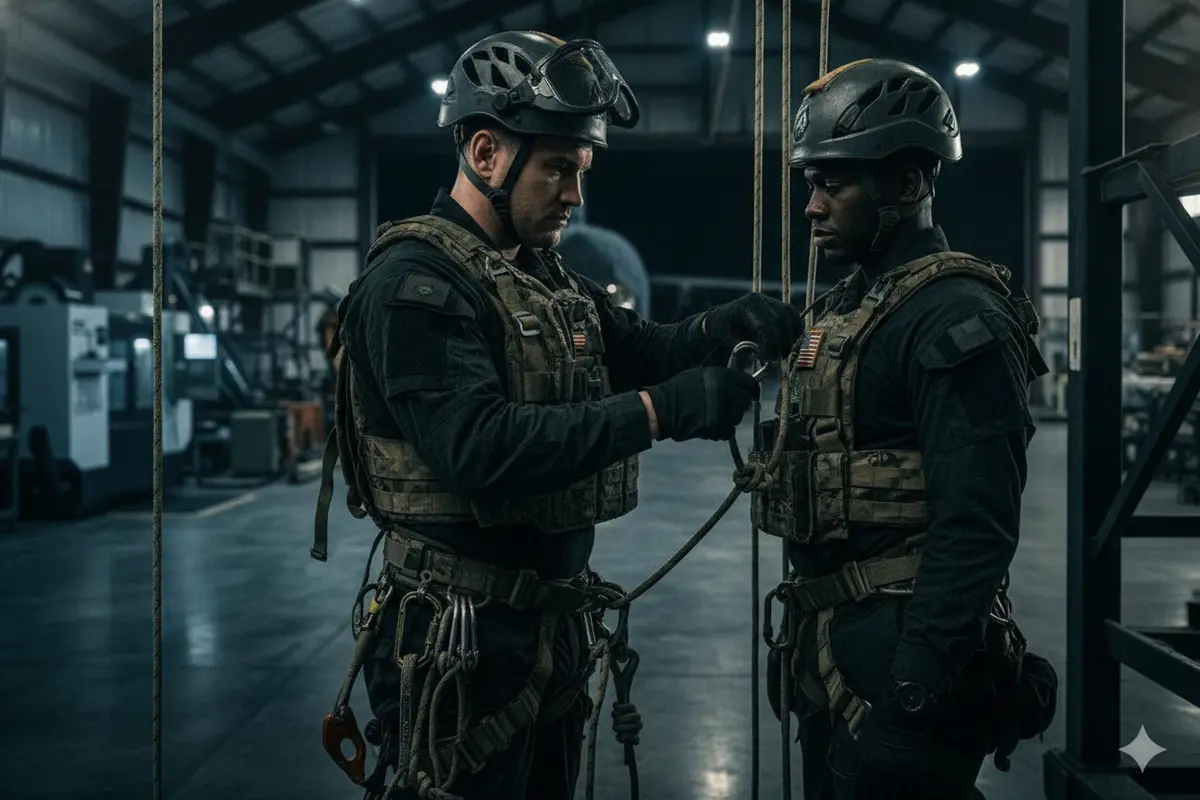
Procurement can ask vendors to identify the available size or adjustment options and provide the current instructions for fitting and inspection. If the agency needs several sizes or a broad range of wearer configurations, make that explicit in the request and confirm exactly what is included in the offer. Do not treat a successful fit check on one wearer as proof that the entire user population is covered.
Make the acceptance record specific enough to repeat. It can identify the model and size, the user clothing configuration, the instruction revision used, the evaluation date, and any observed limitation. If fit is evaluated on a sample of users, explain how that sample represents the user group and what additional size coverage remains necessary. This helps procurement distinguish a successful individual trial from evidence that the full order meets the requirement.
Fusion Tactical also lists half-body harness products. This is a reminder to specify the intended harness form and role, rather than treating different configurations as interchangeable. The procurement team should obtain model-specific documentation and evaluate only configurations that meet the agency’s stated mission and approved procedures.
How should buyers compare materials, ratings, and test evidence?
Request the manufacturer’s declared materials, ratings, and test documentation for the exact offered configuration, then check that each item maps to a requirement in the solicitation. Ratings must be interpreted in the context stated by the manufacturer and the applicable specification; they are not a stand-alone guarantee of system performance or a substitute for compatibility review.
Use a traceable evidence review rather than a marketing-claim review. The offer should identify the product and configuration clearly, point to the applicable instructions and product specifications, and provide the evidence the solicitation requests. If a rating or compliance claim is required, ask for the relevant declaration or test record and confirm its scope. A document for a different model, component, or configuration should not automatically be accepted as evidence for the item being purchased.
| Procurement area | What to specify | Evidence to review | Acceptance check |
|---|---|---|---|
| Mission and role | Rescuer, patient, or other defined role; task and operating configuration | Product instructions and manufacturer’s stated intended use | Offered model and configuration match the defined use |
| Load path and attachments | Required connection arrangement and system interfaces | Attachment identification, limitations, compatibility guidance | Written configuration review; no assumed interfaces |
| Fit and adjustment | Wearer range, clothing, and adjustment needs | Current sizing information and fitting instructions | Documented evaluation on representative users and kit |
| Materials and rating claims | Required declarations and applicable performance criteria | Model-specific specifications, labels, test or compliance records | Trace identifiers and evidence to the exact offered item |
| Inspection and support | Inspection responsibilities, records, and manufacturer guidance | Inspection instructions, care guidance, identification details | Records and process are available to the receiving team |
| Training and readiness | Required familiarization and procedures for intended use | Instructions, training plan, and agency procedure references | Authorized users can demonstrate the agency’s acceptance checks |
Where standards or regulations apply, identify them precisely in the solicitation and verify the supplier’s claim against the relevant scope and edition. Do not write “meets all standards” without naming the requirement. Fusion Tactical’s harness collection can help buyers identify products to ask about, but the procurement record should retain the specific model documentation, not a collection-page description as the only evidence.
Test evidence should answer practical questions: What item was tested? Which configuration and criteria were used? Who issued the record, and does it support the claim being evaluated? If the required evidence is missing or ambiguous, treat that as an open procurement question. Do not fill gaps with assumptions about material, rating, or performance.
Review evidence line by line. A useful record can show the requirement, the exact supporting document and page or section, the reviewer’s conclusion, and whether clarification was requested. Check revision dates and product identifiers where available. If a supplier provides a family-level statement, ask how it applies to the specific model and configuration in the offer. If a test record addresses only a component, do not treat it as proof for a complete system unless the record explicitly supports that conclusion.
What should a receiving and acceptance checklist include?
Acceptance should confirm that delivered goods match the award and that the required evidence is present and reviewable. It should not replace the manufacturer’s testing or an agency’s system-level qualification. Assign responsibility for document review, physical inspection, and disposition of discrepancies before equipment is put into service.
- Match the order: Compare the received model, size, configuration, quantity, and included components with the purchase documents.
- Check identification: Record available manufacturer, model, lot or serial identifiers, and any labels needed to connect the product to its documentation.
- Review the evidence package: Confirm the current instructions, product specifications, requested rating or compliance evidence, care guidance, and inspection information are included or otherwise available.
- Inspect condition: Follow the manufacturer’s instructions and agency receiving process to check for visible damage, missing components, or discrepancies. Do not improvise inspection criteria that conflict with those instructions.
- Record disposition: Document acceptance, quarantine, or rejection, including the reviewer, date, item identifiers, evidence reviewed, and corrective action for any discrepancy.
- Control configuration: Establish how substitutions, repairs, changes in configuration, and replacement items will be reviewed and recorded.
Make acceptance criteria objective enough for different receiving staff to apply consistently. For example, “all model identifiers must match the approved submittal” is checkable; “good quality” is not. The checklist should say who resolves a mismatch and whether equipment remains out of service while the question is open.

Use a discrepancy log when an item arrives with an incomplete packet or an identifier that differs from the approved offer. Record what was expected, what arrived, the affected item, and the decision owner. Keep the equipment separate from service inventory until the discrepancy is resolved under agency procedures. For example, a missing instruction sheet may require obtaining the current document and confirming the delivered model before acceptance; a different model or configuration may require formal review against the award rather than an informal substitution.
When procuring other system equipment, keep the reviews linked but distinct. A rope bag collection may be relevant to equipment storage planning, but a storage product does not establish harness suitability or rescue-system compatibility. Define each item’s role and acceptance evidence separately.
How should inspection intervals, maintenance, and training be planned?
Set the inspection and maintenance process from the manufacturer’s current instructions and the agency’s applicable requirements; do not invent a universal interval. The procurement package should make those instructions available to the people who will inspect, maintain, issue, and track the harnesses. The agency should also define records, responsibility, and how equipment is removed from service when its condition or history is uncertain.
Before purchase, ask the supplier for the inspection criteria, care and storage instructions, product identification method, and any manufacturer-defined service-life or retirement information that applies to the offered item. Incorporate those details into local procedures only after review. For a used, damaged, altered, or unidentified item, follow the manufacturer’s instructions and agency policy; do not make a return-to-service decision based on appearance alone.
Plan the recordkeeping workflow at the same time as the inspection process. Decide which role performs checks, where findings are entered, how an item is marked or segregated when concerns arise, and who is authorized to release it under agency policy. Specify how records will show the item identifier, date, inspector, result, and any follow-up. A process that depends on undocumented memory is difficult to apply consistently across shifts or teams.
Training must connect the harness instructions to the team’s actual system and procedures. Procurement should identify whether familiarization or user instruction is needed, who will deliver it, and what documentation the agency expects. The New Hampshire fire training authority describes rope rescue operations as involving knowledge and practical skills for rope-work incidents; that supports treating equipment procurement and operational training as related readiness activities, not interchangeable steps. See its Rope Rescue Operations course description.
For elevated rescue programs, local procedures should address the team’s planned methods and roles. Pasco’s public technical-rescue page describes high-angle rescue from elevated locations using ropes and harnesses, an example of why the procurement specification should reflect the actual operation rather than a generic product label. Review the Pasco Technical Rescue overview as an example of that operational context.
How can an agency make the procurement decision defensible?
A defensible decision links each requirement to evidence and a recorded evaluation. The buyer should be able to show what the team needed, what the solicitation asked vendors to provide, how the offered model was assessed, and why any open issue was resolved before acceptance. This creates a repeatable process without claiming that one checklist replaces technical review or training.
Use a requirement-to-evidence matrix during evaluation. For every line, name the requirement, the offer document that addresses it, the reviewer’s conclusion, and any follow-up. Keep the original vendor evidence and the final clarification together. If the evaluation relies on a demonstration or fit assessment, record the configuration and procedure used so that the result can be understood later.
- Pass: Required evidence is present, applies to the exact offered item, and meets the stated acceptance criterion.
- Clarification required: The offer may satisfy the requirement, but the evidence or model identification is incomplete. Set an owner and due date; do not assume a pass.
- Does not meet: Evidence conflicts with the requirement, the intended configuration is unsupported, or an acceptance condition is unmet.
Before award, conduct a final review of exceptions and clarifications. Confirm that each answer is in writing, applies to the offer being evaluated, and is reflected in the decision record. If a vendor proposes a substitution, evaluate it against the same requirements and evidence standard instead of assuming that a similar name or appearance means equivalent performance. Record the decision and the person authorized to approve it under the agency’s process.
For procurement teams evaluating product options, Fusion Tactical’s technical and equipment article index is an additional place to review company material. For an application-specific question or a request for quote, use a direct conversation with the supplier and retain the written response in the procurement file. Keep the decision anchored to verified specifications and the agency’s own approved operating requirements.
Contact Fusion Tactical to discuss your requirements
Frequently Asked Questions
Can one harness model be approved for every high-angle rescue task?
Not by default. The agency must define the intended wearer role, system interfaces, operating configuration, and applicable requirements, then confirm that the exact model documentation supports them. A broad product label does not prove suitability for every task.
Is a high load rating enough to approve a rescue harness?
No. A rating must be interpreted within the manufacturer’s stated scope and the applicable requirement. Buyers should also verify intended use, attachment configuration, fit, compatibility guidance, and test evidence for the exact offered product.
What documentation should be included with a harness bid?
Specify the documents required for evaluation, such as current product instructions, model identification, stated ratings and limitations, requested test or compliance evidence, sizing and fitting information, and inspection and care guidance. The exact package depends on the agency’s solicitation and applicable requirements.
How often should a rescue harness be inspected?
Use the manufacturer’s instructions and the agency’s applicable policy to set inspection procedures and timing. There is no universal interval established by this article. Record who is responsible, what guidance governs the inspection, and how results are documented.
Should a procurement team test the harness itself?
Acceptance should verify that the delivered item matches the purchase and that required evidence is complete. Any additional evaluation should be planned, authorized, and consistent with manufacturer guidance and agency procedures. Do not conduct improvised tests or treat a receiving check as a substitute for required product evidence.
How should buyers handle a missing or unclear rating claim?
Record it as an unresolved requirement and request written, model-specific clarification from the supplier. If the evidence does not establish the required claim or scope, do not mark the requirement as met by inference.
Does buying the harness complete rescue-team readiness?
No. Equipment selection is one part of readiness. The team also needs procedures, compatible system components, inspection and recordkeeping processes, and training appropriate to its planned operations.
A procurement-ready harness decision is one that can be traced from mission requirement to verified product evidence, documented acceptance, and team procedures.


