

Fire-Rescue Equipment Procurement Checklist: Rated Systems, Documentation, and Readiness
A fire-rescue equipment procurement checklist should start with the operation the equipment must support, then trace every selected component to its intended use, evidence, inspection plan, and training requirement. For agency buyers, that means reviewing a complete system, not just comparing individual products or headline ratings.
Request a quote for your equipment requirements
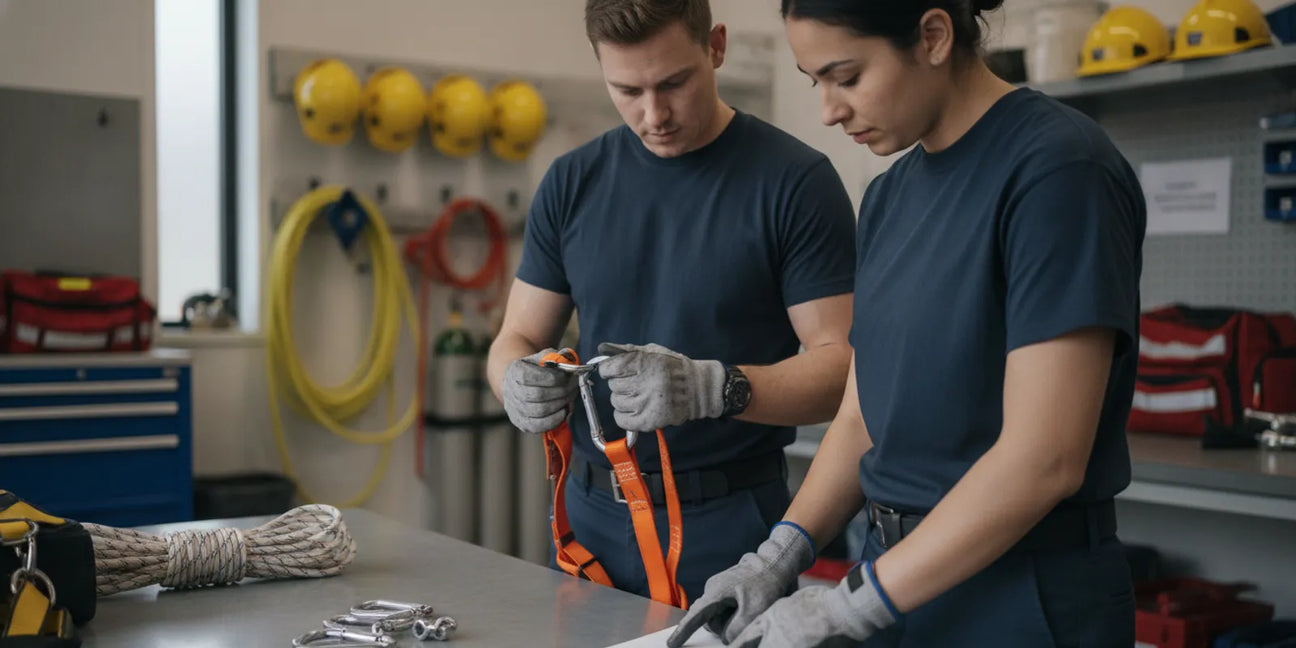
What should a fire-rescue equipment procurement checklist define first?
Start by documenting who will use the equipment, where it will be used, and what task it must support. This mission profile becomes the basis for the specification, evaluation, acceptance, and maintenance plan.
Before requesting proposals, gather input from operational leaders, end users, safety personnel, training staff, and procurement. Convert broad needs such as “technical rescue” into observable operating conditions. Identify the intended work, likely environments, user range, expected frequency, and equipment interfaces. Do not assume a product designed for one task is suitable for another.
- Tasks: Define whether the system supports access, positioning, restraint, lowering, raising, evacuation, or another specific function. Distinguish planned use from foreseeable misuse and emergency contingencies.
- Environment: Describe exposure to water, dirt, abrasion, heat, chemicals, sharp edges, weather, and storage conditions as applicable. Ask users to identify hazards that can affect material choice or inspection.
- Users and fit: Identify the range of users, clothing or protective equipment worn, adjustment needs, and whether the setup must accommodate multiple team members.
- System interfaces: List the harness, connector, anchor, rope, device, attachment point, and other components that must work together. A component chosen in isolation may not fit the intended system.
- Operating constraints: Record transport, packaging, deployment, compatibility with existing equipment, and any limits on storage or maintenance resources.
Set boundaries as carefully as requirements. State the tasks outside scope, any excluded configuration, and assumptions that bidders should not make. If a requirement is unknown, mark it for technical review instead of letting each supplier interpret it differently. This reduces the risk of comparing offers that solve different problems.
For a multi-role team, document whether the purchase is for one defined configuration or several mission-specific sets. If one system is expected to cover different functions, have a qualified technical reviewer assess each proposed configuration and its instructions. “Versatile” is not a substitute for evidence that a specific setup is suitable.
How should buyers specify harnesses, connectors, and rated hardware?
Specify each component by its role in the system, its required compatibility, and the evidence needed to verify it. Use the applicable standard and manufacturer instructions for the actual intended use; do not treat a strength figure alone as proof that a component is suitable.
For a harness selection, describe the operational function, adjustment and fit needs, attachment configuration, and other equipment with which it must interface. Ask bidders to identify the precise model and configuration offered. Require product documentation that identifies applicable limits, instructions, markings, and inspection criteria. Do not assume that products with similar appearance or a shared category name have interchangeable functions.
For connectors and other rated hardware, specify the connection points, gates or locking mechanisms required by the use case, and compatibility with the connected components. Review the manufacturer’s instructions and technical data for the exact model. A value expressed in kN is meaningful only in the context of the applicable rating, direction, configuration, test basis, and system design. Do not compare unlike ratings as if they were equivalent.
When the design calls for a carabiner or connector, document how it will be loaded and secured in the intended setup. Confirm that the connection geometry, clearance, closure, and attachment method align with the manufacturer’s directions and the rest of the system. The procuring agency should not infer a product’s allowable use, rating, or compatibility from a catalog image or a general product label.
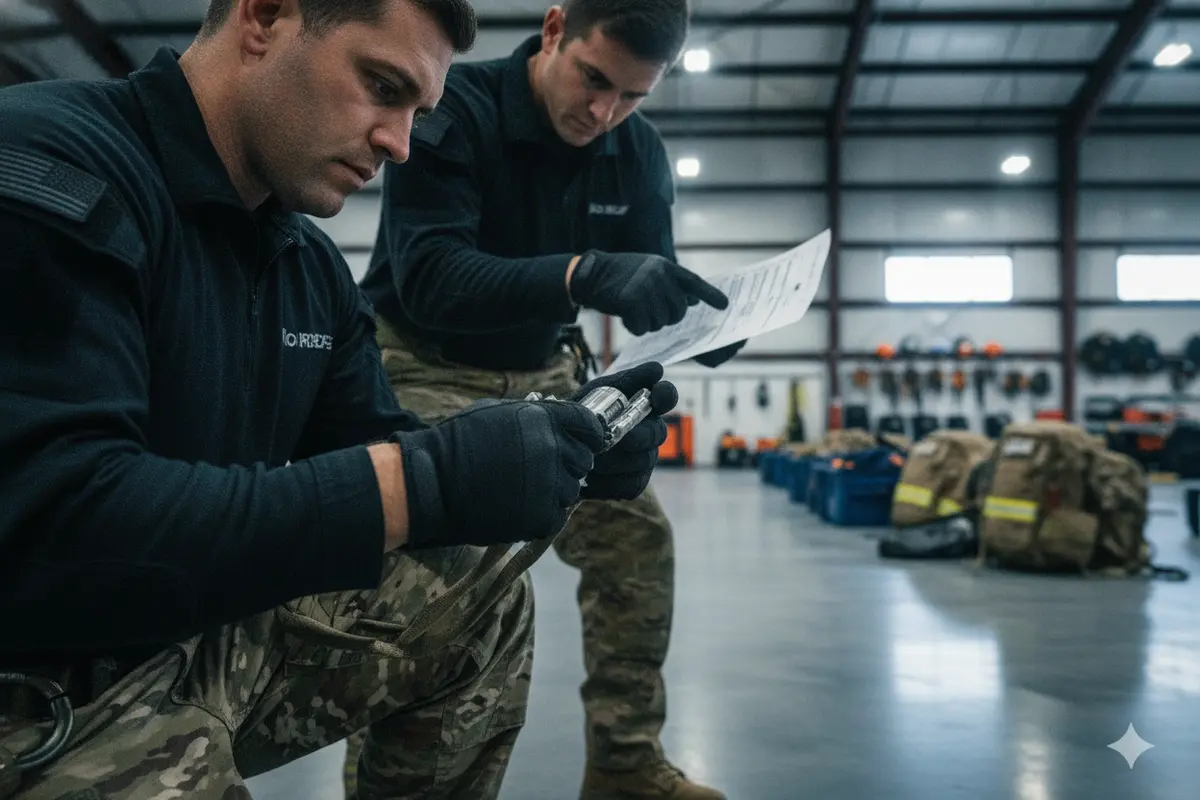
Build a system schedule that names every component, required interface, quantity, and responsible reviewer. Include the primary configuration and any approved alternate. Where a component is supplied by the agency or another vendor, identify it explicitly and require the bidder to state any compatibility assumptions. This makes omissions and interface questions visible before award.
Use the following comparison table as a starting point. The entries describe what to request and verify; they do not prescribe a universal product or rating.
| Review area | What the agency should define | What to request from the bidder | What to verify before acceptance |
|---|---|---|---|
| Harness | Task, user fit, adjustment, attachment configuration, and system interfaces | Exact model and configuration, instructions, applicable standard claims, limits, and inspection criteria | Identity and configuration match the solicitation; documentation fits the intended task |
| Connectors and hardware | Connection points, loading direction, closure needs, and mating components | Exact model, technical data, user instructions, and compatibility information | Markings and configuration are legible and consistent with the approved submittal |
| Rope or descent components | Intended task, system layout, user procedures, and interfaces | Instructions, applicable limits, compatibility requirements, and maintenance criteria | Component set and operating instructions match the reviewed system plan |
| Records and support | Required delivery records, inspection ownership, training, and replacement planning | Traceability information, manuals, inspection guidance, and available support terms | Records are complete, staff responsibilities are assigned, and gaps are resolved |
For a broader equipment package, connect the system specification to related operator-retention equipment only where the operational profile calls for it. Similarly, a descender or controlled-lowering component needs its own defined task and compatibility review. Avoid adding components simply because they appear in a supplier’s package; each item should have a documented role.
Which documents and compliance claims should the solicitation require?
Require a traceable evidence package that lets the agency connect the proposed product and configuration to its instructions, applicable requirements, and acceptance criteria. A supplier statement is useful, but it does not replace the underlying product documentation or the agency’s own review.
Identify the standards, specifications, contract clauses, and agency requirements that apply to the specific equipment and intended use. Standards can have different scopes and editions, so cite the applicable requirement precisely in the solicitation and ask the bidder to identify the edition or basis used. Depending on the equipment and mission, buyers may need to consider ANSI Z359 requirements, OSHA rules, or other relevant requirements. Confirm applicability with the agency’s technical authority and procurement counsel rather than assuming a standard applies to every rescue component.
Ask for a document set that can include:
- Manufacturer, product name, model or part number, and configuration identification.
- Technical specifications and instructions for use, including stated limits, warnings, and compatibility conditions.
- Applicable conformity or compliance declarations, with the requirement and product scope identified.
- Available test or inspection evidence relevant to the specified requirement, including enough information to identify the tested product and configuration.
- Marking and traceability details, such as lot, serial, or other identifiers where applicable.
- Care, storage, inspection, retirement, and maintenance instructions supplied by the manufacturer.
- Substitution, revision, and change-notification procedures for the contract, where required.
Ask bidders to distinguish verified facts from assumptions, proposed exceptions, and items that require agency confirmation. Require a clear cross-reference from each solicitation requirement to the evidence submitted. If a response cites a general standard, request the specific product claim and supporting documentation; do not infer product qualification from a manufacturer’s broad company-level certification.
Procurement records also need to support a defensible decision. Include the approved specification, questions and answers, evaluation notes, exceptions, approvals, award records, and final configuration. The U.S. Fire Administration’s capital-equipment replacement report is a useful reminder to treat major equipment needs as a planned replacement decision, while the Savannah Fire Rescue specifications illustrate why bid requirements should be made explicit in the solicitation. These sources are references, not substitutes for the buyer’s applicable rules: USFA capital equipment replacement report and Savannah Fire Rescue specification document.
Where cooperative purchasing is under consideration, verify that the vehicle, scope, terms, and competition requirements fit the agency’s rules and the equipment need. Sourcewell’s fire-rescue cooperative purchasing guide provides background for fire-rescue leaders evaluating that approach: Sourcewell guide announcement. The agency remains responsible for confirming procurement eligibility and documenting its own decision.
How can procurement verify interoperability and configuration control?
Interoperability should be demonstrated for the actual components and configuration that the agency will receive. Require bidders to identify interfaces and dependencies, then assign a qualified reviewer to resolve mismatches before purchase and again at acceptance.
Prepare a compatibility matrix with one row for each connection or interface. Record the component on each side, the interface requirement, the supporting instruction or technical document, and the person who approved it. Include agency-furnished equipment, accessories, and any existing system components that remain in service. If a proposed product relies on a particular attachment, orientation, or setup, show that condition in the matrix and in the user procedure.
Configuration control matters when a product, component, or procedure changes. The solicitation or contract should state how substitutions are reviewed, what advance notice is required, and which changes need written approval. At delivery, compare labels and identifiers with the accepted submittal. Keep the approved bill of materials and configuration with the equipment record so that later inspections do not confuse similar-looking versions.
Do not accept a general assurance that equipment “works together” when the procurement calls for a defined interface. Ask for the specific compatibility basis and resolve open questions before operational use. If the agency needs a system-level review, make that review a named deliverable with a responsible reviewer and an approval point.
What should the inspection, training, and lifecycle plan include?
Plan for readiness at the time of award, not after equipment arrives. The purchase should identify who will inspect, store, maintain, train on, and document each system throughout its service life, using the manufacturer’s instructions and applicable agency procedures.
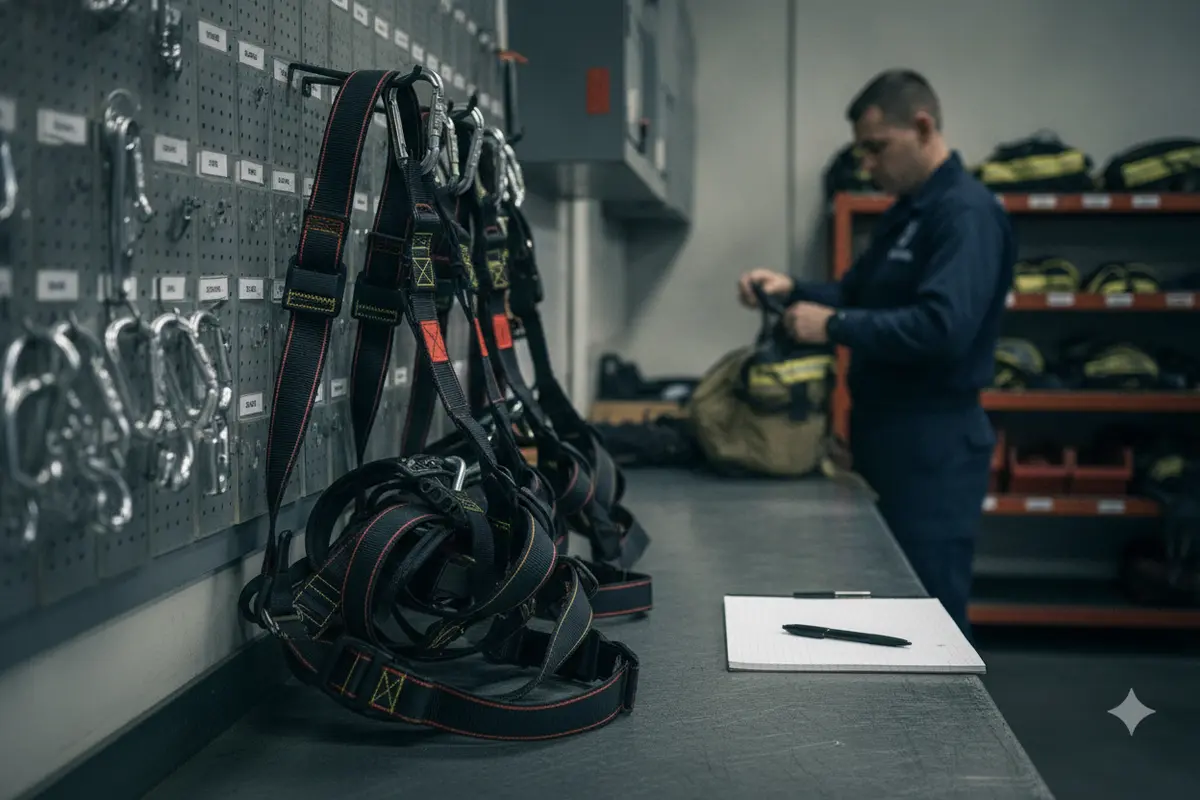
Define receipt inspection before delivery. Staff should verify quantities, product identity, configuration, labels, documentation, and visible condition against the purchase order and accepted submittal. Record discrepancies and quarantine items with unresolved identity, damage, missing instructions, or configuration differences until the responsible reviewer determines disposition.
Establish the inspection process from the manufacturer’s instructions and the agency’s applicable procedures. Specify who may conduct checks, how findings are recorded, how equipment is removed from service when required, and who authorizes return to service. Do not invent a universal inspection interval or retirement date; use the applicable instructions and requirements for the exact equipment. Retain inspection records with product identifiers so the record can be tied to the item.
Training should cover the approved configuration, operating limitations, compatibility restrictions, inspection steps, care, storage, and reporting of damage or unusual events. Assign responsibility for initial instruction and refresher training as appropriate to agency policy. A manual delivered in a box is not, by itself, evidence that users understand the procedures.
Lifecycle planning should consider consumables, inspection capacity, storage, repair or replacement pathways, record retention, and budget timing. Ask suppliers what support documentation and replacement information they provide, then document what the agency has confirmed. If replacement parts or alternate components are proposed, route them through the same compatibility and configuration review as the original items.
How should a fire-rescue procurement team compare proposals?
Compare proposals against the same mission-based criteria and require evidence for each scored requirement. Separate mandatory requirements from preferences, record exceptions, and avoid awarding points for claims that cannot be verified.
A useful evaluation sequence is:
- Screen completeness: Confirm that the bidder identified the exact products, configurations, quantities, and exceptions.
- Check mission fit: Review each proposed system against the task and environment described in the solicitation.
- Review evidence: Match product claims to the submitted instructions, technical records, and applicable requirements.
- Resolve interfaces: Evaluate the compatibility matrix, including agency-furnished components and proposed substitutions.
- Assess readiness: Compare delivery records, inspection guidance, training support, and lifecycle information.
- Document the decision: Record how the proposal met or failed each criterion, who reviewed it, and how exceptions were resolved.
Keep price and technical evaluation distinct where the procurement method requires it. Compare the total package and required deliverables, not just an individual item price. If a proposal omits documentation, proposes an alternate component, or makes an unsupported compliance statement, log the issue and use the solicitation’s clarification and evaluation process. Do not silently fill in missing details on a supplier’s behalf.
When buying a related mission equipment package, the same discipline applies: describe the operational need, verify each item’s stated role, and keep the approved configuration under control. A carefully documented decision helps the next team member understand not only what was purchased, but why it was selected and how it is meant to be maintained.
How should a fire-rescue equipment procurement checklist verify readiness?
Acceptance should confirm that the delivered equipment matches the contract and that the agency has the records and procedures needed to put it into service. Treat unresolved deviations as open actions, not informal notes.
- Delivered quantity, model, configuration, and identifiers match the purchase order and approved submittal.
- Required instructions, technical data, declarations, and traceability documents have been received and reviewed.
- Visible condition and markings have been checked; discrepancies are recorded and assigned for resolution.
- Interfaces and any agency-furnished components match the approved compatibility review.
- Inspection ownership, storage arrangements, user procedures, and recordkeeping responsibilities are assigned.
- Required training has been scheduled or completed, and attendance or qualification records are retained as applicable.
- Open exceptions, substitutions, and corrective actions have a named owner and disposition before operational release.
- The agency has a lifecycle plan for inspections, maintenance, replacement, and configuration updates.
Use this checklist as a control point between procurement and operations. The approving authority should confirm that the accepted items, documentation, and procedures form the system that was evaluated. If a delivery differs from the approved configuration, pause operational release until the agency’s authorized technical and procurement reviewers resolve the difference.
Request a quote for a mission-specific equipment package
Frequently Asked Questions
Fire-rescue procurement decisions depend on the mission, the complete system configuration, and the evidence needed to verify it. The answers below address common questions about defining requirements, reviewing equipment, and preparing it for service.
What is the first step in a fire-rescue equipment purchase?
Write a mission profile that identifies the task, operating environment, users, interfaces, and constraints. Use it to shape the specification before comparing products or requesting proposals.
Can a high kN rating prove that equipment is suitable?
No. A strength value must be interpreted in the context of the applicable rating, loading direction, configuration, test basis, and intended system. Review the exact product documentation and obtain technical review for the proposed use.
Which standards should a fire-rescue agency cite?
Cite the standards, specifications, contract terms, and agency rules that apply to the particular equipment and task. Confirm the relevant scope and edition with the agency’s technical authority instead of assuming one standard governs every component.
What documents should bidders submit?
At minimum, request product and configuration identification, instructions, technical data, applicable compliance evidence, traceability details where applicable, and inspection and care criteria. State the required evidence in the solicitation and connect it to each evaluated requirement.
How should an agency handle a proposed product substitution?
Require written review against the original requirement, product evidence, interfaces, and approved configuration. Do not accept a substitution solely because it has a similar name or appearance; document the decision and update records if approved.
Who should own inspection and maintenance records?
The agency should name an accountable role or unit before the equipment enters service. That owner should follow manufacturer instructions and agency procedures, keep records tied to product identifiers, and route defects or unresolved conditions for disposition.
When is rescue equipment ready for operational use?
It is ready only after the agency verifies the delivered configuration, reviews required documents, resolves deviations, assigns inspection and storage responsibilities, and prepares users through the required procedures and training.
A mission-based specification, a verified system configuration, and an assigned lifecycle owner give procurement and operations teams a shared basis for reliable readiness decisions.
Review Fusion Tactical’s helo retention equipment or harness selection as starting points when those products match your documented requirements.


