

Helicopter Tether Protection for Critical Missions
High-risk helicopter operations leave no margin for personnel-retention or loose-equipment failures. A properly specified helicopter tether connects an operator or mission-critical item to an approved airframe anchor while preserving the controlled mobility required for doors-open, rescue, utility, and tactical flight profiles.
Request mission-specific helicopter tether procurement support from Fusion Tactical USA.
A helicopter tether is a load-rated retention component that connects personnel or equipment to an approved aircraft anchor point. Correct selection depends on the complete system: webbing, stitching, connectors, anchor compatibility, usable length, documented ratings, inspection criteria, and the operating procedure governing its use.
Understanding how the retention system controls risk is the first step in defining defensible technical and procurement requirements.
What is a helicopter tether?
A helicopter tether is a load-rated retention component used to connect personnel or mission equipment to an approved aircraft anchor point. In doors-open and high-mobility flight profiles, the tether must control fall or loose-object risk without creating excess slack, connector interference, or an unacceptable restriction on the operator's required work envelope.
Defining the role and materials
A helicopter tether is one component within a personnel- or equipment-retention system. Procurement evaluation should address the documented assembly rating, material specification, connector compatibility, energy-management behavior, usable extension, anchor geometry, and inspection requirements. A published 15kN rating, for example, must be verified against the complete assembly and intended mission profile rather than treated as a standalone buying criterion.
A retracting bungee configuration can manage excess tether length and reduce snag exposure when the system is not extended. When mission tasks require movement, the elastic section expands within its designed range while the rated retention assembly remains connected. You can find more on this in our guide to helicopter tether safety systems.
Personnel vs equipment retention
Personnel retention and equipment retention address different hazards and should not be treated as interchangeable applications. A personnel system must integrate with an approved harness, anchor, connector, and operating procedure while allowing the crew member to reach the defined work area. Equipment retention secures tools, medical kits, communications equipment, and other mission items against uncontrolled movement or loss.
Both applications support operational risk control, but each requires its own attachment points, ratings, inspection criteria, and procedures. An unsecured tool can endanger personnel below or compromise the mission. CDC documentation on external load operations reinforces the need to manage equipment, maintenance, procedural, and environmental hazards as an integrated system.
Components of a restraint system
A full restraint system uses several parts to ensure safety. It starts with the strap and moves to the metal hardware. At each end, you will find metal clips or snap hooks. These clips must be easy to use with one hand, even with gloves on. They lock onto the craft's hard points and the operator's harness.
Many teams also look for Berry Amendment compliant gear. This ensures the gear is made in the U.S. and meets high quality standards. It also helps with government buying rules. Regular checks of these metal pins and nylon straps are a must for safe use.
How does a helicopter tether protect personnel?
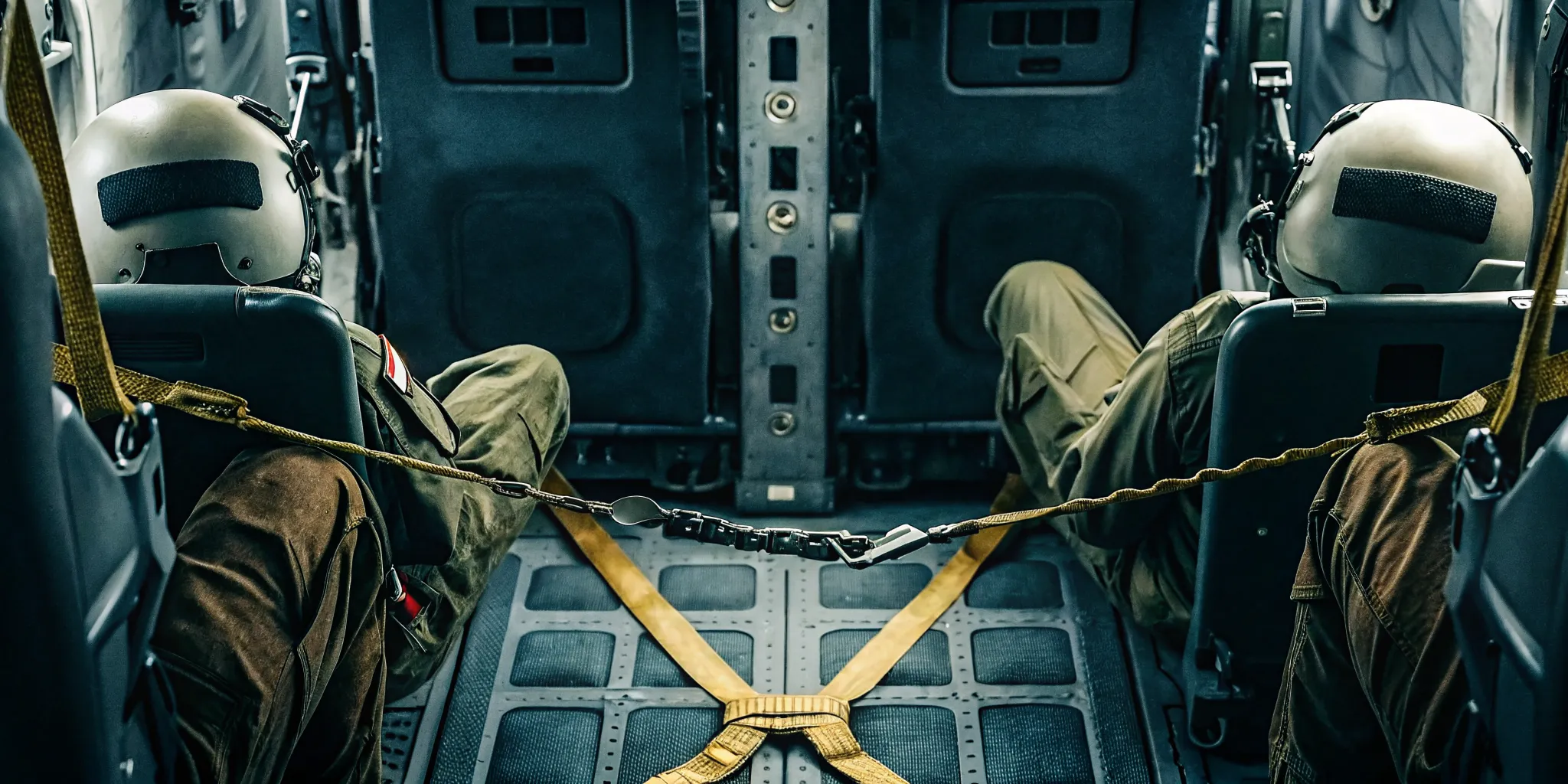
A helicopter tether is a key safety tool for crews who work in open-door aircraft. These systems keep crews safe during fast moves and steep turns. By locking the crew member to the airframe, the tether stops them from falling out.
This connection is especially important during abrupt aircraft movement, turbulence, banking, or task transitions near an open door. A properly configured system helps the crew maintain the required work position while controlling fall exposure.
Risk control in open door flight
Flight in helicopters brings many risks to the crew. Steep banks and sudden drops can cause high forces on the body. These outside load tasks put unique stress on both the ship and the pilots.
In these high-risk areas, even a small slip can lead to a crash or death. A strong tether acts as a fail-safe that keeps the crew inside the cabin at all times.
Crews often have to lean out of the door to view a hoist or a load. This work is risky because of the wind and the move of the craft. Without a lead, a person could be lost in a split second.
Using a rated line lets the crew do their job with more speed and less risk. It ensures that no matter how the ship moves, the person stays tied to a solid point on the floor or wall.
Size and fit of the tether
The tether must be long enough to let the crew move but short enough to keep them in the ship. Most leads use strong nylon and elastic cores. This design lets the line stretch when needed but pulls back to stay out of the way.
Proper helicopter tether safety systems help teams manage this space. They give the crew the room to work while keeping the risk of a fall to a low level.
It is also key for the gear to be easy to use. A crew member might need to unhook fast in a crisis. High-grade clips and hooks help with this even with gloves on.
The tether must also resist wear from the sun and sand. These parts are made to last in the harsh spaces where teams work every day. Choosing the right gear means looking at both the strength and the ease of use.
Value of high load ratings
Every tether has a load rating that tells how much force it can take. High-end leads are often rated to 15kN to handle the shock of a sudden stop. This high rating is a must for gear used in flight where forces can be very large.
These parts are often made under strict U.S.-based manufacturing rules to ensure they do not fail. Using gear that meets these high marks gives the crew the trust they need to work.
Check the clips and pins before every flight to keep the gear safe. Regular checks help find wear or damage before a part breaks. A small tear in the webbing can cause the whole system to fail under a load.
By following these rules, teams can ensure their tethers stay in top shape for years. This focus on safety is what keeps crews alive in the most high-risk missions.
Protecting mission-critical equipment in the aircraft
Loose gear in a helicopter poses a real threat to safety. When an aircraft moves or shakes, loose items can slide, fall, or fly out of open doors. This puts the crew and people on the ground at high risk. Protecting gear is not just about keeping tools safe. It is about stopping new risks that lead to crashes.
Securing tools with a helicopter tether
Every piece of gear must stay in place during a flight. Crew members often use a helicopter tether and lanyard choice to tie down key tools. These tools stay close to the user but do not fall if they slip. A good tether stays out of the way when you do not need it. High-quality gear often uses bungee parts that shrink when not in use. This keeps the cord from catching on seat rails or other gear in the cabin.
Load ratings are a vital part of tool safety. Each helicopter tether safety system must meet exact load needs. This helps the gear handle the force of a quick stop or sharp turn. If a tether is too weak, the gear can break free. This turns a simple wrench or camera into an unsafe object. Experts look for gear made from strong nylon that can handle high stress.
Comms and medical kit management
Radios and medical kits are mission-critical assets. Loss, impact damage, or uncontrolled movement can interrupt communications, delay care, or create a cabin hazard. Retention requires more than a generic strap; approved mounts, containers, attachment hardware, and task-specific tethers must keep equipment accessible and controlled. You should check your gear before every shift. Look for wear on all straps and bags.
Safety experts suggest a full check of all metal parts and pins. You should also look at the wiring harnesses and locking pins on your gear to make sure they work well. This helps you find small flaws before they cause a failure. When your comms and medical kits are safe, you can focus on the mission.
Reducing secondary hazards
Loose items can become secondary hazards when they strike personnel, interfere with controls, leave the aircraft, or obstruct emergency movement. Foreign-object control and disciplined cabin organization therefore support the retention plan. Use approved bags or rigid cases to store items that you do not need right now. This keeps the floor clear and stops trips.
Keeping track of loose gear helps stop crashes. Research shows that machine failure and pilot errors are common causes of accidents during helicopter flights. A loose item that jams a control or distracts a pilot can lead to a crash. By using the right tethers and storage, you reduce these risks. Safety starts with a plan to keep every item in its place.
Discuss custom engineering and testing requirements with Fusion Tactical USA.
Helicopter tether procurement requirements
Buying a helicopter tether and lanyard selection for crew safety is a technical task. Teams must look at more than just the price. You need to find gear that meets strict load ratings and safety rules. A high-quality tether helps manage risk in high-stakes flight operations.
Load ratings and hardware
Each component must be compatible with the specified design load and operating environment. A rating such as 15kN is meaningful only when supported by manufacturer documentation and evaluated for the complete retention assembly, intended use, and approved anchor point. Procurement teams should review webbing, stitching, connectors, gates, and attachment interfaces as a system. Traceable hardware and disciplined procedures help control equipment-related risk in helicopter external load operations.
Manufacturing and compliance
Government buyers must follow laws when they buy gear. For many contracts, you need Berry Amendment compliant gear that is made in the USA. This ensures the tether uses local materials and labor. It also helps with quality and tracking. Buying from a firm that makes gear in the U.S. helps you meet your legal duties and supports mission safety.
| Requirement | Standard Specification |
|---|---|
| Webbing Material | 1-inch tubular nylon with elastic. |
| System Load Rating | Mission-specific documented rating for the complete system. |
| Contract Compliance | Berry Amendment and TAA compliant. |
| Hardware Type | Quick-release snap hooks or shackles. |
| Safety Inspection | Pre-shift check of pins and fasteners. |
System inspection and care
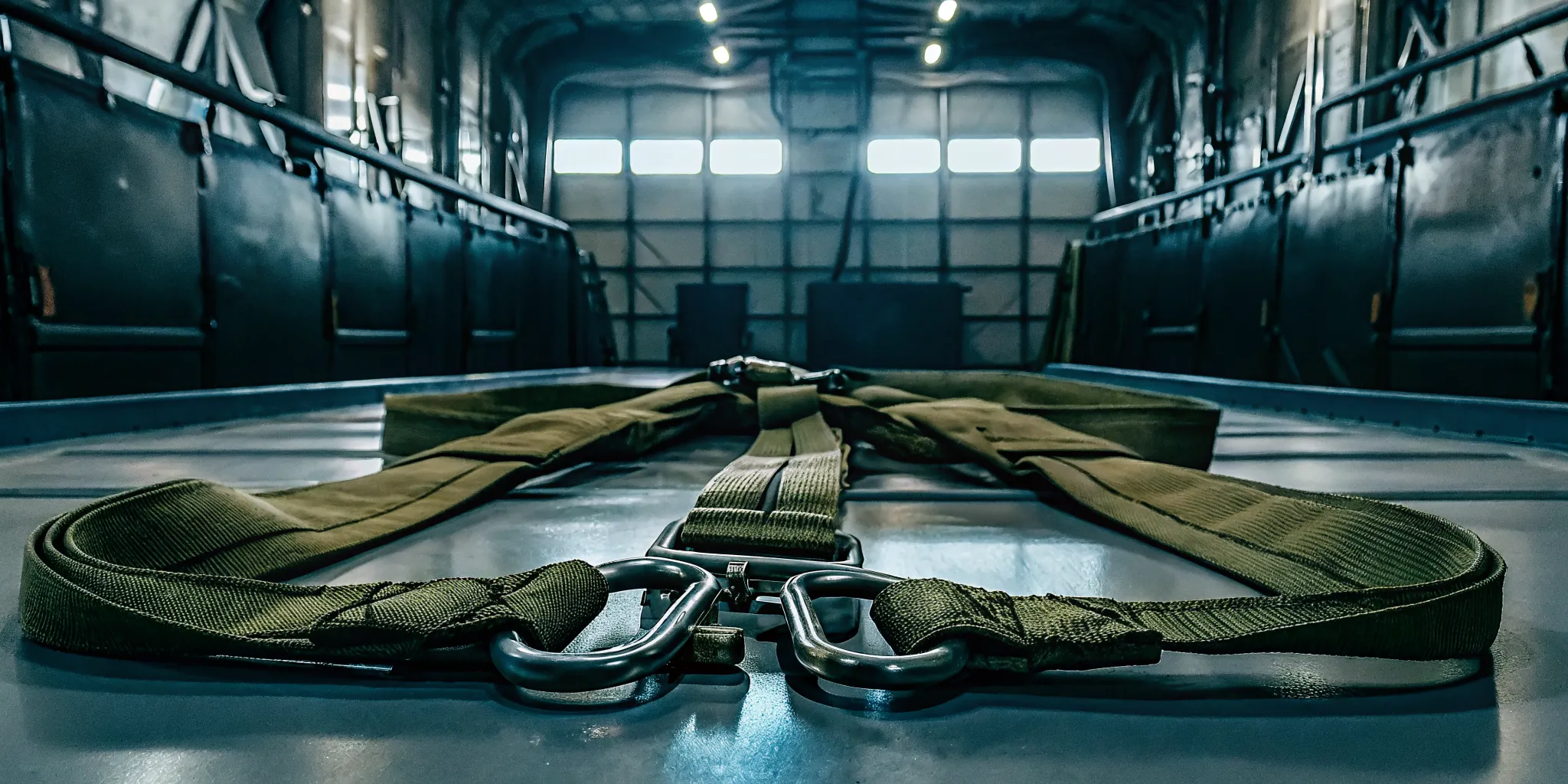
Safe use of a helicopter tether starts with a check of the gear. You should look for wear on the webbing and check the metal parts for cracks. It is vital to inspect mechanical fasteners and locking pins before every shift. If a tether shows signs of damage or has been through a fall, you must replace it right away to keep the crew safe.
How should helicopter tethers be inspected?
A helicopter tether is a key safety tool. It keeps crew members safe while they fly. High-risk flight work puts stress on both the crew and the gear. Research shows that care errors and gear failures are top causes of helicopter crashes. Regular checks of your gear help stop these risks. You must check your gear before every shift. Look for wear before it leads to a break. This process keeps your team safe and your mission on track.
Checking the webbing and stitching
Most tethers use nylon and elastic. You must look for cuts, fraying, or burns on these parts. Heat from the aircraft can melt nylon. Check for fuzzy spots or stiff areas. These signs mean the fabric is weak. You must also check the load-bearing stitching. The stitches should be tight and clear. If you see loose threads or pulled loops, stop using the gear. This part of the helicopter tether and lanyard selection process makes sure your gear stays strong.
Assessing hardware and link parts
The metal parts of a tether take a lot of force. Look for rust, cracks, or bends in the hooks. Check that the release pins move well. They should not stick or feel like they have sand in them. Dirt and salt can jam these parts. You should also check the fasteners and locking pins. These parts must lock tight to hold a load. A regular pre-shift check of parts and pins is a key safety rule. Clean your gear often to stop metal from wearing down.
A step-by-step inspection guide
A set list of steps helps you miss nothing during a check. Use this list to review your gear before every use. It takes just a few minutes to ensure the gear is ready for the task.
- Check the full length of the webbing for any holes, cuts, or burn marks.
- Look at the stitch patterns to find loose or broken threads.
- Test the hook to make sure it opens and closes well.
- Check the release pin to confirm it pulls out and resets without sticking.
- Look for any signs of rust or pits on the metal parts of the gear.
- Clean off any dirt, salt, or oil with mild soap and water.
- Write down the date and the result of your check in a log.
Logging your checks helps you track how old your gear is. Tethers work in tough spots where you cannot have a failure. Most tactical gear is rated to hold a lot of weight, such as 15kN, but wear can lower that strength. If you find any damage, you must stop using the tether. Do not try to fix a broken tether on your own. Proper care and checks help your gear last longer and keep you safe.
Selecting a tether for the mission profile
Choosing the right helicopter tether starts with a clear look at the mission environment. Each flight profile has its own set of risks that the gear must handle. A unit doing search and rescue over the ocean faces different needs than a team on a high-risk defense mission. You must treat the helicopter tether safety systems as a full part of the aircraft rather than just an add-on. Every piece must work with the anchor points and the crew harness to keep the operator safe.
Match the tether to the aircraft
The anchor point on the aircraft determines the connector you need. Some airframes use fixed rings while others have tracks for sliding anchors. You must check that the snap hook or shackle fits the anchor without any binding. Fusion Tactical builds Berry Amendment compliant gear designed to meet these exact needs. Using the wrong hook can lead to side loading, which reduces the strength of the system during a fall.
Mechanical failure and maintenance errors are common causes of accidents in these flight profiles. You must follow the manufacturer's guide for a pre-shift check of mechanical fasteners and locking pins. This check helps ensure the tether locks and stays in place as it should. A quick look at the cable and wiring harness can find wear before it turns into a failure on the job.
Consider length and adjustability
The length of the tether should allow for a full range of motion while stopping a fall before the operator hits the airframe or the ground. Fixed-length tethers are simple and strong, but they might not fit every task. Adjustable lanyards give more freedom but add complexity. You should look for tethers that stay out of the way when you do not need them. Many high-end tethers use an internal elastic core to keep the webbing close to the body, which helps avoid snag risks during fast moves.
Evaluate load ratings and documentation
Every mission-critical part must meet the load needs of the task. Helicopter tethers are vital parts that must have specific ratings for high-risk work. Most tactical tethers use one-inch tubular nylon webbing to provide a high strength-to-weight ratio. You need to verify that your gear has the right qualification papers for the job. Fusion Tactical offers custom engineering and testing to ensure each system meets the standards your program needs.
Building a procurement-ready retention program
Safe flight work needs tools that meet strict rules. For teams in defense or law enforcement, a helicopter tether must follow laws like the Berry Amendment. This law means the gear must be made in the U.S. using local materials. Fusion Tactical makes Berry Amendment compliant gear at its site in California. This helps buyers meet government needs without delay.
U.S. made and compliant gear
Buying for the government or military has many steps. Every helicopter tether needs to have clear records to show where it came from. Fusion Tactical offers U.S.-based manufacturing to keep supply chains short and safe. These tools help teams stay safe in high-risk spots where gear failure can lead to accidents.
Flight work is hard on gear and people alike. Studies show that mechanical failure is a top cause of flight accidents during external load work. Using reliable safety systems can help lower these risks. Choosing gear that meets TAA and Berry rules keeps your program ready for any audit or mission.
Custom tools for special tasks
Some missions need tools that do not exist yet. Standard gear might not fit a specific cabin or a new aircraft. Fusion Tactical uses custom engineering and prototyping to solve these problems. This path lets you get a helicopter tether built for your exact needs in as little as one or two weeks.
Each custom tool goes through deep testing to make sure it is safe. For safe use, you should also follow OSHA check rules for all safety hardware. This includes looking at pins and fasteners before every shift. A solid plan for helicopter tether safety systems ensures your team has the best protection possible.
Traceable and rated hardware
In high-stakes work, every part of the gear must have a rating. A helicopter tether is a mission-critical part that needs a specific load rating for the task. Most tactical tethers are made from strong materials like one-inch tubular nylon to handle high force. These ratings give pilots and crew the trust they need to focus on the mission at hand.
Frequently Asked Questions
What is a helicopter tether?
A helicopter tether is a mission-critical safety tool used to secure personnel and gear during external load flights. These lanyards are made from strong tubular nylon and elastic to provide both durability and flexibility. High-performance models are often load-rated to 15kN. This ensures they can withstand extreme forces in defense missions where gear failure is not an option.
How do you inspect a helicopter retention lanyard?
Safety requires regular pre-shift checks of all tactical gear, including helicopter retention lanyards. According to OSHA, operators must check fasteners, pins, and cable harnesses before use. Checking for wear, fraying, or failure in these parts helps prevent accidents. This process stops errors from upkeep or gear fatigue during high-risk helicopter flights.
Why is Berry Amendment compliance important for helicopter gear?
Compliance with the Berry Amendment and the Trade Agreements Act is a need for many defense contracts. This ensures that safety tools, such as helicopter tethers, are made in the United States using local parts. Choosing hardware from makers like Fusion Tactical USA guarantees high standards. This also ensures legal rules are met in mission-critical areas for groups like NASA or the Department of Defense.
What are the main causes of helicopter external load accidents?
Studies on helicopter safety show that many factors lead to accidents during external load flights. According to the CDC, the most common causes include part failure, pilot error, and upkeep errors. Using load-rated tethers and following strict check rules can help lower these risks. Good tool design keeps people and gear safe even under the unique stress of helicopter logging or rescue work.
Ready to secure your helicopter operations?
A defensible retention program begins with documented requirements, compatible components, controlled inspection intervals, and clear retirement criteria. Procurement teams should resolve rating, material, anchor, connector, compliance, and traceability questions before equipment enters operational service.
When an off-the-shelf configuration does not match the aircraft or mission profile, early coordination with Fusion Tactical USA supports engineering review, prototyping, testing, and production planning for custom gear.
For immediate mission-specific equipment support, call (909) 393-9450.


