

Tactical Load-Bearing System Inspection Guide
A tactical load-bearing system inspection program is not a generic pre-use checklist. For a harness, retention lanyard, webbing assembly, or connector used in defense, aerospace, law enforcement, or rescue work, the program must preserve traceability, detect damage before it becomes a field failure, and make retirement decisions that can be defended during a safety review. The correct interval and retirement criteria always begin with the manufacturer instructions, the system's intended use, and the governing contract or agency requirements.
Request an engineering consultation to align an inspection and replacement program with your mission profile.
This guide gives procurement officers, safety managers, and unit armorers a practical lifecycle framework for tactical harnesses, lanyards, webbing, and rated metal hardware. It distinguishes formal life-safety management from a broad fall-protection checklist by focusing on configuration control, mission exposure, and the evidence needed to keep a critical system in service with confidence.
What does a tactical load-bearing system inspection include?
A tactical load-bearing system inspection should verify identity, configuration, textile condition, hardware condition, function, contamination exposure, and maintenance history. The result is not simply pass or fail: it is a documented decision to return the exact system to service, quarantine it for evaluation, or retire it from life-safety use.
Start by identifying the complete assembly rather than inspecting isolated parts. Record the manufacturer, model, serial or lot identifier, date in service, assigned user or unit, and approved configuration. This matters when a harness, lanyard, energy absorber, connector, or sewn assembly has its own inspection instructions or retirement rule.
- Identity and traceability: confirm labels, serial or lot marks, rating marks, and inspection records are legible and match the asset register.
- Configuration: verify only approved components are installed, correctly routed, and compatible with the intended anchor, aircraft, rescue, or ground-operation interface.
- Textiles: inspect webbing, stitching, bartacks, load paths, protective sleeves, and retainers for cuts, abrasion, glazing, broken fibers, chemical attack, discoloration, heat damage, hardening, or deformation.
- Hardware: inspect connectors, D-rings, adjusters, gates, keepers, locking mechanisms, and attachment points for corrosion, sharp edges, cracks, distortion, binding, or incomplete closure.
- Function: operate buckles and connector gates as instructed by the manufacturer. A mechanism that does not close and lock positively is not ready for service.
- Exposure history: capture known shock loading, rescue use, chemical contamination, saltwater exposure, UV exposure, heat exposure, or unauthorized repair.
For systems that perform fall arrest or related protective functions, the applicable OSHA rule requires inspection before initial use each work shift and after an occurrence that could affect the system's integrity. See 29 CFR 1910.140 for the federal baseline. Program managers should treat this as a floor, then apply the stricter manufacturer, contract, customer, or mission requirement.
Why are tactical systems managed differently from ordinary fall protection?
Tactical systems may operate across aircraft, vehicles, confined access points, maritime environments, rescue evolutions, and repeated load transitions. Their serviceability depends on the complete approved configuration and the specific exposures encountered, not on calendar age alone.
General industrial inspection guidance is useful, but it can miss operational variables that matter to a mission-critical tactical assembly. A lanyard that sees repeated aircraft-door contact, a harness exposed to hydraulic fluid, or a connector used around abrasive structure can accumulate damage differently from equipment kept in a fixed industrial environment. Treating every asset as equivalent creates two risks: fielding compromised equipment or retiring usable equipment without evidence.
Build your program around the design basis. The system's instructions, applicable ANSI/ASSP Z359 provisions, acquisition specification, and contractually invoked MIL-STD requirements define what must be inspected and who is qualified to make a disposition. ANSI/ASSP Z359 is a fall-protection consensus standard family, while MIL-STD requirements vary by program and should never be assumed from a product category alone.
Fusion Tactical's professional manufacturing approach supports configuration-aware programs where design, testing, documentation, and field use are considered together.
Set inspection intervals by event, exposure, and authority
The most reliable replacement schedule is event-driven first and calendar-driven second. Every system needs a pre-use check, a documented periodic inspection by a qualified person at the interval required by its instructions or governing program, and an immediate special inspection after a damaging event or suspected overload.
| Inspection trigger | Program action | Typical evidence |
|---|---|---|
| Before each use or shift | Operator checks the complete assembly for obvious damage, correct routing, and function. | Local procedure, shift log if required. |
| Scheduled periodic interval | A designated competent or qualified inspector performs and records a detailed inspection. | Asset record, findings, inspector identity, disposition. |
| Post-event | Quarantine immediately after shock loading, uncontrolled loading, chemical contact, heat exposure, water immersion, or any event identified by the manufacturer. | Incident record, photos, manufacturer evaluation or retirement decision. |
| Before reassignment or deployment | Confirm the asset register, configuration, and maintenance status are current. | Issue record, configuration checklist, inspection currency. |
The phrase "annual inspection" is common in general safety programs, but it is not a universal tactical interval. The manufacturer may require a shorter period, and an agency or contract may impose additional inspections. The OSHA construction rule also requires personal fall arrest systems to be inspected before each use for wear, damage, and other deterioration, as stated in 29 CFR 1926.502.
Contact Fusion Tactical for government pricing when you need a documented U.S.-manufacturing and compliance discussion for an active program.
How should you inspect webbing, stitching, and soft goods?
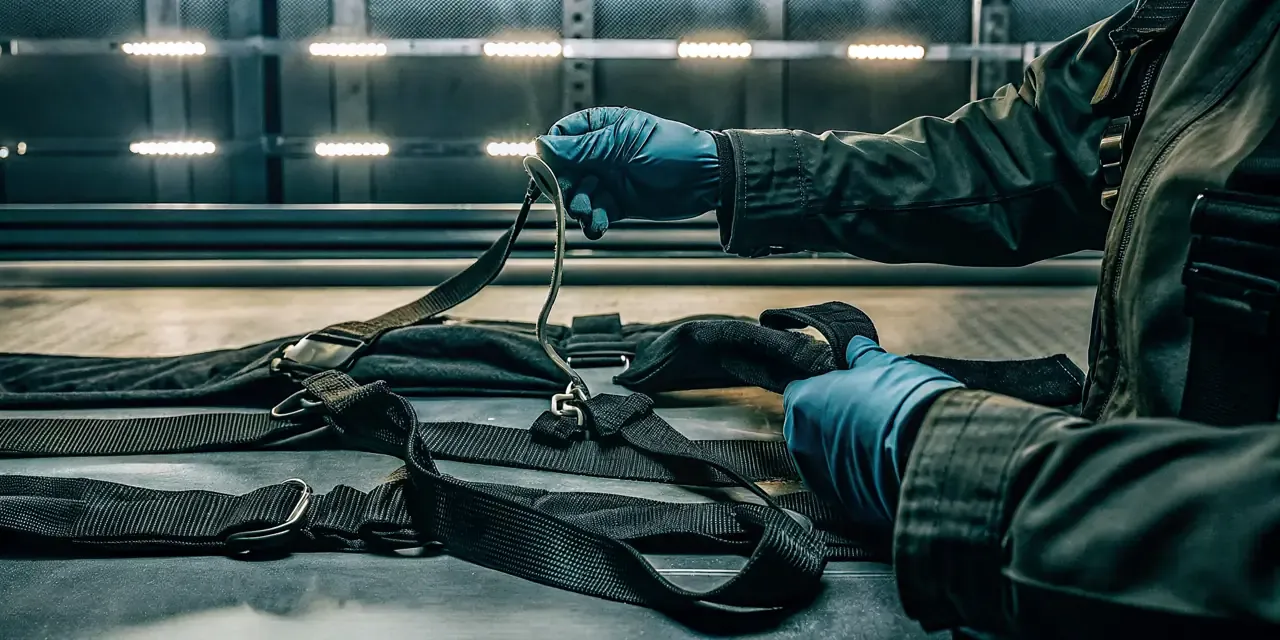
Inspect soft goods systematically from one end of the load path to the other. Flex webbing through the hands, visually examine both faces and edges, and compare high-wear zones with protected sections. Any uncertainty about a load-bearing textile component should lead to quarantine and manufacturer review, not an improvised field repair.
Webbing and sewn assemblies
Look for cut yarns, fraying that reaches load-bearing fibers, abrasion at hardware interfaces, melted or glossy areas caused by heat, stiffness, unusual softness, staining, bleaching, mold, embedded grit, or chemical odor. Inspect bartacks and seam lines for broken, pulled, loose, or missing stitches. Covers and sleeves deserve attention because they can hide damage beneath them.
Labels and identification
Legible marking is a control feature, not paperwork. If the product label, rating label, serial mark, or inspection identification cannot be read, the asset may no longer be traceable to its instructions and service history. Follow the manufacturer process for relabeling or disposition. Do not recreate a life-safety label locally.
Cleaning and storage
Use only the cleaning and drying methods stated by the manufacturer. Do not use bleach, solvents, pressure washing, or unapproved lubricants on textile assemblies. Store equipment clean, dry, protected from direct sunlight and chemical vapors, and away from sharp edges, batteries, heat sources, and uncontrolled vehicle cargo. Good storage reduces damage, but it does not reset the documented service life.
Inspect connectors, adjusters, and lanyard hardware as load-path components
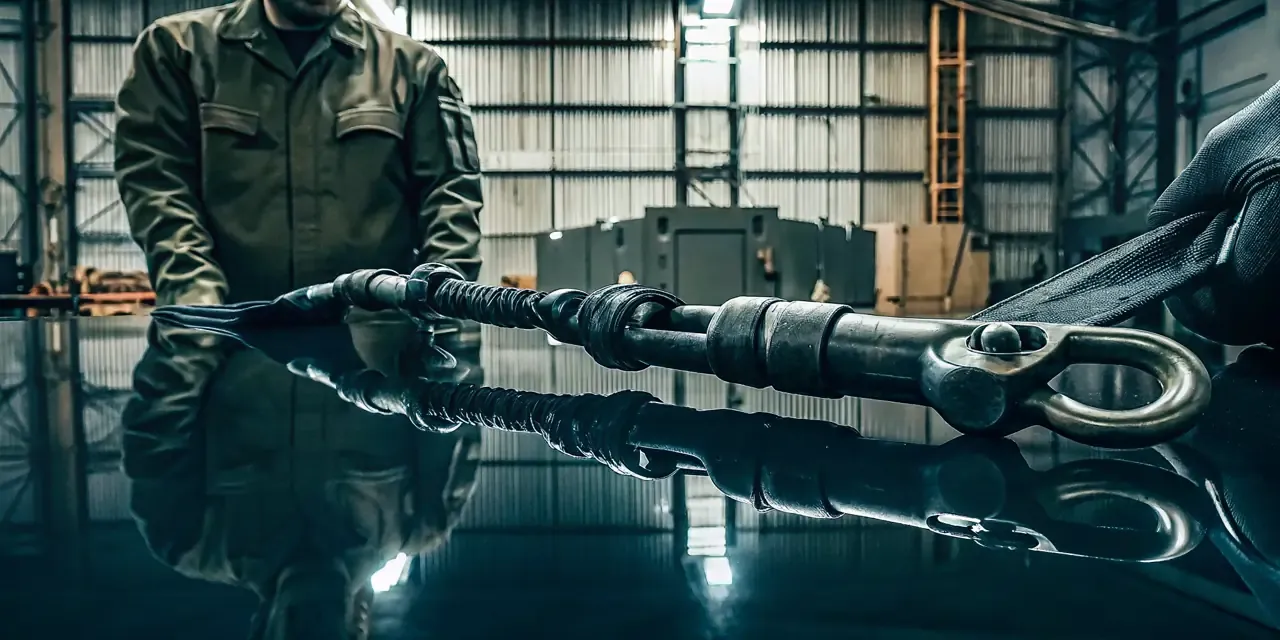
Metal hardware should be inspected for deformation, cracks, corrosion, sharp edges, gate damage, lock function, keeper condition, and evidence of forced loading. A connector can appear usable while a damaged gate, distorted body, or impaired locking action prevents it from performing as designed.
Check that each connector is compatible with its mating element and is loaded in the orientation approved by the manufacturer. Avoid assuming that an impressive minimum breaking strength or kN marking resolves a compatibility issue. The rating applies only within the component's tested design and use conditions. In a completed system, geometry, side loading, gate contact, and incompatible attachment can be as important as the marked strength.
When should a tactical harness or lanyard be retired?
Retire a tactical harness or lanyard whenever the manufacturer requires it, a required label is unreadable, the asset has experienced a disqualifying event, a load-bearing component is damaged, or the system's history cannot be verified. Retirement is an engineering and safety decision, not a cosmetic judgment.
Common retirement triggers include:
- Known or suspected shock loading, uncontrolled dynamic loading, or deployment of an energy-absorbing component.
- Cut, melted, chemically contaminated, brittle, heavily abraded, or otherwise compromised webbing or stitching.
- Cracked, bent, corroded, sharp-edged, or malfunctioning metal hardware.
- Missing, altered, or illegible identification that prevents confirmation of the product, rating, inspection criteria, or service history.
- Unauthorized alteration, field modification, repair, or component substitution.
- Failure to meet a manufacturer, contract, program, or qualified-inspector requirement.
Quarantine means removing the asset from use and clearly marking it so it cannot return to service by accident. It does not mean placing it back in inventory after a visual glance. Preserve the asset, record the concern, and obtain the disposition authorized by the manufacturer or program authority. If the item is retired, render it unusable or control its disposal under the organization's procedure.
Schedule an engineering consultation for custom tactical safety hardware, approved configurations, and program-specific inspection considerations.
Build a replacement schedule that procurement can defend
A defensible replacement schedule combines manufacturer service-life limits with exposure-based risk controls, inspection findings, and supply planning. It should identify what triggers replacement, who can approve exceptions, and how the organization prevents an overdue or quarantined asset from being issued.
- Create an asset register: assign each system a unique identifier and record product model, serial or lot, date received, date placed in service, owner, approved configuration, and instructions.
- Define lifecycle states: available, issued, due for periodic inspection, quarantined, under manufacturer evaluation, retired, and disposed.
- Set inspection cadence: use the strictest applicable manufacturer, contract, agency, and exposure-driven requirement. Assign an owner for the periodic inspection calendar.
- Document exposures: log shock loading, chemical contact, water immersion, heat, abrasion events, repairs, configuration changes, and unusual maintenance findings.
- Forecast replenishment: group anticipated replacements by program, deployment, configuration, and lead time. Avoid waiting for a critical asset to fail inspection before starting procurement.
- Control substitutions: require engineering or program approval before changing a connector, lanyard, harness, or attachment method in a rated system.
For government programs, lifecycle records can also support procurement continuity. Fusion Tactical USA provides U.S.-based engineering and manufacturing capabilities, including Berry and TAA-compliant capabilities where applicable to the program. Requirements should be confirmed against the solicitation, contract, and product documentation rather than assumed from a general claim.
Frequently asked questions
How often should tactical load-bearing systems be inspected?
Inspect the complete system before each use or shift, at the documented periodic interval set by the manufacturer and governing program, and immediately after an event that could affect integrity. A calendar interval alone is not enough for mission-critical equipment.
What should I look for during a tactical harness inspection?
Check labels and traceability, webbing, stitching, adjusters, connectors, lanyard hardware, correct assembly, and function. Look for cuts, abrasion, melted fibers, corrosion, cracks, deformation, binding, contamination, missing labels, and unauthorized changes.
Can a damaged tactical harness be repaired in the field?
Do not field-repair or alter a life-safety harness or lanyard unless the manufacturer provides and authorizes that repair method. Quarantine the equipment and follow the manufacturer or program disposition process.
Does a kN rating determine whether a connector is safe to use?
No. A kN rating is only one part of the decision. The connector must also be compatible with its mating element, correctly oriented, fully closed and locked, and used within the manufacturer-approved configuration.
Should equipment be retired after shock loading?
Known or suspected shock loading requires immediate removal from service. Follow the manufacturer's instructions and the governing program's process for evaluation or retirement; do not return the system to use based on appearance alone.
What records should an equipment service-life program keep?
Maintain product identity, date in service, approved configuration, inspection dates and findings, inspector identity, maintenance, exposure events, quarantine actions, manufacturer evaluations, and final retirement or disposal status.
Request a quote or engineering consultation for mission-critical tactical safety systems built around your operational and procurement requirements.


