

Tactical Rescue Team Readiness: Equipment, Roles, and Procurement Criteria
A tactical rescue team is ready when personnel, procedures, equipment, and records work as one controlled system. For agency buyers, that means defining the mission before selecting products, documenting interfaces, and planning inspection and sustainment from the start. This framework turns those decisions into procurement requirements that can be evaluated and maintained.
Call to discuss team requirements
What should a tactical rescue team readiness plan define first?
A readiness plan should establish the missions the team is expected to support, the operating conditions it must handle, and the limits of its assigned role. These decisions drive staffing, equipment configuration, training records, and acceptance criteria. They also prevent an agency from buying a collection of products that cannot be shown to work together for its defined use.
Begin with an approved mission profile, not a preferred equipment list. Record the environments, access constraints, expected team size, task duration, communications needs, casualty or load-handling considerations, and likely interfaces with other units. Keep the description at the level the agency can substantiate. Do not translate broad mission language into an assumed technical rating or operational capability.
For each profile, specify:
- Task boundary: What the team is expected to do, what it is not assigned to do, and when a specialist resource must take over.
- Operating context: Indoor or outdoor setting, likely exposure, access and egress constraints, expected duration, and support available at the scene.
- People and roles: Minimum staffing assumptions, team lead, equipment custodian, and the qualified roles required for each task.
- System dependencies: Communications, power, transport, partner-agency equipment, and any anchor, rope, or attachment interfaces the plan assumes.
- Readiness evidence: The documents and checks required before equipment is released for operational use.
A search-and-rescue equipment planning overview also describes the need for a carefully planned equipment system rather than a disconnected set of tools. Its subject is broader than a tactical agency procurement, but the system-planning principle is useful when translating mission profiles into a controlled requirement: review the search-and-rescue equipment planning overview.
Build a mission-to-requirement matrix. Each row should name a mission, its essential task, the relevant team role, the equipment function required, and the verification method. When a requirement cannot be tied to a documented task or a testable acceptance check, clarify it before solicitation. This makes the acquisition easier to explain and gives evaluators a consistent basis for comparing offers.
For example, an agency planning a confined access response could list entry and egress constraints, the expected team roles, the communications dependency, and the equipment interfaces that the plan assumes. The matrix should then identify the evidence for each requirement: perhaps a product instruction, an interface drawing, a configuration record, or an agency-defined receipt check. This does not establish that a system is suitable by itself; it shows how the agency will verify each part of its own documented need. If partners supply a component, record who confirms its identity and status, and who resolves a mismatch before the components are treated as one configuration.
How should agencies assign roles and ownership?
Role definitions should show who plans, operates, checks, documents, and releases each part of the system. A product does not create a qualified operator, and a training record does not by itself establish that a team has the correct equipment configuration. Readiness requires both people and equipment controls, with clear ownership for each.
At minimum, define the responsibilities of the operational lead, technical lead, equipment custodian, procurement or contracting representative, and personnel who perform inspection and maintenance. In a smaller unit, one person may hold more than one administrative responsibility, but the record should still identify the accountable owner for each action. The agency’s training and operational policy determines who may perform technical tasks.
- Operational lead: Confirms that the proposed configuration addresses the approved mission profile and coordinates the team’s readiness review.
- Technical lead: Reviews system interfaces, applicable requirements, user instructions, and configuration details against the agency’s intended use.
- Equipment custodian: Maintains the inventory, item identity, status, storage location, and issue or return records.
- Inspection owner: Ensures checks are assigned to qualified personnel, recorded, and escalated when an item’s status is uncertain.
- Procurement team: Converts operational needs into neutral specifications, evaluation criteria, acceptance evidence, and contract deliverables.
Make ownership visible in a responsibility matrix. For each action—requirements approval, technical review, receipt inspection, configuration approval, periodic review, and retirement decision—name one accountable role and any supporting roles. Avoid wording such as “team will inspect” unless the procedure defines who, when, how, and where the result is recorded.
The matrix should also state how a change is approved. Substituting a connector, changing a harness configuration, or adding a component can alter an interface or intended use. Treat a change as a controlled review, not an informal field preference. The technical authority should confirm that the revised configuration remains within the agency’s documented requirements and user instructions before return to service.
Use a simple responsibility table in the program file when several departments share these duties. For each decision, record the role that recommends an action, the role that approves it, and the person or function that updates the controlled record. For instance, procurement can manage a proposed substitution through the contract process, while the technical reviewer evaluates the evidence and an authorized program owner makes the acceptance decision. This division prevents a vendor clarification, a receiving check, or a user preference from becoming an undocumented design change. Review the matrix when staffing changes, a new mission is added, or the agency revises its approval chain.
How can buyers document load paths and equipment interfaces?
Buyers should define the complete intended configuration and require evidence that its components are compatible for that configuration. A load path is not established by a label on one item; it depends on the connected components, their orientation, the system arrangement, and the use specified by the manufacturer and agency. Procurement documents should therefore identify interfaces and request product-specific evidence rather than infer capability from appearance.
Describe each interface in a configuration record. Identify the harness attachment location, connector type and orientation, connected subsystem, user-adjustable elements, and any limitations or instructions that govern the combination. Where an item has a stated rating, capture the unit and basis as shown in the source documentation. Do not combine ratings, assume that the strongest component sets the system rating, or convert an individual component rating into an assembly claim without applicable evidence.
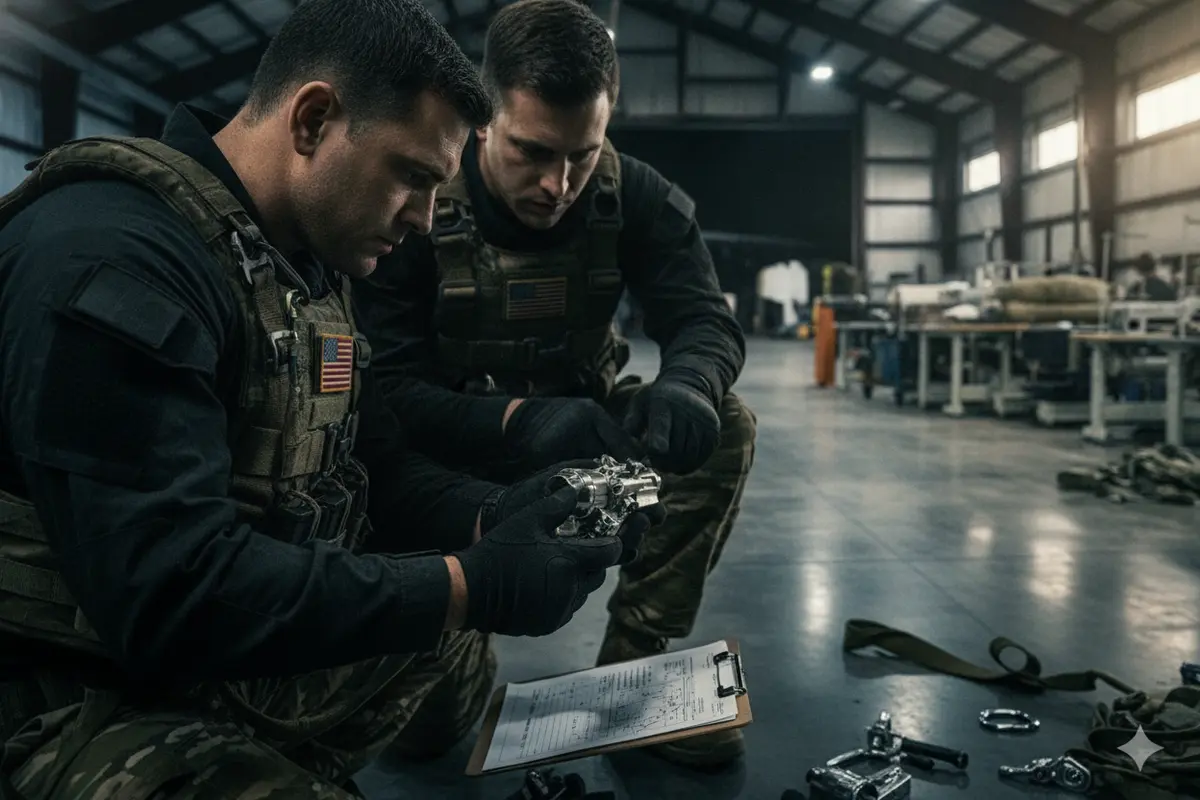
Ask the supplier for the documents needed to verify the offered item and configuration. Depending on the requirement, those may include a current product specification, applicable conformity or test information, user instructions, material or origin records, and traceability details. Name the deliverable in the solicitation. A general statement that a product is “rated” is not a substitute for the exact rating, test basis, configuration, and limitations relevant to the requirement.
As a practical interface review, assess these questions:
- Does each component have an identifiable model or part number and a documented intended use?
- Does the offered configuration match the attachment points and connector arrangement described in the requirement?
- Are orientation, clearance, adjustment, and potential interference addressed in the product instructions or evaluation plan?
- Are ratings and test claims supported by product-specific records rather than extrapolated from a different model or configuration?
- Can the agency identify and control authorized substitutions, revisions, and replacement parts?
When comparing available system components, use the source specification and agency-approved configuration as the authority. Fusion Tactical provides information on its harness equipment, helo lanyards, and connector hardware; buyers should confirm the specific product documentation and suitability for their own defined application. These category links are starting points for product review, not approval of a particular assembly or use.
What should an equipment procurement package include?
A procurement package should connect every technical requirement to a proposal response and an acceptance method. Include the mission profile, required functions, system interfaces, product-level documentation, delivery and configuration controls, and the records the agency needs to manage equipment after receipt. This gives offerors a consistent request and gives evaluators evidence to assess.
Use the following outline to build a solicitation or internal purchase specification:
| Procurement area | What to define | What to request or verify |
|---|---|---|
| Mission and scope | Assigned tasks, boundaries, operating context, and known system dependencies | Requirement traceability showing how each offered item serves the defined need |
| People and fit | Intended user population, adjustment needs, role assignments, and agency fit-review process | Product dimensions or fit guidance, user instructions, and a documented evaluation method |
| Interfaces | Attachment points, connector type and orientation, and approved configuration | Configuration details, compatibility evidence, and controlled substitution rules |
| Ratings and evidence | Applicable standard or performance requirement and the evidence needed to substantiate it | Product-specific specifications, test or conformity records where applicable, and use limitations |
| Acceptance | Identity, condition, quantity, documentation, and functional checks required on receipt | Inspection checklist, item traceability, manuals, and resolution process for discrepancies |
| Sustainment | Inventory ownership, inspection records, maintenance responsibility, storage, and replacement planning | Care instructions, record fields, support information, and a process for status changes |
Keep acceptance checks objective. For example, specify that the receiving team verifies the model and part number against the order, checks quantity and visible condition, confirms required documentation is present, and records any discrepancy before the item is issued. Do not use a receipt checklist to claim a technical test that the agency has not defined or qualified personnel to conduct.
Separate mandatory requirements from scored preferences. Mandatory requirements should be measurable and essential to the task. Evaluation factors can compare factors such as documentation completeness, configuration clarity, manufacturing and delivery approach, or sustainment support when those factors matter to the program. Define the scoring method in advance and apply it consistently.
Where domestic sourcing or government contract rules apply, identify the actual clauses and documentation required for that acquisition. A supplier’s general capability statement is not a substitute for a contract-specific determination. Fusion Tactical describes U.S.-based production and compliance capabilities on its military equipment collection; procurement teams should confirm current product- and contract-specific requirements through the solicitation and supporting records.
A receiving plan is more useful when it states the sequence as well as the checklist items. First, compare the shipment to the award and confirm item identity, quantity, and any required traceability data. Next, check for visible damage or missing parts without attempting an undefined technical test. Then match the delivered configuration and documentation to the approved submittal. Record discrepancies in a designated log, assign an owner and due date, and keep affected items from routine issue until the authorized reviewer resolves the question. Close the record with the disposition and any updated inventory or configuration information. These steps create a clear handoff from contract delivery to agency custody and provide an auditable trail without overstating what receipt inspection proves.
How should a team plan inspection, training records, and sustainment?
Inspection and sustainment controls should be designed into the purchase, then assigned to named owners before equipment is issued. The team needs an item-level record, a documented status process, access to current instructions, and a clear response when an item is damaged, altered, overdue for a check, or of uncertain history. Training records should identify the qualifications and agency approvals relevant to assigned roles.
For each tracked item, record the product identity, serial or lot information when available, acquisition date, current configuration, assigned location or custodian, applicable instructions, inspection results, maintenance actions, and status. Use the manufacturer’s instructions and the agency’s approved policy to establish inspection methods and intervals. This article does not set universal intervals or replace product instructions, applicable standards, or agency policy.
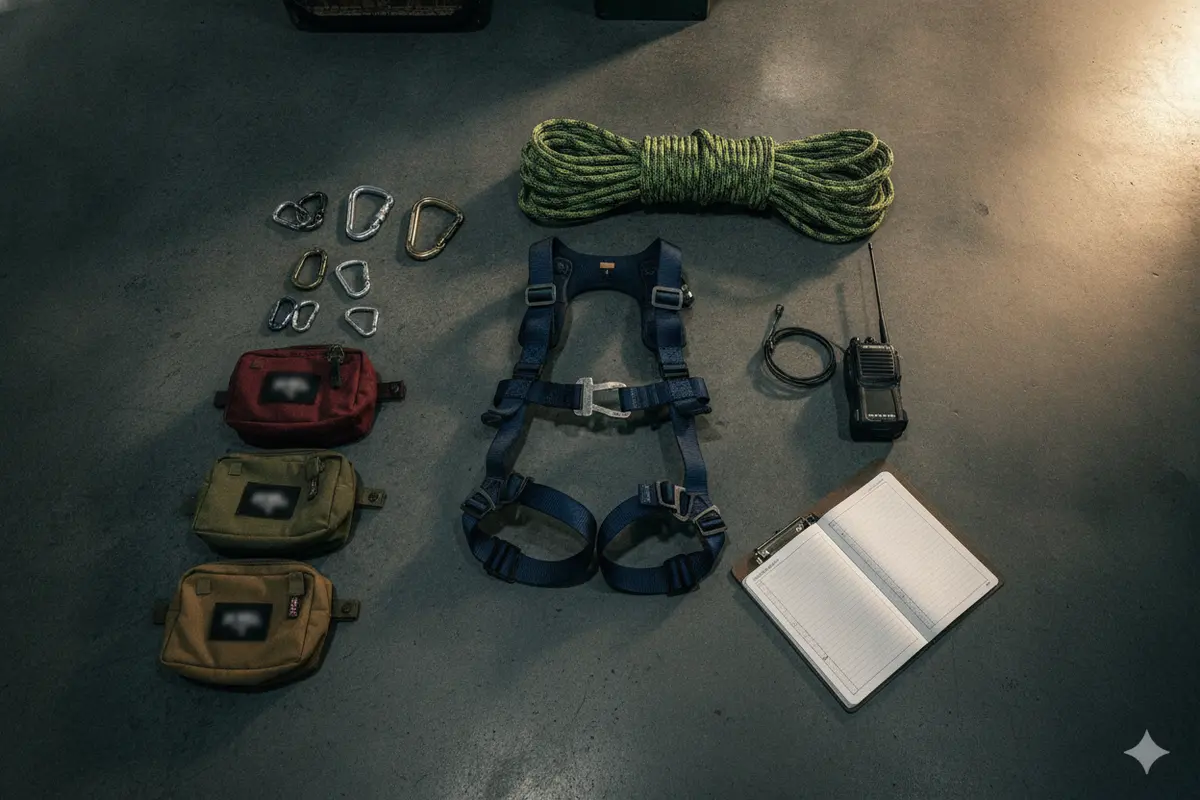
Establish simple status categories such as available, restricted pending review, and removed from service. Document who may change status and who may authorize return to service. If a record is missing or an item’s configuration is uncertain, the team should follow its established procedure rather than assume that the item remains ready.
Training documentation should be role-based and proportionate to assigned duties. Maintain the course or qualification name, issuing organization where applicable, completion or expiration date when specified, authorization status, and the tasks the person may perform under agency policy. Link the record to readiness checks without treating course completion as proof that a specific product or configuration is appropriate.
Before fielding a new configuration, plan a controlled familiarization and evaluation process. Include the assigned users, technical reviewer, equipment custodian, and procurement representative as appropriate. Record the configuration reviewed, instructions used, issues identified, corrective actions, and approval authority. The scope and methods should be set by the agency’s competent personnel and applicable requirements.
Sustainment planning should include:
- Inventory control: A current list with item identity, location, owner, and operational status.
- Configuration control: A record of approved combinations, revisions, substitutions, and changes.
- Inspection and care: Manufacturer instructions, agency procedures, assigned qualified personnel, and a retained record of results.
- Training currency: Role-based records and a process to identify missing or expired qualifications where applicable.
- Replacement planning: A method to identify unavailable, damaged, obsolete, or unsupported items and maintain approved continuity.
- Closeout and lessons: A way to capture equipment issues and feed relevant findings into requirements and future purchases.
For teams that use rope-system components, the agency can review the available descender equipment and accessory categories as part of its market research. As with any category review, establish the intended configuration, user requirements, and documentation needed before selecting a specific product.
Translate these controls into routine administrative events. When equipment is issued, record the custodian and current status. After a use, change, or discrepancy, follow the agency’s established review process and update the item record before the next assignment. During periodic program reviews, compare the inventory against the approved configuration and confirm that current instructions and required records remain available. If staffing or mission assumptions change, identify whether the existing configuration and training assignments still match the approved plan. A short checklist with named owners and dates is easier to maintain than a complex process no one can complete. Keep the record proportional to the equipment and agency policy, but make every status change traceable.
How can an agency compare proposals consistently?
A fair comparison uses the same evidence questions for every offer and traces the result to the agency’s approved requirements. Do not let an attractive catalog description substitute for substantiation. Use a compliance matrix that shows each requirement, the bidder’s response, the supporting document, the evaluator’s finding, and any clarification needed.
A simple evaluation sequence is:
- Screen for completeness: Confirm that the offer addresses required products, configuration, delivery, documentation, and other solicitation items.
- Check traceability: Match each claimed feature to the relevant requirement and a supporting document.
- Review technical fit: Check interfaces, use limitations, user instructions, and evidence against the agency’s stated application.
- Assess implementation: Review configuration control, acceptance steps, support documentation, and sustainment commitments included in the offer.
- Record the rationale: Document findings against the published factors and apply the same standard across proposals.
When a response uses ambiguous language, request clarification through the procurement process. Record whether the answer resolves the requirement and whether the same question should be raised with other offerors. Do not convert an unverified claim into an accepted capability because it sounds familiar or appears in a marketing description.
Before award, the program and procurement leads should verify that the selected configuration remains aligned with the approved mission profile, that required records are deliverables, and that the receiving organization has owners for inspection and sustainment. This final review connects the contract decision to actual agency readiness instead of ending at product delivery.
Call to discuss procurement and engineering requirements
Frequently Asked Questions
These answers summarize the planning principles above. Agencies should apply their governing policy, contract terms, product instructions, and qualified technical review to a specific team and configuration.
What does tactical rescue team readiness mean?
It means the team’s assigned people, approved equipment configuration, procedures, records, and sustainment controls are aligned to documented mission requirements. Readiness is more than having equipment on hand.
What should buyers define before selecting equipment?
Define the mission profile, task boundaries, user roles, operating context, system interfaces, required evidence, acceptance checks, and sustainment responsibilities. These details make requirements measurable and proposal comparisons more consistent.
Can a component rating establish the capability of a complete system?
No. A component rating alone does not establish the rating or suitability of a connected system. Buyers should review product-specific documentation and the complete intended configuration, including applicable limitations and instructions.
How should inspection intervals be set?
Use the manufacturer’s instructions, applicable requirements, and the agency’s approved policy. Assign inspection to qualified personnel and retain the result. A general article should not replace the specific instructions for an item.
What records should an equipment custodian maintain?
Maintain item identity and traceability where available, current configuration, location or custodian, status, inspection results, maintenance actions, and relevant instructions. Include a process to document discrepancies and control return to service.
How should an agency handle a proposed product substitution?
Route it through documented technical and procurement review before acceptance or use. Compare the substitute’s specifications and configuration to the original requirement, then record the approval or rejection and update controlled records when approved.
Does completing training prove that a team configuration is suitable?
No. Training records document relevant instruction or authorization, while configuration suitability requires separate review against the mission, product documentation, and agency requirements. Both personnel and equipment controls matter.
When these controls are defined before purchase and maintained after receipt, an agency can explain what its team is prepared to do, what evidence supports that readiness, and who is responsible for keeping the system current.


