

Helicopter Personal Retention Best Practices: Building an Equipment Standard for Personal Retention Lanyards
A helicopter personal retention lanyard standard should do more than name a preferred product. It should define the approved use, compatible interfaces, evidence, inspection controls, and responsibilities that make a restraint system verifiable across aircraft, crew roles, and operating conditions. This guide gives procurement and safety teams a practical framework for building that standard.
Discuss a mission-specific equipment requirement
What should the standard control?
Begin by defining the boundary of the system. A personal retention lanyard is one element in a larger connection chain. Depending on the approved configuration, that chain may include the user attachment point, lanyard body, connector, aircraft-side anchor or interface, and the structure that supports the anchor. The equipment standard should identify which elements are included and who is accountable for verifying each one.
Do not treat the word “lanyard” as a complete description of intended use. A restraint intended to limit movement, a connection used to position a crew member, and a system intended to arrest a fall are not interchangeable merely because each uses a tether. Define the intended function in operational language and identify uses that are outside the approved scope. That boundary prevents a procurement document from implying capabilities that have not been established.
State the aircraft types or approved interfaces, crew positions, task phases, environmental conditions, and user configurations that the requirement covers. If the equipment will support more than one mission profile, record those profiles separately. A standard that says “for helicopter use” without identifying the operational context leaves important compatibility and performance questions unresolved.
At the start, assign owners for the operational requirement, engineering review, airworthiness or platform approval, procurement, inspection, and records. The supplier can provide product and manufacturing evidence, but the organization remains responsible for deciding whether the system is suitable for its approved use.
How should a team translate missions into requirements?
Use a mission-to-requirement worksheet instead of beginning with a catalog description. For each scenario, capture the task, the user’s permitted movement, the connection points, foreseeable loading directions, environmental exposure, and any restrictions imposed by platform procedures. Separate observed needs from assumptions, and identify who must approve each assumption.
- Describe the task. Record what the crew member must do, where they work, and when the restraint is connected or disconnected. Avoid vague requirements such as “heavy duty” or “secure.”
- Define the restraint envelope. Identify required reach, permitted movement, routing, and any contact or snag concerns. Establish these from the approved operation and system design, not from a general-purpose length preference.
- Map the complete load path. Trace the connection from user interface through every component to the supporting aircraft structure. Identify interfaces the supplier does not provide and how their suitability will be established.
- Set the evidence needed. Specify drawings, material and configuration identifiers, inspection instructions, applicable test records, limitations, and traceability records that must accompany the offer or delivery.
- Define acceptance and lifecycle controls. Establish the review, fit evaluation, inspection, maintenance, storage, and removal-from-service process before the equipment enters use.
Requirements should be measurable where practical. For example, a requirement can name the connector type and gate function, specify the interface dimensions that must match, or call for an identified document revision. Where a numerical load or strength requirement is necessary, the engineering authority should establish it for the complete configuration and the applicable design basis. Avoid selecting a kN value from a component label without checking its direction, test conditions, configuration, and relationship to the system requirement.
Write down what is not yet known. A missing anchor drawing or an undefined aircraft configuration is a decision to resolve, not a detail to delegate silently to a supplier. A visible list of open questions also helps the procurement team keep an offer from being treated as technically acceptable before the system boundary is clear.
Which interfaces need to be checked?
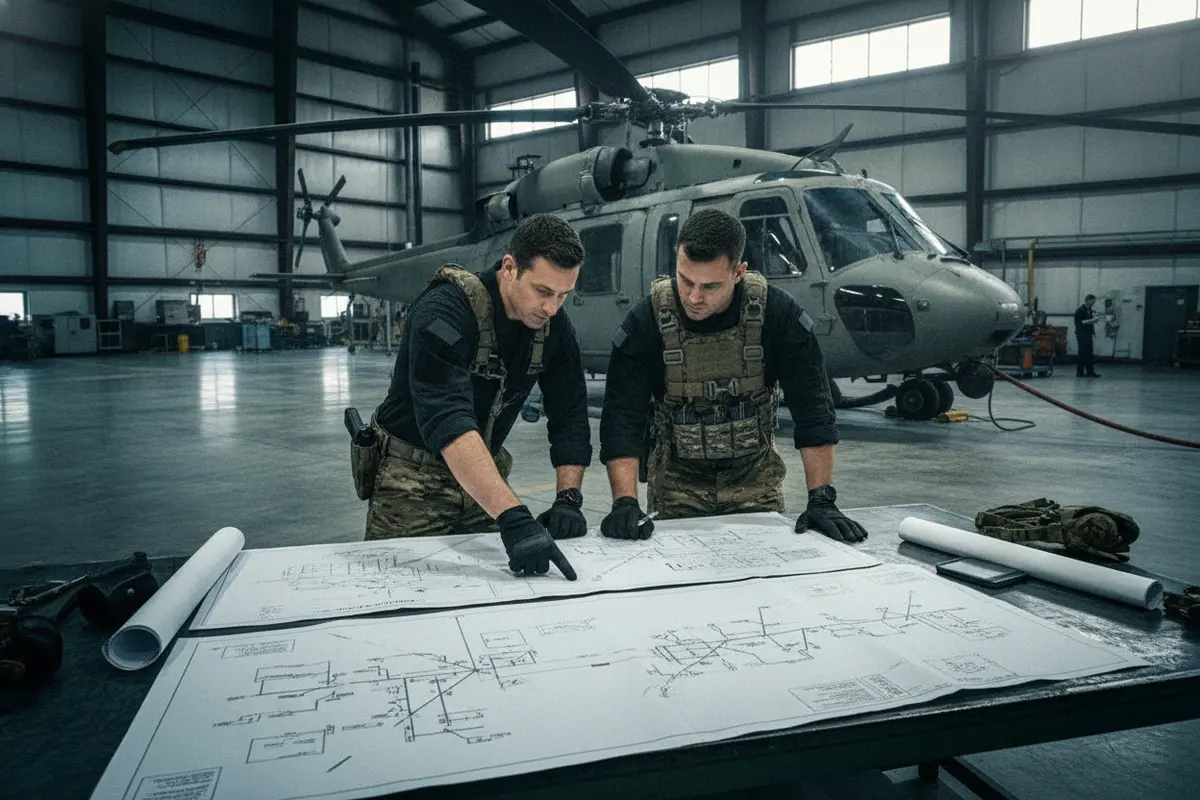
Interface mismatch is a common source of procurement uncertainty. Review the user-side attachment method, connector geometry, gate clearance, anchor dimensions, orientation, and any transition hardware as one configuration. Confirm how each component behaves when connected as intended, including whether the connector can rotate, cross-load, bear against an edge, or contact an obstruction. These are design-review questions, not assumptions to settle by visual inspection alone.
Check the equipment in the actual configuration that the organization proposes to authorize. A connector that fits an anchor in isolation may not have suitable clearance once adjacent structure, gloves, clothing, seating, and task movement are considered. Likewise, changing a connector, strap routing, anchor, or attachment point may change the system configuration and should trigger the organization’s defined review process.
Build interface control into the documents. Use clear identifiers for components, approved combinations, and the aircraft or anchor interface. Include drawings or controlled photographs when they add clarity, and specify which document revision governs. If a supplier offers an alternate component, require a documented equivalency review rather than allowing substitutions based on similar appearance or a shared marketing term.
Keep connection management operationally realistic. The standard should address where the lanyard is stowed, how the user confirms the connection, what procedure governs disconnection, and how a loose or unused end is managed. Review potential interference with egress, work tools, controls, and other crew duties. These details should be validated by the responsible operational and engineering authorities for the relevant platform and task.
For a product-family review, teams can examine the available retention lanyard range and the helicopter lanyard collection as starting points for identifying configurations to evaluate. A collection page is not a substitute for controlled technical documentation or a platform approval.
What evidence should procurement request?
Ask for evidence that is specific to the offered configuration. A specification sheet may summarize a product, but it does not necessarily establish suitability for every aircraft interface, task, or operating condition. Set the evidence package before requesting quotes so that vendors respond to the same technical baseline.
- Configuration information: product identification, component list, drawings or interface details, revision status, and approved options.
- Performance basis: the stated rating or performance data, the component or assembly to which it applies, loading direction, test method, and any limitations available for the configuration.
- Materials and construction: material identification and relevant manufacturing or inspection records appropriate to the requirement.
- Traceability: lot, batch, serial, or other production identification, as applicable, plus a process for linking delivered items to records.
- Use and care information: instructions for use, inspection criteria, storage, cleaning, environmental limitations, and criteria for quarantine or retirement.
- Change information: notification and approval controls for changes to materials, components, manufacturing location, design, or supplied documentation.
Be precise about what counts as objective evidence. If a requirement calls for testing, define the article tested, sample or configuration, acceptance criteria, records to be supplied, and who reviews them. If the vendor cites a standard or qualification, request the exact scope and document that supports the claim. Do not assume a product name, general certification statement, or component rating establishes compliance for the complete restraint arrangement.
For U.S. aviation requirements and current agency resources, consult the Federal Aviation Administration and have the appropriate organization authority determine which rules, approvals, and guidance apply to the specific operation. This reference is a starting point for official information, not a declaration that a particular product or configuration is approved.
Procurement teams evaluating a supplier’s engineering and production processes can also review the manufacturer’s description of its manufacturing capabilities and company background. Ask for the records needed to substantiate the specific claims that matter to your requirement and contract.
How can offers be compared consistently?
Compare evidence and risk, not just feature counts or the lowest quoted price. Use a common review matrix that separates pass/fail requirements from scored considerations. A missing mandatory document should remain visible as an open item; it should not disappear inside a high overall score.
| Review area | Question for the offer | Evidence to review | Decision record |
|---|---|---|---|
| Mission fit | Does the proposed configuration match the defined task and user movement? | Requirement cross-reference, use limitations, configuration details | Accept, reject, or resolve an identified gap |
| Interfaces | Are user, connector, and anchor interfaces defined and compatible? | Drawings, dimensions, connector details, approved combinations | Record each interface and responsible approver |
| Performance | Does the evidence address the complete intended configuration? | Applicable test data, rating basis, limitations, review method | Link evidence to each performance requirement |
| Traceability | Can delivered items be linked to configuration and production records? | Identification scheme, lot or serial records, change control | Define required delivery records and retention owner |
| Lifecycle | Can users inspect, maintain, store, and remove equipment under a defined process? | Instructions, inspection criteria, care and retirement guidance | Assign program owner and operating procedure |
| Delivery and support | Can the supplier provide the required configuration and documentation? | Quote assumptions, production plan, document list, change terms | Track exceptions, schedule, and contractual deliverables |
Record the basis for every decision. When an offer cannot meet a requirement, write down whether the requirement is mandatory, whether a formal revision is being considered, and who has authority to approve that revision. Keep technical acceptance separate from commercial evaluation so that schedule or price pressure does not conceal an unresolved safety issue.
Ask each supplier the same questions about deviations, substitutions, documentation, and configuration changes. For a specialized or modified system, include engineering review early. Fusion Tactical describes engineering and testing support on its engineering and testing page; buyers should confirm the scope, deliverables, and evidence required for their own project rather than assume a service description meets a procurement requirement.
How should the evidence matrix handle gaps and exceptions?
A useful matrix does not stop at “document received.” It records the requirement, the supplier response, the evidence reference, the reviewer, and the disposition. This makes it possible to see whether a document actually answers the question or merely repeats a claim. Use a controlled status such as verified, partially addressed, open, or not applicable, and define what each status means before scoring offers.
For every open item, capture the exact information needed, the person responsible for obtaining or reviewing it, and the point in the procurement when it must be resolved. Distinguish a clerical omission from a technical uncertainty. A missing revision identifier may be straightforward to correct; an undefined load path or unverified interface can affect the design basis and may require engineering analysis or additional evidence.
Keep exceptions visible through award and delivery. If the organization accepts a deviation, document its scope, rationale, approving authority, operational limitations, and duration. Identify whether the exception applies to one item, one platform, or a defined fleet configuration. A deviation should not quietly become a general permission for other users or future purchases.
When reviewing test information, check the relationship between the test article and the offered item. Confirm whether the article included the same components, materials, attachment method, and configuration. Record the test conditions and acceptance criteria that are relevant to the requirement. If the evidence is summarized in a report or certificate, retain the source document and note who assessed its applicability. Where the supplier cannot provide requested evidence, decide whether another acceptable verification route exists or whether the requirement remains unmet.
Finally, retain the matrix with the contract and technical file. It becomes a practical handoff between procurement, engineering, receiving inspection, and the eventual equipment owner. It also gives the team a clear starting point when a product changes or the mission requires a new configuration.
How should fit evaluation and acceptance work?
Plan a staged acceptance process. First review the documentary package against the requirement matrix. Next, verify delivered identification and configuration against the approved offer. Then conduct any organization-approved fit or operational evaluation under controlled conditions, with the right technical, safety, and operational representatives present. The acceptance plan should say what each stage can establish and what it cannot.
A fit evaluation can reveal access, reach, routing, clearance, and usability issues. It does not by itself establish a design rating, substitute for required testing, or approve use on an aircraft. Define the test environment, equipment configuration, participants, observations to record, stop criteria, and approval authority before the evaluation begins. If a finding leads to a design or component change, return the revised configuration to the relevant technical review.
Before release, check that the delivered item matches the controlled baseline, records are complete, users have the current instructions, and inspection responsibilities are assigned. The acceptance record should identify the configuration and evidence reviewed, any approved limitations, unresolved items, and the person or authority who made the decision. Store the record where it can be found during inspection, maintenance, audit, or an incident review.
What should inspection and configuration control cover?
Translate the manufacturer’s instructions and the organization’s approved procedures into a repeatable inspection program. Define who inspects before use and at periodic intervals, what defects or changes require quarantine, who can return an item to service, and how findings are documented. Personnel should know how to identify the item and locate the correct instructions, not rely on memory or informal practice.
Use only inspection criteria established for the specific equipment and its approved use. The program may need to address visible damage, contamination, wear, stitching or webbing condition, connector operation, identification legibility, and evidence of unauthorized modification, as applicable to the product. Do not create improvised pass/fail criteria or assume that visual inspection alone can detect every issue.
Configuration control begins after purchase, not just during design. Record approved components, revisions, vendor changes, replacement parts, and any field substitutions. Define how a damaged or uncertain item is segregated, assessed, and dispositioned. Maintain a history that connects equipment identity to inspection and maintenance records, while respecting the organization’s recordkeeping and contract requirements.
Set clear triggers for technical review. A changed aircraft interface, user attachment method, task, component, supplier, or performance claim may affect the earlier assessment. Require change notification and identify who determines whether the change needs a new document review, fit assessment, test, or approval. This prevents gradual drift from the configuration originally reviewed.
How can a team establish the standard in stages?
A staged rollout makes gaps visible before the standard becomes routine. The following sequence can be adapted to a new procurement or an existing fleet of equipment:
- Baseline the mission. Collect approved procedures, aircraft and anchor information, user roles, and operational constraints. Identify missing data and responsible owners.
- Draft measurable requirements. Define function, configuration, interfaces, evidence, lifecycle controls, and explicit exclusions. Have engineering and operational authorities review the wording.
- Issue a common supplier question set. Request the same technical data, configuration details, and deviations from each potential source. Set a process for handling clarifications.
- Review and shortlist. Use the comparison matrix to identify compliant offers, evidence gaps, and unacceptable assumptions. Record why each offer advances or does not.
- Plan controlled evaluation. Define fit checks or other evaluation steps, the approval boundaries, participants, and documentation before equipment is used in a trial.
- Accept and release. Confirm the delivered configuration, close required evidence items, train users on the applicable procedure, and make instructions accessible.
- Monitor and revise. Capture inspection trends, user feedback, configuration changes, and lessons from maintenance. Revise the standard through document control and communicate the effective version.
This process creates a traceable path from mission need to fielded equipment. It also helps a team distinguish a sourcing decision from an approval decision. If custom design or manufacturing is part of the procurement, document the design inputs, review points, verification evidence, and change control in the contract or project plan.
For product or project questions, use the contact page to identify the appropriate discussion. Keep the request specific: describe the mission context at an appropriate level, the interface information available, the evidence required, and the decision timeline.
Request a technical discussion
Frequently asked questions
Does a high component rating prove the complete system is suitable?
No. A rating applies to a defined component or configuration and test basis. Buyers need to understand the load direction, configuration, limitations, and how the data relates to the complete intended system. The responsible engineering authority should evaluate the full load path and applicable requirement.
Can a team use one standard for every aircraft and task?
A common procurement framework can cover multiple operations, but the approved configuration and interfaces may differ. Identify applicable aircraft, crew positions, task profiles, and restrictions, then control each approved arrangement. Do not infer universal compatibility from a shared equipment label.
What should be included in an equipment acceptance record?
At minimum, identify the equipment and configuration, requirement revision, evidence reviewed, inspection or evaluation completed, exceptions and limitations, and approval authority. Include links or references to supporting records so another reviewer can reconstruct the decision.
Who decides whether a restraint configuration is approved?
The organization’s designated technical and operational authorities determine approval under its procedures and applicable requirements. A supplier can provide product information and supporting evidence, but that material does not replace the organization’s platform-specific review.
A durable helicopter restraint standard connects mission needs to a controlled configuration, verifiable evidence, trained users, and a documented lifecycle process. Review it whenever the task, interface, equipment, or governing requirements change, and keep the approval basis accessible to the people responsible for the system.


